

 By
By What Are Cryptocurrency Wallets: Key Management & Custody
What Wallets Actually Do
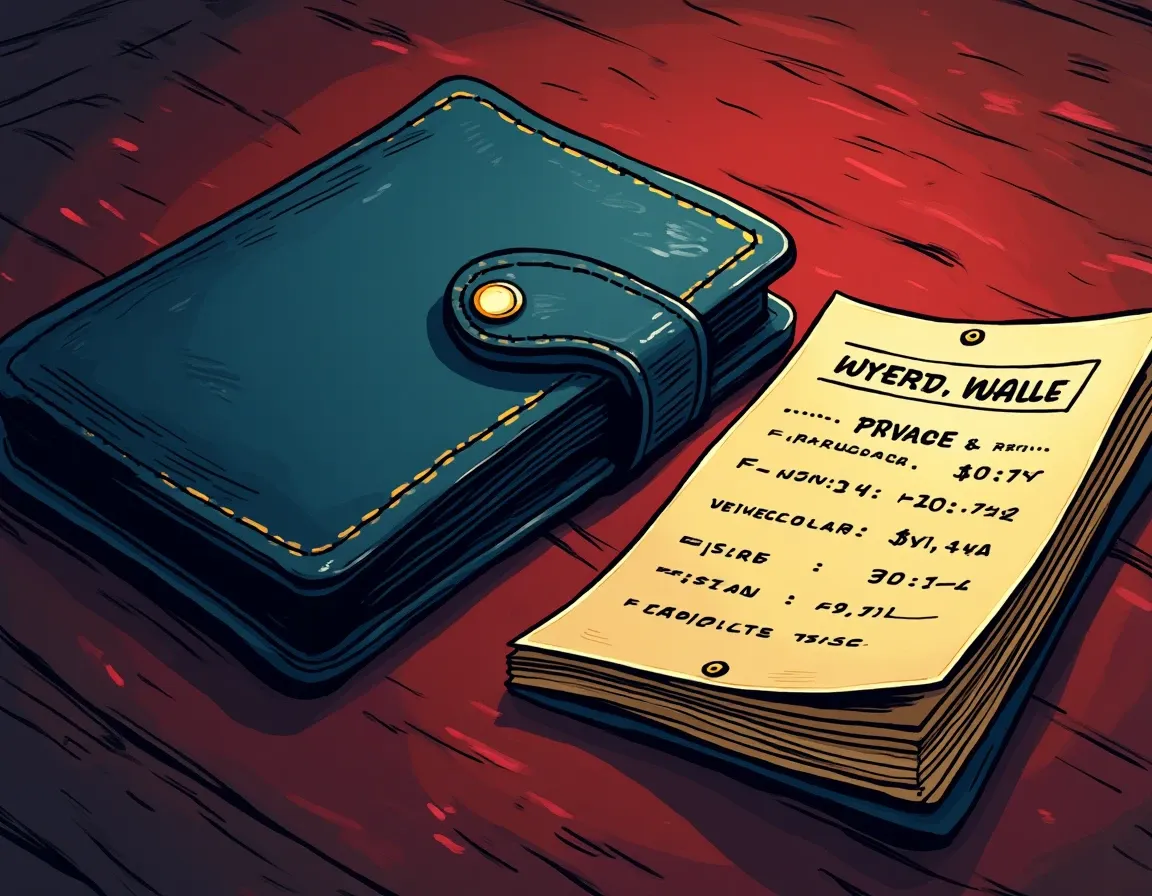
Cryptocurrency wallets do not store coins. They store private keys that prove ownership of on-chain assets. The coins themselves remain on the blockchain. The wallet’s job is to hold the cryptographic key that lets you move those coins.
A private key is a 256-bit number that controls access to a blockchain address. The wallet generates this key, stores it, and uses it to sign transactions when you want to move funds. The signed transaction goes to the network. The network verifies the signature against the public key. If valid, the transaction executes.
This means wallet architecture is about key management, not asset custody. The critical questions are: where does the key live, who controls it, and what signing process protects it from unauthorized use.
The Custody Spectrum: Who Controls The Keys

Custody determines who holds the private key. This divides wallets into two categories: custodial and non-custodial. The distinction is not about convenience. It is about counterparty risk versus personal responsibility.
Custodial Wallets
Custodial wallets are managed by a third party. When you hold funds on Coinbase, Kraken, or Binance, the exchange holds the private key. You log in with a username and password. You do not control the key itself. The platform signs transactions on your behalf.
Trade-offs include exchange insolvency risk, account freezes during regulatory action or market stress, mandatory KYC requirements, and withdrawal limits when platforms impose restrictions. If the custodian suffers a breach, faces downtime, or collapses, you lose access to your funds. Historical examples: Mt. Gox (2014), FTX (2022).
For centralized exchange yield, custodial wallets create a specific risk. When you deposit ETH into Binance Earn or Coinbase Prime, you transfer custody to the platform. The platform allocates your capital to lending desks, institutional borrowers, or internal yield strategies. You do not sign the transactions that deploy your capital. The platform does. If the platform fails, your yield position disappears with it.
Custodial models work when counterparty risk is acceptable. They fail when the custodian fails.
Non-Custodial Wallets
Non-custodial wallets give the user full control over the private key. The key lives on your device or hardware signer. You sign every transaction. No third party can freeze, reverse, or block a transfer. This is self-custody.
The trade-off is personal responsibility. If you lose your private key or recovery phrase, there is no recovery mechanism. Lost keys account for approximately 20% of all Bitcoin, representing billions in permanently inaccessible funds. If you sign a malicious transaction, the network executes it. There is no fraud department to call.
For active yield position management, non-custodial wallets eliminate platform counterparty risk but introduce operational risk. You must secure the key, verify every transaction before signing, and understand the contract interaction you are approving. Most losses in self-custody come from signing a bad transaction, not from key theft.
Key Signing Models: Hardware, Software, Smart Contract

The signing model determines where the key lives and how it approves transactions. Three architectures dominate: hardware wallets, software wallets, and smart contract wallets. Each trades security against speed.
Hardware Wallets
Hardware wallets store private keys in a dedicated device with a tamper-resistant secure element. Ledger uses chips certified under Common Criteria EAL5+ or EAL6+. Trezor Safe 7 uses a similar secure element architecture. The key never leaves the device. When you sign a transaction, the wallet receives the unsigned transaction data, signs it inside the secure element, and returns the signed transaction to the host computer.
This protects against remote key extraction. Malware on your computer cannot read the private key. Phishing sites cannot exfiltrate it. The attack surface is limited to physical device compromise or signing a malicious transaction displayed on the device screen.
The trade-off is speed. Every transaction requires connecting the hardware device, reviewing transaction details on the device screen, and physically confirming the signature. For frequent DeFi interactions across multiple protocols, this friction compounds. Yield farmers rotating positions across Aave, Compound, and Curve face ten to fifteen signing operations per rebalancing cycle.
For long-term holdings or large capital allocations, hardware wallets are the correct tool. For active protocol interaction, the signing overhead becomes a constraint. Comparing the best hardware wallets reveals that signing speed varies across devices, but all hardware signers are slower than software alternatives.
Software Wallets
Software wallets store private keys on the device, protected by OS-level isolation. MetaMask on iOS uses the Secure Enclave. Android wallets use StrongBox. The key is encrypted at rest and gated by biometric authentication or a password. When you sign a transaction, the wallet decrypts the key in memory, signs the transaction, and submits it to the network.
Software wallets sign faster than hardware wallets. MetaMask processes a signature in under two seconds. This makes them the default choice for active DeFi users. The trade-off is that the key lives on an internet-connected device. If the device is compromised, the key is exposed. If you approve a malicious transaction, the wallet signs it without additional verification.
MetaMask includes anti-phishing alerts and transaction simulation features that preview the outcome of a transaction before signing. This reduces blind signing risk but does not eliminate it. The wallet cannot verify the safety of every contract interaction. It can only show you what the transaction will do based on static analysis.
Smart Contract Wallets
Smart contract wallets replace externally owned account (EOA) custody with a deployed contract that holds assets and enforces signing rules on-chain. Safe (formerly Gnosis Safe) is the dominant implementation. The wallet is a contract deployed on Ethereum or another EVM chain. It holds assets in a programmable account controlled by a configurable set of signers.
Safe supports multisig configurations from 1-of-N to N-of-N. A 2-of-3 Safe requires two out of three designated signers to approve any transaction. The signing rules are enforced by the contract. No single signer can move funds unilaterally.
This architecture is used by DAOs, protocol treasuries, and institutions managing large on-chain positions. It eliminates single points of failure but introduces coordination overhead. Every transaction requires multiple signers to review and approve. For frequent yield rebalancing, this friction is prohibitive. For treasury management or large capital allocation, it is necessary.
Safe supports Ethereum mainnet, Polygon, Arbitrum, Optimism, Base, BNB Chain, Avalanche, zkSync Era, and several hundred other networks. Cross-chain coordination is possible but requires separate contract deployments per chain.
Advanced Key Management: MPC And Multisig
Multi-Party Computation (MPC) and multisig are both multi-signature architectures, but they operate differently at the cryptographic level.
MPC
MPC splits one private key into encrypted shares distributed across multiple parties or devices. The complete key never exists in one location. When signing a transaction, the shares collaborate mathematically without reconstructing the full key. The signature is valid, but no single party ever held the full key.
This eliminates the single point of failure inherent in traditional key management. If one share is compromised, the attacker cannot reconstruct the key. If one device is lost, the remaining shares can regenerate the signing capability. Cobo provides MPC custody with integrated DeFi access across 80+ chains, allowing institutions to maintain custody-grade security while accessing staking, lending, and yield farming protocols.
The trade-off is complexity. MPC requires coordination between multiple systems. Latency increases. The signing process is opaque to most users. For institutional custody, this is acceptable. For individual users, it is overkill.
Multisig
Multisig wallets require multiple cryptographic signatures from different keys to execute a transaction. A 2-of-3 multisig setup might use three hardware wallets, each holding a separate private key. Key 1 is in your home safe. Key 2 is in a bank safe deposit box. Key 3 is with a trusted family member. Any two keys can sign a transaction. If one key is lost, the other two can still move funds.
Common practice: use multiple hardware wallet brands to avoid firmware vulnerabilities. A Ledger + Trezor + Coldcard setup prevents a single vendor exploit from compromising the entire signing set.
Multisig transactions include more data than single-signature transactions. Each additional signature and public key increases transaction size. On Bitcoin, this increases fees. On Ethereum, it increases gas costs. The overhead is 20-30% higher than standard EOA transactions.
Blind signing risk remains. If a co-signer is tricked into approving a malicious transaction, the multisig threshold can be met without anyone noticing the fraud. Transaction preview tools mitigate this, but they do not eliminate it. Each signer must independently verify the transaction details before signing.
Wallet Architecture For Yield Position Management
Wallet choice determines signing speed, security, and operational overhead. For active yield positions, the trade-off is between capital security and transaction friction.
Speed Versus Security
Hardware wallets secure keys but slow transaction flow. A Ledger requires physical confirmation for every signature. If you are rotating yield positions across Aave, Morpho, and Pendle, you face fifteen to twenty signing operations per rebalancing cycle. At thirty seconds per signature, that is seven to ten minutes of overhead. For time-sensitive rate arbitrage, this latency is prohibitive.
Software wallets sign in under two seconds. MetaMask, Rabby, and Rainbow wallet all support transaction batching and one-click approvals. This makes them the default choice for active DeFi users. The trade-off is that the key lives on an internet-connected device. Phishing risk increases. Malware risk increases. Most DeFi users accept this trade-off because the alternative is operational paralysis.
Smart contract wallets eliminate single points of failure but introduce coordination overhead. A 2-of-3 Safe requires two signers to approve every transaction. For frequent rebalancing, this is unworkable. For large capital allocations or protocol treasury management, it is necessary.
Composability Risk
Modern yield farming frequently involves looping assets across multiple interconnected protocols. You deposit ETH into Lido to receive stETH. You deposit stETH into Aave as collateral. You borrow USDC against that collateral. You deposit USDC into Curve. A vulnerability, depeg, or exploit in just one underlying smart contract can cascade through the system and result in total loss.
Wallet choice does not prevent composability risk, but it determines your ability to respond. In the first hour of an exploit, 54% to 93% of funds drain in the first five minutes. If your signing workflow requires connecting a hardware wallet, navigating to the protocol interface, and confirming multiple transactions, you will not exit in time. Software wallets with pre-approved transaction templates let you withdraw in under sixty seconds. This is the difference between preserving capital and losing it.
Custody Concentration Risk
If you hold all assets in a single custodial wallet, you concentrate risk in one platform. FTX users learned this in November 2022. Celsius users learned it in June 2022. When the platform fails, every position disappears simultaneously.
Self-custody distributes risk, but it does not eliminate it. If you hold all assets in a single MetaMask wallet and the seed phrase is compromised, every position is lost. Best practice: separate wallets for different risk tiers. High-value long-term holdings in hardware wallets. Active DeFi positions in software wallets. Large allocations in multisig or MPC setups.
What Matters For Income-Focused Users
Wallet architecture determines who controls capital and who signs transactions. For yield position management, this translates to three operational constraints.
First, custodial wallets eliminate signing overhead but introduce platform counterparty risk. If the platform fails, your yield position is lost. Non-custodial wallets eliminate platform risk but require operational discipline. You must secure the key, verify every transaction, and understand the contract interaction before signing.
Second, hardware wallets protect against remote key extraction but slow transaction flow. Software wallets sign faster but expose keys to device compromise. Smart contract wallets eliminate single points of failure but introduce coordination overhead. The correct choice depends on position size, rebalancing frequency, and acceptable downside risk.
Third, composability risk compounds across protocols. A vulnerability in one contract can cascade through an entire yield stack. Wallet choice determines your ability to respond. Pre-approved withdrawal templates and fast signing workflows preserve capital during exploits. Hardware wallets with thirty-second signing latency do not.
The income mechanism here is straightforward. Understanding custody models prevents loss from exchange failures, phishing, or seed phrase compromise. The yield you preserve is the yield you keep. Using the best wallet for multi-protocol yield means matching your custody model to your operational requirements. For most active DeFi users, that means software wallets for frequent positions and hardware wallets for long-term holdings.
The Takeaway
Wallets manage private keys, not coins. The coins remain on the blockchain. The wallet proves you control them by signing transactions with the private key. Custodial wallets give the key to a third party. Non-custodial wallets put the key in your hands. Hardware wallets secure keys in tamper-resistant chips. Software wallets store keys on your device. Smart contract wallets enforce signing rules on-chain. MPC splits keys across multiple systems. Multisig requires multiple keys to sign. Each model trades security against speed. For yield position management, the correct wallet depends on position size, rebalancing frequency, and acceptable downside risk. Most active DeFi users need software wallets for frequent positions and hardware wallets for long-term holdings. The specific failure mode is signing a malicious transaction or losing the seed phrase. Transaction preview tools reduce the first risk. Redundant backups reduce the second. The mechanism is not magic. It is key management with specific operational trade-offs.
Frequently Asked Questions
Do cryptocurrency wallets actually store coins?
No. Wallets store private keys that prove ownership of on-chain assets. The coins remain on the blockchain. The wallet holds the cryptographic key that lets you sign transactions to move those coins. When you transfer funds from a wallet, you are signing a transaction with your private key, not moving physical or digital coins from one storage location to another.
What is the difference between custodial and non-custodial wallets?
Custodial wallets are managed by a third party like Coinbase or Kraken. The platform holds your private key and signs transactions on your behalf. Non-custodial wallets give you full control over the private key. You sign every transaction yourself. Custodial wallets introduce platform counterparty risk but eliminate personal key management responsibility. Non-custodial wallets eliminate platform risk but require you to secure the key and verify every transaction before signing.
Why are hardware wallets considered more secure than software wallets?
Hardware wallets store private keys in a dedicated device with a tamper-resistant secure element. The key never leaves the device. When you sign a transaction, the wallet signs it inside the secure element and returns only the signed transaction to your computer. This protects against remote key extraction and malware. Software wallets store keys on internet-connected devices, encrypted but accessible to the operating system. If the device is compromised, the key can be extracted.
What is a multisig wallet and when should I use one?
A multisig wallet requires multiple cryptographic signatures from different private keys to execute a transaction. A 2-of-3 setup means any two out of three designated keys can approve a transaction. This eliminates single points of failure. If one key is lost or compromised, the other keys can still move funds. Multisig is appropriate for large capital allocations, protocol treasuries, or shared custody scenarios where no single individual should control funds unilaterally.
Can I lose my cryptocurrency if I lose my wallet?
If you lose the device that holds your wallet, you can recover access using your seed phrase or recovery phrase. This 12-to-24-word phrase is generated when you create the wallet and can recreate your private key on a new device. If you lose both the device and the seed phrase, there is no recovery mechanism. The funds are permanently inaccessible. Lost private keys account for approximately 20% of all Bitcoin, representing billions in unrecoverable funds. Custodial wallets do not have this risk because the platform holds the key, but they introduce platform counterparty risk instead.
Tool mentioned above
Ledger
Ledger devices display the full transaction on their own screen before you approve it, which is what stops an approval exploit at the point it matters.
We may earn a commission if you sign up through this link, at no cost to you. It does not change what gets recommended.
The Weekly Yield Report
You have just decomposed five wallet custody models and their specific failure modes for yield position management. Those trade-offs will shift as signing technology and exploit vectors evolve.
Every Thursday: where crypto yield actually is – stablecoins, liquid staking and DeFi lending, with the risk named next to the rate and what changed since last week.
Free. No trade calls, no allocations, no hype. Unsubscribe in one
click.