

TradFi perpetuals double to $2B on crypto exchanges: CryptoQuant report
Open interest in perpetual contracts tied to stocks, metals and oil has doubled since late May as major crypto exchanges expand beyond digital assets, CryptoQuant reported.
Summary
- TradFi perpetual open interest has more than doubled to over $2 billion since late May.
- Binance, Bybit and Gate control about 70% of the emerging derivatives segment.
- Crypto perpetual open interest stands near $65 billion, around 20% below its previous peaks.
TradFi perpetual open interest climbs above $2B
TradFi perpetual contracts have become one of the fastest-growing areas of the crypto exchange market, according to CryptoQuant’s report.
The products give traders continuous exposure to traditional assets, including metals, crude oil and equities. Unlike standard futures, perpetual contracts do not have a fixed expiry date and use regular funding payments to keep their prices close to the underlying market.
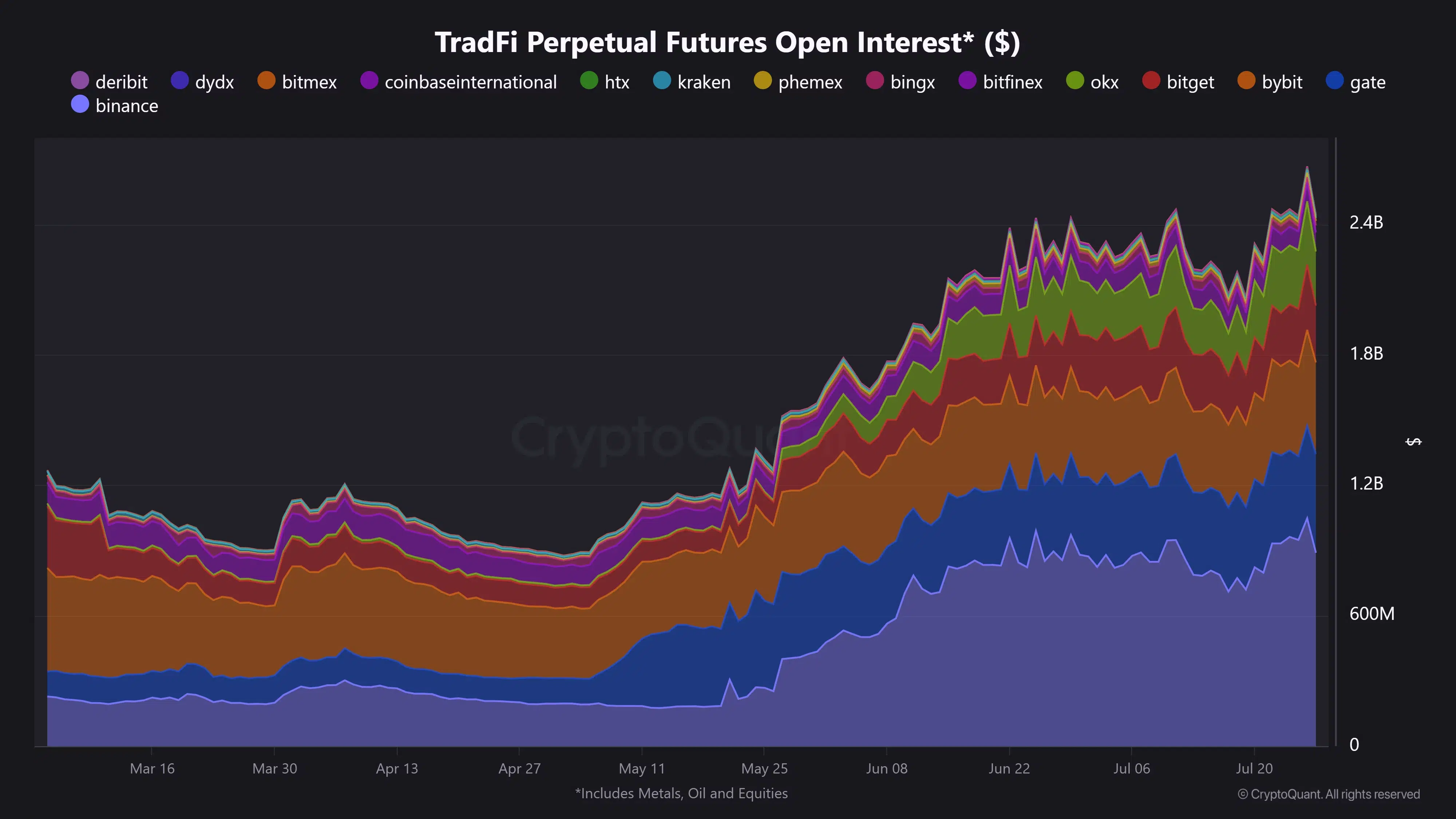
Open interest in these products remained between roughly $350 million and $500 million during spring 2026. It then rose sharply from late May, crossing $2 billion by July.
The increase allows crypto exchanges to compete more directly with traditional trading platforms. Crypto venues can offer the contracts around the clock, including during hours when conventional stock and commodity markets are closed.
Despite the rapid growth, TradFi perpetuals remain small compared with crypto derivatives. CryptoQuant estimated that the segment represents only around 3% of the roughly $65 billion held in cryptocurrency perpetual contracts.
Binance extends its derivatives lead into TradFi
Binance holds the largest share of open interest in both categories, showing how established crypto exchanges are using their liquidity and trading infrastructure to enter traditional asset markets.
CryptoQuant’s headline snapshot placed Binance’s TradFi perpetual open interest at around $720 million, equal to roughly 35% of the market. Bybit and Gate followed with about $381 million each.
Together, the three exchanges accounted for around 70% of TradFi perpetual open interest. Adding OKX and Bitget brought the top five’s share to approximately 93%, leaving the remaining capital spread across smaller venues.
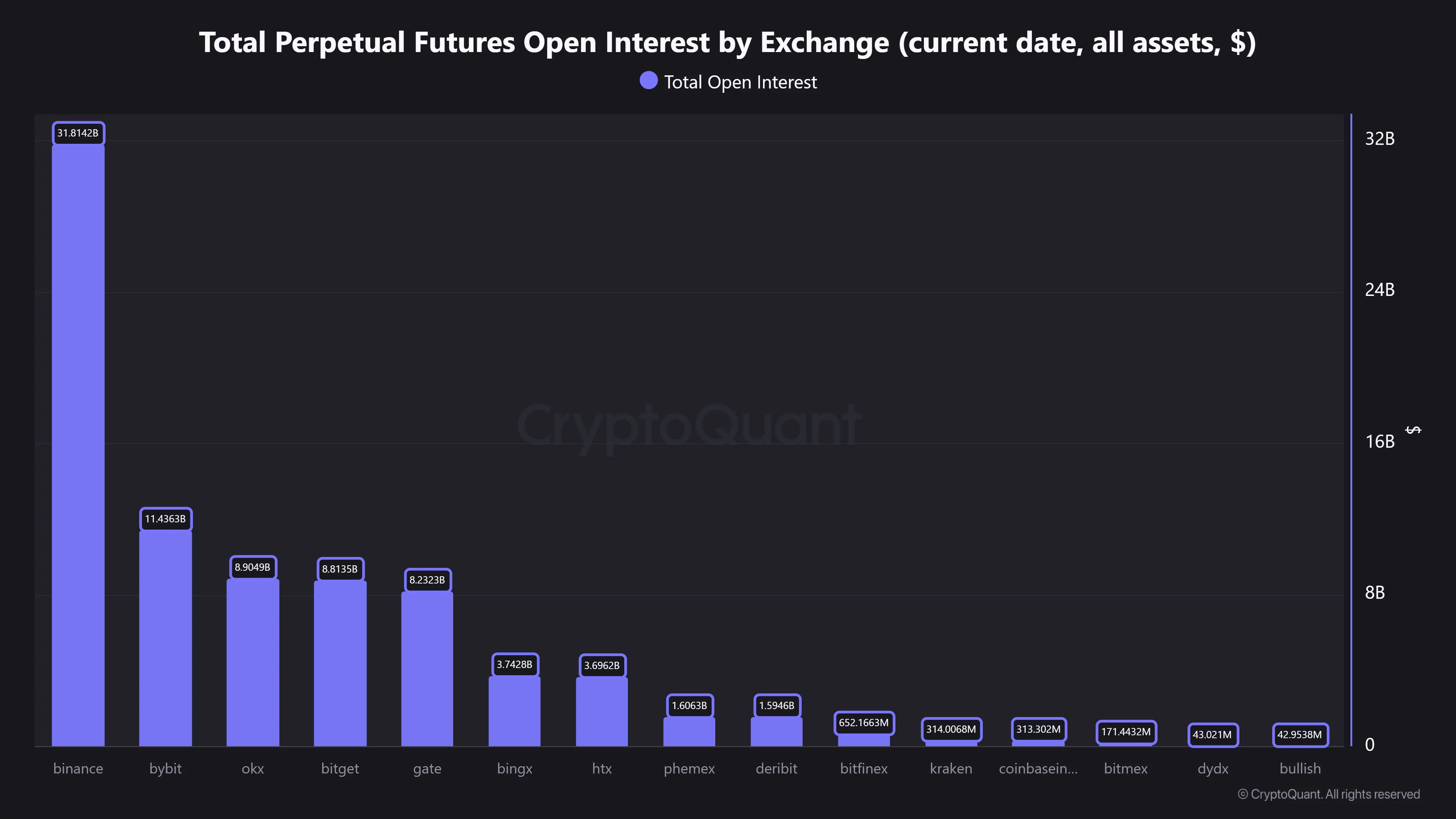
The concentration mirrors the structure of the crypto perpetual market. Binance held about $22.86 billion, or 35%, of crypto perpetual open interest in the report’s main snapshot. Bybit followed with $9.67 billion, while Gate held $8.61 billion.
Those three platforms controlled approximately 63% of crypto perpetual open interest. The five largest exchanges, including Bitget and OKX, accounted for about 81%.
Crypto perpetuals remain below previous peaks
Aggregate crypto perpetual open interest has expanded five to six times since early 2023, when it stood near $12 billion to $15 billion.
Capital in outstanding contracts reached about $80 billion in September 2025 and returned to a similar level in early 2026. It has since fallen by roughly 20% to around $65 billion.
CryptoQuant interpreted the decline as evidence of deleveraging or capital withdrawals rather than fresh money entering the crypto derivatives market. The fall contrasts with the growth in products tracking traditional assets.
However, the $2 billion TradFi segment is not yet large enough to offset changes in the broader crypto perpetual market. Its expansion instead shows exchanges adding new markets while retaining the same concentration of capital among the largest operators.
US perpetual futures market follows a regulated path
US investors are gaining access to similar products, but domestic contracts operate under a different regulatory structure.
Coinbase Financial Markets offers US customers CFTC-regulated perpetual-style futures that trade nearly around the clock. Unlike offshore perpetuals with no expiry, Coinbase’s contracts have five-year terms and use funding payments to stay aligned with spot prices.
The US market is also moving toward true perpetual contracts. In May, the Commodity Futures Trading Commission approved Kalshi’s cash-settled Bitcoin perpetual futures contract, which has no fixed expiration date and trades continuously. The regulator said its assessment applies on a contract-by-contract basis and does not automatically cover perpetuals tied to non-crypto assets.
CryptoQuant’s findings suggest that demand for continuous trading is spreading beyond cryptocurrencies. Whether TradFi perpetuals become a larger source of exchange capital will depend on liquidity growth, regulatory access, and whether traders continue moving activity from conventional venues.