

 By
By Staking, Lending & Liquidity Pools
When Staking Rewards Become Taxable Income
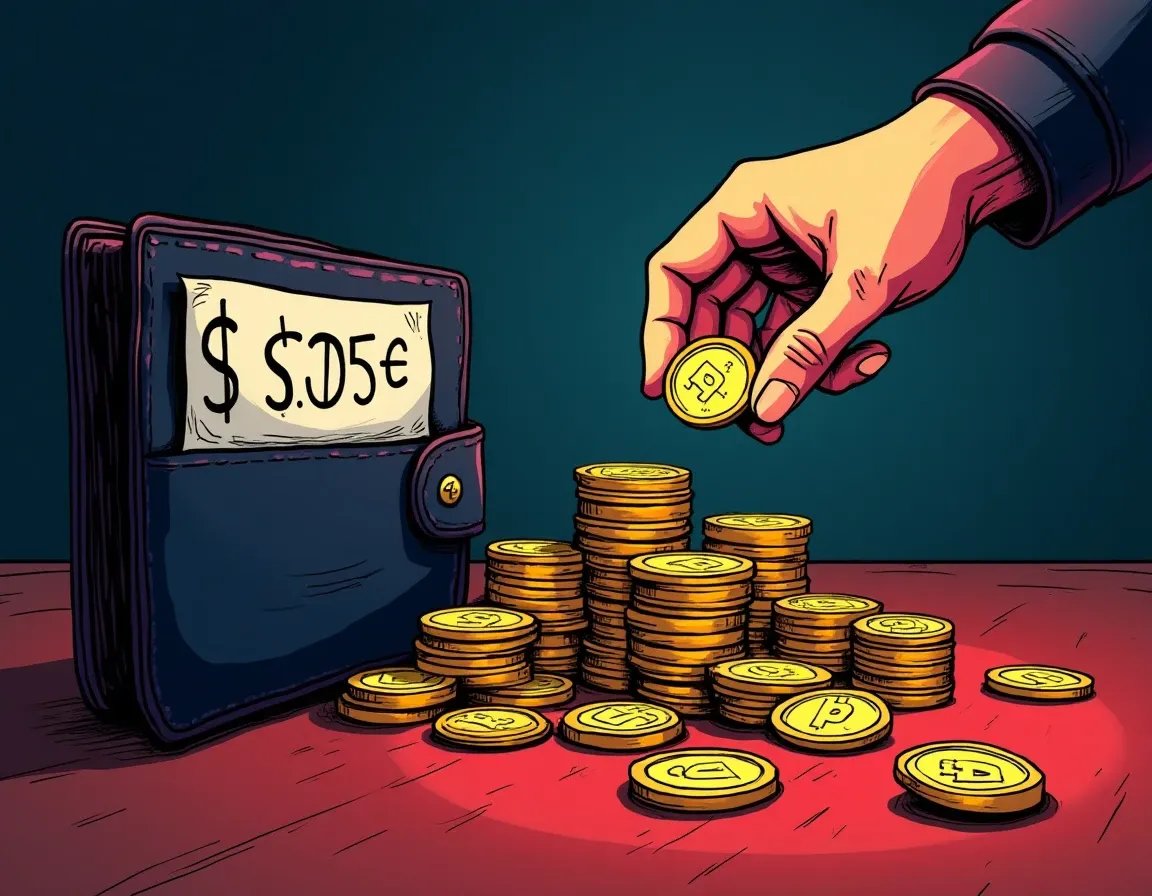
The IRS has released explicit guidance: staking rewards are considered ordinary income based on their fair market value at the moment you gain dominion and control. That phrase, dominion and control, is the entire test. If you can move the tokens, they are taxable. If they are locked in a protocol and you cannot access them, they are not taxable until the lock expires and the tokens land in a wallet you control.
In practice, most staking protocols release rewards immediately. When you stake 10 ETH through Rocket Pool and receive rETH, the liquid staking token accrues value continuously as rewards compound. The tax treatment is under debate. When you stake on Cosmos and receive rewards every few seconds that are freely transferable, those rewards are taxable at receipt. When you stake on Polkadot and your rewards remain bonded for 24 to 48 hours, you have a defensible argument for deferring recognition until unbonding completes. The IRS has not issued specific guidance on lock-up periods, but the constructive receipt doctrine supports postponing the income event when access is genuinely restricted.
Federal income tax rates in the United States for 2026 range from 10% to 37% depending on taxable income and filing status. If you receive 0.05 ETH as a staking reward when the price is $3,200, you recognize $160 of ordinary income on that date. Your cost basis in the 0.05 ETH becomes $160. When you later sell that ETH for $3,400, you recognize an additional $10 capital gain (0.05 ETH times $200 price increase). This is the double taxation structure inherent in crypto staking returns: ordinary income at receipt, capital gain or loss at disposal.
Phantom income is the risk that breaks most stakers. If you receive staking rewards when the token price is high, you owe tax on that value even if the market collapses before you sell. A staker who earned 2 ETH in rewards at $4,000 per token recognizes $8,000 in ordinary income. If ETH falls to $2,000 before year-end, the staker still owes tax on the original $8,000, even though the tokens are now worth $4,000. The only offset is a capital loss deduction when the tokens are sold, and capital losses are capped at $3,000 per year against ordinary income in the United States.
Lending Interest And The Thousand-Event Problem
Interest earned from lending protocols like Aave, Compound, and Morpho is taxed as ordinary income when it accrues to your wallet or becomes available to claim. The challenge is that many DeFi lending protocols update your balance with every Ethereum block, which occurs roughly every 12 seconds. If you lend USDC on Aave for a full year, you could theoretically have over 2.6 million micro-income events.
Most crypto tax software aggregates these micro-accruals into a single reportable figure per tax year. The software pulls your wallet history from on-chain data, calculates the cumulative interest earned, and reports it as ordinary income. You are not expected to report 2.6 million line items. You report the total interest income for the year, valued at the fair market value of the tokens when they became claimable.
Taking out a DeFi loan is generally not a taxable event. You are borrowing, not disposing of assets. However, some protocols require you to swap tokens during the borrowing process. If you deposit ETH as collateral and the protocol auto-converts a portion to a wrapped token or synthetic asset, that conversion is a taxable swap. The loan itself remains non-taxable, but the mechanics of entering the position may trigger a capital gain or loss.
If you receive crypto interest from a lending protocol, the tax treatment mirrors staking rewards. You recognize ordinary income at the fair market value of the tokens when they are paid or become claimable. The tokens then have a cost basis equal to that income amount. When you sell, you recognize capital gain or loss based on the difference between sale price and basis.
Liquidity Pool Deposits, Fees, And The V2 Versus V3 Distinction

Under current IRS guidance, depositing tokens into a liquidity pool is likely treated as a taxable exchange. You dispose of your original tokens and receive LP tokens in return. This means that if you deposit 1 ETH and 3,200 USDC into a Uniswap pool, the IRS may view that deposit as a taxable swap of ETH and USDC for a new asset (the LP token). Most tax practitioners treat this as a taxable event, valuing the LP token at the fair market value of the assets contributed. Your LP token’s cost basis equals the value of the contributed assets. If you deposited 1 ETH at $3,200 and 3,200 USDC, your LP token’s initial cost basis is $6,400. Gas fees can be added to the cost basis as a transaction cost.
Trading fees are the primary income stream for liquidity pool providers. Every swap in the pool pays a fee, typically 0.3% on Uniswap v2. The tax treatment of those fees depends on the pool design.
In Uniswap v2-style pools, fees are automatically reinvested into the pool. The value of your LP token grows continuously as fees accumulate, but there is no discrete event when fees are paid. When you withdraw from the pool, you receive more tokens than you deposited. The gain over your original basis includes both price appreciation and accrued fees. Most US tax practitioners treat the entire withdrawal gain as a capital gain because there is no clean way to separate fee income from price movement. The IRS has not issued specific guidance on this point, but the lack of a discrete income event supports capital gain treatment at withdrawal.
In Uniswap v3-style pools, fees are claimed explicitly. You initiate a transaction to collect accrued fees, and the protocol sends you a specific dollar amount of tokens. The most defensible tax treatment is to recognize those fees as ordinary income at the time of claim, valued at the fair market value of the tokens received. This creates a separate income event distinct from the LP position itself. When you later withdraw your principal from the pool, you recognize capital gain or loss based on the difference between the LP token’s withdrawal value and its original cost basis.
Incentive rewards distributed by protocols (CRV on Curve, UNI on Uniswap, CVX on Convex) are separate from trading fees. These tokens are typically claimed or “harvested” through a discrete transaction. They are taxed as ordinary income at their fair market value on the date you gain control. If you claim 100 CRV tokens when the price is $0.80, you recognize $80 of ordinary income and establish an $80 cost basis in the CRV. When you sell the CRV, you recognize capital gain or loss from that basis.
Impermanent loss is not tax-deductible under current law. IL represents an opportunity cost relative to holding the underlying assets, not a realized loss. Only when you withdraw from the pool and recognize a capital loss on the LP token can you claim a tax deduction. If you deposited assets worth $10,000, suffered impermanent loss, and withdrew LP tokens worth $8,000, you have a $2,000 capital loss on the LP position. That loss is deductible. The unrealized IL that accrued while the position was open is not.
Airdrops And The No-Claim Fiction
According to IRS Revenue Ruling 2019-24, crypto received from an airdrop is taxable as ordinary income when you have dominion and control. The ruling explicitly rejects the argument that airdrops are gifts. The IRS views them as promotional distributions, rewards for participation, or compensation, all of which constitute taxable income.
The timing question is unresolved. If an airdrop allocates tokens to your wallet address but requires you to pay a gas fee to claim them, when does the taxable event occur? The IRS has not clarified whether income recognition happens when the tokens are first made available (even if you take no action) or only when you claim them. Most conservative practitioners report income when the tokens become available, valued at the fair market value on that date. Aggressive practitioners defer recognition until the claim transaction is executed.
If you did not actively claim an airdrop but it appeared in your wallet, you still owe tax. The fact that you did not request the tokens is irrelevant. If you have access and control, the income is recognized. The valuation date is the moment the tokens arrived in your wallet. If the airdrop occurred when the token had no liquid market, determining fair market value becomes more difficult, but the obligation to report remains.
Liquid Staking Tokens And The Six-Figure Tax Dispute
When you stake ETH through a liquid staking protocol and receive stETH, rETH, or another liquid staking token in return, the tax treatment is contested. A legal memo from Jito Labs argues that minting or redeeming liquid staking tokens may not trigger a taxable event in the United States because you are receiving a representation of your staked asset rather than a fundamentally different one. The Uniswap Foundation and many conservative tax practitioners disagree, treating the mint as a taxable swap of ETH for a new asset.
The dispute creates six-figure tax exposure differences for large positions. If you stake 100 ETH at $3,200 and receive 100 stETH, the aggressive position treats this as a non-taxable event with a carryover basis. The conservative position treats it as a taxable swap with a $320,000 gain if your ETH basis was zero. For a taxpayer in the 37% federal bracket, the difference in immediate tax liability is over $100,000.
Rebasing liquid staking tokens create an additional layer of ambiguity. Lido’s stETH rebases daily to reflect staking rewards. Each rebase increases your token balance. The aggressive position defers all tax until you redeem stETH for ETH, treating the rebases as non-taxable adjustments to the number of shares you hold in a pooled staking position. The conservative position treats each rebase as a taxable income event, with ordinary income recognized daily as your balance grows. The IRS has issued no guidance specific to rebasing LSTs.
Wrapped versions of rebasing tokens (wstETH) do not rebase. Instead, the token’s value per unit increases. Most practitioners treat wrapping and unwrapping as non-taxable events because you are converting between representations of the same economic position. The safest documentation practice is to record the wrap and unwrap transactions with carryover basis and recognize no gain or loss at those steps.
Tax Deferral Opportunities And What The Law Actually Allows
Proposed legislation in the United States would allow taxpayers to postpone recognition of income from staking or mining rewards for up to five years. The bill has been introduced but is not law. Under current law, immediate recognition is required when you gain dominion and control over the tokens.
Lock-up periods create the strongest deferral argument under existing doctrine. If your rewards are subject to a protocol-enforced lock and you genuinely cannot move them, the constructive receipt rule may defer the income event until the lock expires. This argument is most defensible when the lock is meaningful (14 days or longer), non-discretionary, and documented in the protocol’s code. A 12-hour auto-compounding delay is unlikely to support deferral. A 21-day Cosmos unbonding period is more defensible.
Slashing risk does not eliminate the income event. If you receive staking rewards and the protocol later slashes your validator, reducing your balance, the IRS has not clarified how to treat the slashed tokens. The most conservative approach is to recognize ordinary income at receipt and claim a capital loss when the slash occurs. The capital loss is limited by annual deduction caps. Documenting the protocol’s slash terms and the specific event that triggered the penalty is essential if you claim the loss.
Estimated Tax Payments And The Penalty Most Yield Earners Miss
In the United States, if you earn income that is not subject to withholding (including all crypto yield), you are generally required to make quarterly estimated tax payments. If you owe more than $1,000 in tax for the year and did not pay at least 90% of your current year’s liability or 100% of the prior year’s liability through withholding or estimates, you may owe an underpayment penalty.
Most people who earn stablecoin yield or staking rewards do not make estimated payments. They wait until April and pay the full amount due. The IRS assesses a penalty for underpayment, calculated as interest on the unpaid amount from the due date of each quarterly installment. The penalty is not large (typically 3% to 8% annually), but it is automatic and non-discretionary.
If you earn $10,000 in staking rewards over the course of the year and owe $3,000 in federal tax on that income, you should make four estimated payments of $750 each by the quarterly deadlines (April 15, June 15, September 15, and January 15 of the following year). If you instead pay the full $3,000 in April when you file your return, you will owe an underpayment penalty for the delay.
The safe harbor is to pay 100% of your prior year’s total tax liability (110% if your adjusted gross income exceeds $150,000). If you owed $20,000 in total federal tax last year, you can avoid the underpayment penalty by paying $20,000 in estimated taxes this year, even if your actual liability turns out to be higher. You will owe the additional amount when you file, but you will not owe a penalty for underestimating.
Cost Basis Tracking And The Record Most Platforms Do Not Provide
Every time you receive yield income, you establish a new tax lot with a cost basis equal to the fair market value at receipt. If you stake continuously and receive rewards every few days, you accumulate dozens or hundreds of tax lots over the course of a year. When you sell, you must identify which lots you are disposing of in order to calculate gain or loss.
Most DeFi protocols do not issue tax forms. Centralized exchanges are beginning to issue Form 1099-DA for 2025, but that form covers only exchange activity, not DeFi protocol transactions. You are responsible for tracking every yield payment, recording the date, the quantity of tokens received, and the fair market value on that date. This data is required to calculate both your income tax liability and your cost basis for future sales.
Crypto tax software automates this process by pulling transaction data from the blockchain and matching it to historical price feeds. The software identifies staking rewards, lending interest, LP fee claims, and airdrop receipts, assigns fair market value based on the timestamp, and generates a tax report. Without software or meticulous manual records, reconstructing a year of yield income is impractical for most users.
Gas fees paid to claim rewards are not deductible as ordinary expenses. They can be added to the cost basis of the tokens received, reducing your capital gain when you sell. If you pay $15 in gas to claim $200 worth of staking rewards, you recognize $200 of ordinary income and establish a cost basis of $215 in the tokens received.
What The Tax Law Ignores And What That Costs You
Current tax law treats every yield mechanism identically: ordinary income at receipt, capital gain or loss at sale. The law does not distinguish between sustainable yield from protocol fees and unsustainable yield from token emissions. A lending protocol paying 8% from organic borrow demand is taxed the same as a liquidity mining program paying 80% from inflationary token rewards.
This creates a structural mismatch for users in high-inflation economies. In Argentina, Turkey, or Nigeria, stablecoin yield is not speculative income. It is a dollar-denominated savings account that replaces a collapsing local currency. The tax treatment in those jurisdictions varies, but the user’s economic reality is that the yield is compensating for currency deprecation, not generating excess return. In the United States, where the IRS guidance is clearest, the tax code does not recognize that distinction. A US taxpayer earning 5% on USDC pays the same ordinary income tax as a US taxpayer earning 5% on a volatile altcoin, even though the risk and economic substance of the positions are entirely different.
The law also does not account for auto-compounding. If your staking rewards are automatically re-staked and remain locked, the IRS position is that you still recognize income when the rewards are credited, even if you cannot access them without forfeiting future returns. The only exception is if the protocol enforces a genuine lock-up that prevents all access. Voluntary lock-ups (where you choose to re-stake rather than withdraw) do not defer the income event.
In jurisdictions outside the United States, treatment varies. Some countries tax crypto yield as capital gains rather than ordinary income. Others have no clear guidance and users report inconsistently. The United Kingdom treats staking rewards as miscellaneous income, taxable at receipt. Germany exempts certain staking rewards if held for more than one year before sale. Portugal had a zero-tax regime for crypto but introduced a 28% capital gains tax in 2023. Users earning yield across borders face multiple conflicting regimes with no coordination.
The Takeaway
Every staking reward, every lending interest payment, every LP fee claim, and every airdrop is a taxable event under current IRS guidance. The taxable amount is the fair market value of the tokens when you gain dominion and control. The tax is owed in fiat even if you never convert to dollars. The cost basis of those tokens becomes the amount you recognized as income, and when you sell, you owe capital gains tax on the appreciation from that basis.
The double taxation is intentional. The phantom income risk is real. The documentation burden falls entirely on you, and the penalties for underestimating are automatic. Lock-ups may defer the income event, but only if they are genuine and protocol-enforced. Liquid staking tokens, rebasing mechanisms, and auto-compounding all create unresolved questions that will eventually be litigated or clarified by regulation. Until then, the conservative position is to recognize income at every accrual and document every transaction. The yield you earn is taxable. The question is only when and at what rate.
Frequently Asked Questions
Are staking rewards taxed when I receive them or when I sell them?
Staking rewards are taxed twice. You owe ordinary income tax at the fair market value when you receive them and gain dominion and control. When you later sell those tokens, you owe capital gains tax on any appreciation from your cost basis, which equals the amount you recognized as income at receipt. If rewards are locked and you cannot access them, the income event may be deferred until unlock, but this is contested and depends on the specific protocol terms.
Do I owe taxes on liquidity pool fees if I never withdraw them?
It depends on the pool design. In Uniswap v2-style pools, fees auto-reinvest and most practitioners treat the gain as taxable only at withdrawal, recognized as capital gain. In Uniswap v3-style pools, fees are claimed explicitly and most defensible treatment is ordinary income at claim time. Incentive rewards like CRV or UNI are taxed as ordinary income when claimed, separate from trading fees.
Is lending interest on Aave or Compound taxed with every block update?
Technically yes, but practically no. DeFi lending protocols accrue interest every block, creating thousands of micro-income events per year. Most crypto tax software aggregates these into a single annual income figure. You report the total interest earned for the year as ordinary income, valued at fair market value when it became claimable. You do not file thousands of separate line items.
Are airdrops taxable even if I didn’t claim them or request them?
Yes. IRS Revenue Ruling 2019-24 states that airdropped tokens are ordinary income when you have dominion and control, regardless of whether you requested them. If tokens appear in your wallet and you can access them, you owe tax at their fair market value on the date received. The timing for claim-required airdrops is unresolved, but conservative treatment is to recognize income when tokens become available, not when claimed.
Do I need to make estimated tax payments on staking and lending income?
Yes, if your total tax liability exceeds $1,000 and you did not pay at least 90% of the current year or 100% of prior year liability through withholding or estimates. The IRS requires quarterly estimated payments for income not subject to withholding, including all crypto yield. Failing to pay quarterly results in an automatic underpayment penalty, typically 3% to 8% annually on the unpaid amount from each quarterly deadline.
Tool mentioned above
Koinly
Koinly imports from 800+ exchanges and wallets and handles the DeFi cases most tools get wrong – rebasing tokens, LP positions, staking rewards.
We may earn a commission if you sign up through this link, at no cost to you. It does not change what gets recommended.
The Weekly Yield Report
You now know which yield events trigger immediate tax, which create capital gains, and which remain unresolved. Those rules will shift as the IRS clarifies LST treatment and Congress considers deferral proposals.
Every Thursday: where crypto yield actually is – stablecoins, liquid staking and DeFi lending, with the risk named next to the rate and what changed since last week.
Free. No trade calls, no allocations, no hype. Unsubscribe in one
click.