

 By
By Ripple overtakes Kraken as C1 Fund’s largest holding
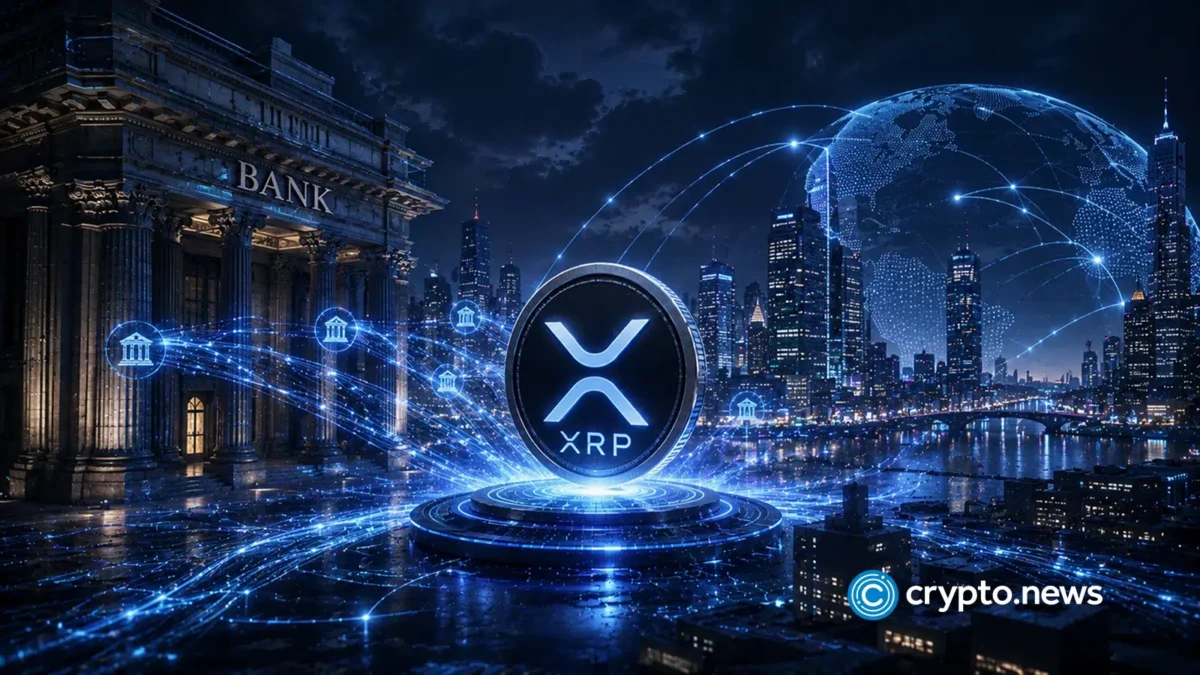
Ripple Labs became the largest private company holding in C1 Fund’s portfolio during the second quarter of 2026, accounting for 17.5% of the NYSE-listed fund’s net assets as of June 30.
Summary
- C1 Fund made Ripple its largest holding, representing 17.5% of net assets on June 30.
- Payward, Kraken’s parent company, ranked second with an allocation equal to 16.9% of net assets.
- Portfolio investments totaled $33.07 million across eleven private digital asset companies on June 30, 2026.
- Ripple’s partial issuer buyback generated an approximately 150% return for C1 Fund within four months.
- C1 Fund repurchased 249,300 shares for $824,440 through July under its existing authorized buyback program.
C1 Fund reported that Ripple narrowly overtook Payward, the parent company of cryptocurrency exchange Kraken. Payward represented 16.9% of net assets at the end of the period.
The fund recorded total net assets of $42.63 million, equal to a net asset value of $6.49 per share. Based on those percentages, Ripple’s position was worth approximately $7.46 million, while Payward’s position was worth about $7.20 million.
Ripple equity leads C1 Fund’s private portfolio
C1 Fund held $33.07 million in private company investments at fair value on June 30. These investments represented 77.5% of its net assets. Another $9.96 million, or 23.3%, was invested in short-term U.S. Treasury securities.
The portfolio covered 11 private or recently public digital asset businesses. Apart from Ripple and Kraken, its holdings included Alchemy, BitGo, Blockchain.com, Chainalysis, ConsenSys, Figment, Fireblocks, Polymarket and Uphold.
C1 Fund added Polymarket parent Blockratize during the second quarter. It also increased several positions that it initially acquired in 2025. The fund selects companies from its C1 30 list, subject to availability and pricing in private secondary markets.
Ripple’s weighting reflects the fund’s remaining equity position after an earlier partial sale. It should not be interpreted as direct ownership of XRP. Ripple shares represent ownership in the private company, while XRP holders receive no claim on Ripple’s revenue, assets or dividends.
As crypto.news previously explained, Ripple equity and XRP remain legally separate assets. Their values may respond to some of the same corporate developments, but they represent different rights and risk profiles.
Ripple buyback delivered C1 Fund’s first private exit
C1 Fund sold 1,407 Ripple Series A preferred shares back to the company for $422,100 during a Ripple-sponsored transaction announced in April. The fund said the sale generated an approximately 150% return in less than four months.
The return applied only to the shares involved in that transaction. It was not a 150% increase across C1 Fund’s entire Ripple holding or a verified measure of Ripple’s broader private-market valuation.
C1 Fund retained substantial Ripple exposure after the sale. Its remaining position becoming the largest holding shows that the partial exit reduced, rather than eliminated, its investment in the company.
Private company shares do not trade continuously on public exchanges. C1 Fund therefore values these positions using fair-value procedures. Prices may incorporate secondary transactions, issuer buybacks and other valuation inputs unavailable in a liquid public market.
Other publicly accessible funds have also reported small Ripple equity positions. A Kinetics mutual fund disclosed 1,875 Class A Ripple shares valued at $246,319, as crypto.news reported from its quarterly SEC portfolio filing. That position represented roughly 0.1% of the fund’s net assets.
C1 Fund shares remain below reported NAV
C1 Fund finished the quarter with 6,568,348 shares outstanding and a NAV of $6.49 per share. CFND traded around $2.85 at the end of August, placing its market price more than 50% below the reported quarter-end NAV.
A closed-end fund’s stock price can trade above or below the value of its underlying portfolio. The discount does not necessarily indicate that investors assign the same reduction to Ripple or any individual holding. It can also reflect fees, limited liquidity, valuation uncertainty and the difficulty of exiting private investments.
C1 Fund has been buying its own shares in an attempt to take advantage of that gap. Through July 31, it repurchased and retired 249,300 shares for an aggregate $824,440.
Its board authorized up to $3 million in repurchases in January. The program remains subject to market conditions and SEC requirements, and authorization does not require the fund to spend the full amount.
IPO activity could create new liquidity routes
Kraken and Blockchain.com have submitted confidential registration statements for potential U.S. public offerings. A confidential filing begins the SEC review process but does not guarantee that either company will proceed with an IPO.
Kraken co-CEO Arjun Sethi confirmed that Kraken had entered the confidential IPO process in April. Blockchain.com later disclosed a similar step, although neither company has announced final pricing or a listing date.
An eventual listing could give C1 Fund a clearer market price for those positions and potentially create a path to sell shares after any lockup period. BitGo, another portfolio company, completed its IPO in January 2026.
Ripple has not publicly filed for an IPO or announced a listing timetable. Its position will therefore continue to rely on private-market valuation inputs unless another issuer-led transaction or liquidity event occurs.
C1 Fund said it would file its full Form N-PORT for the June 30 period with the SEC. That filing will provide more detailed portfolio information, including security types, values and valuation classifications. Future quarterly reports will show whether Ripple remains ahead of Kraken or whether later transactions change the portfolio rankings.