


 By
Jupiter Lend USDC 7.7% Position Sizing After Rate Jump
What You’re Sizing Into: The 2.33 Percentage Point Jump On $473M TVL

Jupiter Lend’s USDC pool jumped from 5.38% to 7.71% APY. That’s a 2.33 percentage point increase on a protocol holding approximately $473 million in USDC deposits at the time of the move. On a $150,000 position, the rate improvement generates $3,495 in additional annual yield.
The jump signals one of two conditions: borrower demand spiked relative to deposit supply, or large depositors withdrew capital and drove utilization higher. Both patterns are visible on-chain before they hit rate aggregators.
Jupiter Lend currently holds $1.112 billion in total value locked across all assets as of October 2026. Over the past 30 days, the protocol generated $4.11 million in fees with $207,241 in protocol revenue, translating to $34.37 million in annualized fees. That’s a 3.1% fee yield on total TVL. When USDC rates spike to 7.71%, you’re earning more than twice the protocol’s fee yield baseline. That spread won’t hold.
Your allocation ceiling depends on whether your capital is already on Solana, your tolerance for network outage risk, and how much collateral liquidation timing matters to your position.
Solana Network Risk: Outages, Oracle Staleness, And Liquidation Timing

Solana has not experienced a full network outage since February 6, 2024. The official status page showed roughly 100% uptime over the trailing 90 days as of June 2026. That’s the good news.
The bad news arrived on August 12, 2026, when a routing issue at TeraSwitch temporarily disconnected validators controlling 28.83% of all staked SOL. The mainnet continued processing transactions throughout the incident, but the event demonstrated a real scenario where nearly 29% of stake goes offline.
When Solana experiences an extended outage, your collateral can’t be moved during the outage, but interest continues to accrue. Price oracles go stale, creating gaps that get exploited the moment the network resumes finality. If you’re using SOL or liquid staking tokens like JitoSOL as collateral, a price drop during an outage means both your collateral and your purchased SOL lose value simultaneously. You can’t rebalance. You can’t add collateral. You discover you’re undercollateralized only after liquidation has already occurred.
Jupiter Lend uses Pyth oracles for price feeds. During a network stall, those oracles freeze. Liquidation engines rely on those prices. When finality returns, liquidations execute at stale prices before you can respond. This is the edge case that determines your ceiling allocation.
If the network slows down, liquid staking tokens like JitoSOL or mSOL may temporarily trade at a discount because arbitrageurs cannot quickly close the gap. Your collateral devalues in two directions: the underlying SOL price and the LST depeg discount.
Position Sizing Ceilings By Capital Location And Risk Tolerance
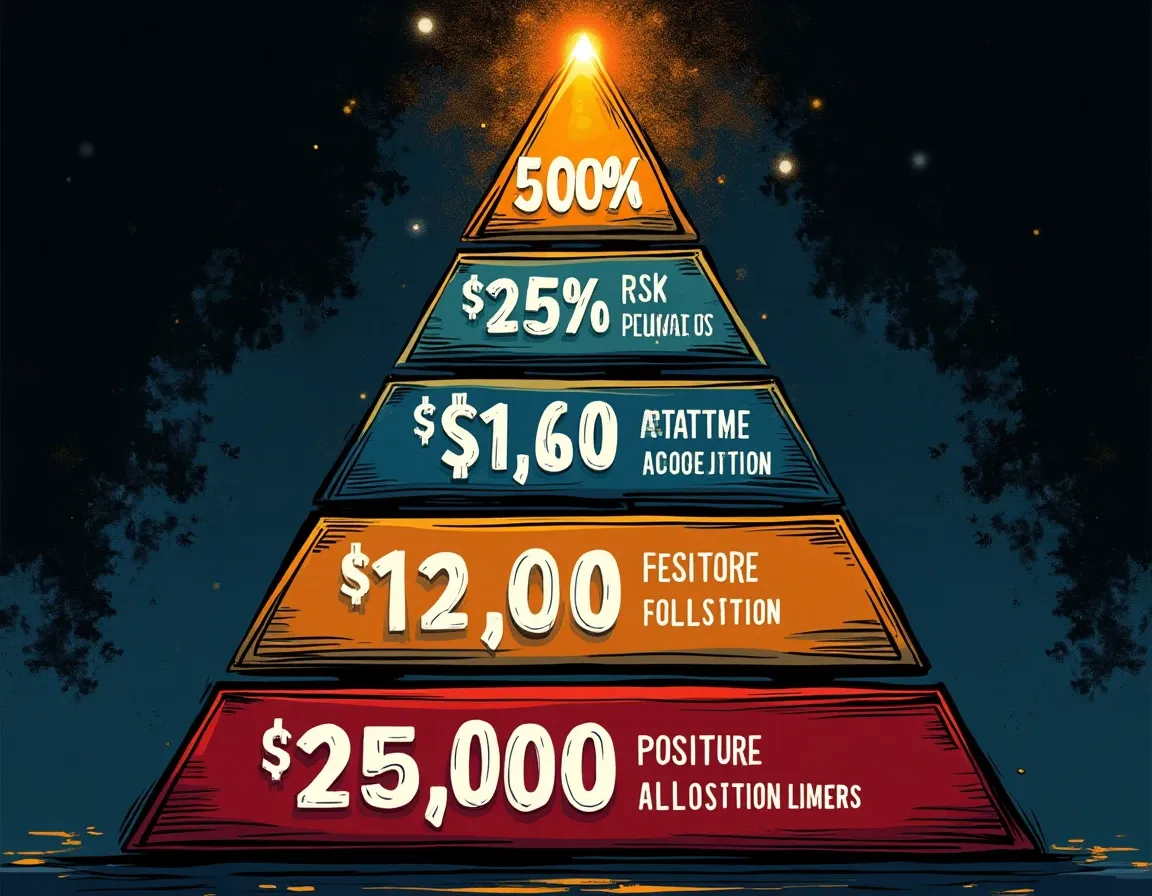
Your allocation ceiling is determined by three variables: whether your capital is already on Solana, your exposure to network outage liquidation risk, and your time horizon.
Conservative Allocation (0-25%): Capital Not Yet On Solana, Outage Sensitivity
If your capital is on Ethereum or a centralized exchange and you’re bridging specifically for this rate, your ceiling is 25% of intended stablecoin allocation. Here’s why.
Bridging USDC from Ethereum to Solana costs $15-45 in total gas, almost entirely driven by Ethereum network congestion. USDC approval costs $5-15, the burn transaction on Ethereum costs $10-30, and Circle’s Cross-Chain Transfer Protocol finalizes in approximately 20 minutes. Allbridge Core offers an alternative at roughly 0.1% plus a small gas reimbursement, with Solana settlement under 30 seconds. A centralized exchange withdrawal costs $10-30 and takes 10-30 minutes depending on the platform.
On a $150,000 position, you’ll pay $30 in bridge costs (midpoint estimate). At 7.71% APY, you earn $11,565 annually. At 5.38% APY (the pre-jump baseline), you earn $8,070 annually. The 2.33 percentage point improvement generates $3,495 in additional yield. Your bridge cost is recovered in 3.1 days.
The problem is rate sustainability. Jupiter Lend’s annualized fee yield is 3.1% on total TVL. A 7.71% USDC rate is funding approximately 2.5x the protocol’s revenue baseline. That rate requires sustained borrower demand at elevated utilization levels. When borrowed supply dries up, the APY collapses toward the fee yield floor.
If you’re bridging capital onto Solana, allocate conservatively unless you believe the 7.71% rate will hold for at least 30 days. Use only USDC or USDT pairs. Avoid SOL collateral unless you’re prepared for liquidation timing risk during outages.
Moderate Allocation (25-50%): Capital Already On Solana, 6+ Month Horizon
If your stablecoins are already on Solana, you’ve eliminated bridge cost and bridge risk. Your ceiling moves to 50% of stablecoin allocation if you accept the following conditions.
You must monitor loan-to-value ratios daily. Jupiter Lend uses isolated vaults with higher LTV ceilings than pooled designs, but those parameters vary by collateral pair. Document which vault you’re using and its specific LTV threshold. If you’re using SOL or LST collateral, you accept the risk that a price drop during a network outage could liquidate your position before you can add collateral.
Jupiter launched Lend v2 on August 10, 2026, introducing Smart Collateral and Smart Debt features that allow supplied and borrowed assets to generate lending yield while also participating in trading liquidity. If you deposit USDC, USDT, SOL, or JupSOL, the protocol can compose it into a correlated liquidity pair. Your position earns lending yield, trading fees, and (where applicable) native staking rewards from a single deposit.
That composability introduces additional risk surfaces. Your position is no longer a simple deposit. It’s a liquidity pair exposed to impermanent loss, a lending position accruing interest, and (for LSTs) a staking position subject to validator performance. Each layer adds a failure mode.
A 50% allocation into Jupiter Lend USDC is appropriate if you’re already on Solana, you monitor utilization daily, and your time horizon is at least six months. On a shorter horizon, the rate mean reversion risk outweighs the yield improvement.
Aggressive Allocation (50%+): On-Chain Capital, Rate Sustainability Conviction
Allocations above 50% are appropriate only if you’ve bridged capital onto Solana already and you believe the 7.71% rate will sustain above 6% for the next 90 days. This is a high-conviction, high-turnover strategy.
At this allocation level, you’re betting that borrower demand remains elevated relative to deposit supply. That requires monitoring utilization in real time. The 2.33 percentage point jump likely reflects a utilization spike, not a change in market-wide stablecoin rates. When utilization normalizes, the rate collapses.
Jupiter Lend has undergone multiple audits including Certora formal verification (January-March 2026), Code4rena (February-March 2026), and OtterSec reports (August-November 2025). The protocol is formally verified with seven audits. A security audit is a point-in-time review by a third party that lowers risk but does not guarantee that a program is free of bugs or that funds cannot be lost.
Your aggressive allocation ceiling is 75% of stablecoin capital if all of the following are true: you’re already on Solana, you monitor LTV daily, you accept liquidation timing risk during outages, and you have an exit plan for when utilization drops below 70%.
How To Monitor Utilization And Exit Triggers
The 7.71% rate won’t hold indefinitely. Your position sizing strategy must include real-time utilization monitoring and predefined exit triggers.
Utilization is the ratio of borrowed supply to total deposits. When utilization rises, rates rise. When deposits flood in or borrowers repay, utilization falls and rates collapse. Jupiter Lend’s utilization data is visible on-chain and aggregated by DefiLlama’s Jupiter Lend protocol page.
Set your exit trigger at 70% utilization. Below that threshold, rates typically compress toward the protocol’s base fee yield (approximately 3.1% for Jupiter). If utilization drops from 85% to 68% in a single week, your rate could fall from 7.71% to under 5% in the same period.
Monitor active loans versus total deposits. If borrowed supply is concentrated in a small number of wallets, a single large repayment event can crash utilization and rates overnight. Wallet-level borrower composition is visible on Solscan and Arkham. If three wallets account for 40% of borrowed USDC, you have concentration risk.
Track the USDC deposit trend over a rolling seven-day window. If deposits are growing faster than borrowed supply, utilization will fall and your rate will compress. Jupiter Lend’s TVL increased 0.5% over the past 30 days as of mid-October, but earlier in the same period TVL swung from $2.06 billion to $1.85 billion. Those swings precede rate volatility.
Your monitoring protocol: check utilization daily, review borrower wallet concentration weekly, and set an alert for when seven-day deposit growth exceeds seven-day borrow growth by more than 10%. That’s your advance signal that rates are about to compress.
Bridge Cost Breakeven And Gas Comparison
If you’re moving capital onto Solana specifically for this rate, bridge cost breakeven determines whether the allocation makes sense.
Circle’s Cross-Chain Transfer Protocol (CCTP) costs $15-45 total, almost entirely Ethereum gas. USDC approval costs $5-15, the burn transaction on Ethereum costs $10-30, and Solana settlement is near-instant once Ethereum finality is reached. Total time is approximately 20 minutes.
Allbridge Core charges approximately 0.1% plus a small gas reimbursement, with Solana settlement in under 30 seconds. On a $150,000 transfer, that’s $150 in fees plus gas reimbursement. CCTP is cheaper for large transfers when Ethereum gas is under $20 per transaction.
A centralized exchange withdrawal (Coinbase, Binance, Kraken) costs $10-30 in withdrawal fees and takes 10-30 minutes. For capital already sitting on an exchange, this is the fastest and cheapest path onto Solana.
Once on Solana, transaction costs are under $0.01 per USDC transfer with approximately two-second finality. Ethereum mainnet USDC transfers cost $2-20 depending on network congestion with roughly 13 minutes to finality. If you’re planning to rebalance across multiple protocols as rates shift, Solana’s gas savings are material. On ten rebalancing transactions per month, you save $20-200 in gas compared to Ethereum.
Your bridge cost breakeven at current rates: $30 bridge cost divided by $3,495 annualized yield improvement equals 3.1 days. If you believe the 7.71% rate will hold for at least two weeks, the bridge cost is immaterial. If you believe the rate will compress within one week, bridge cost eats a meaningful portion of your yield improvement.
Failure Modes To Document Before You Allocate
Four failure modes determine your actual risk ceiling beyond the headline APY.
First: oracle staleness post-outage. Jupiter Lend relies on Pyth oracles for price feeds. If Solana stalls, prices freeze. Your collateral could be liquidated at a stale price once finality returns. During the August 2026 TeraSwitch incident, the network continued processing transactions, but if a future outage halts finality entirely, your liquidation protection is only as good as your pre-outage LTV buffer.
Second: LST depegging during network stress. If you’re using JitoSOL or mSOL as collateral and the network slows, those tokens may temporarily trade at a discount because arbitrageurs cannot quickly close the peg gap. Your collateral devalues in two directions simultaneously: the underlying SOL price drop and the LST depeg discount. This is a Solana-specific risk that doesn’t exist on Ethereum liquid staking.
Third: fee revenue versus borrow demand mismatch. Jupiter Lend’s annualized fees are $34.37 million on $1.1 billion TVL, a 3.1% fee yield. A 7.71% USDC rate is paying out more than twice the protocol’s revenue baseline. That’s sustainable only if borrower demand remains elevated. When demand normalizes, rates compress toward the fee yield floor. The 7.71% rate is a temporary spike, not a new equilibrium.
Fourth: governance and multisig risk. Jupiter’s baseline of audits and formal verification remains, but protocol leaders have noted that securing code is table stakes and that the attack surface has broadened substantially to include governance, contributors, and operational security. Jupiter is expanding its use of multisigs and timelocks. If a governance attack or multisig compromise occurs, your funds are at risk regardless of how strong the smart contract audits are.
Document these failure modes before you allocate. Your position sizing ceiling should account for the probability-weighted loss from each mode, not just the headline APY.
What To Do Next: Allocation, Monitoring, And Exit Planning
Your next steps depend on where your capital currently sits and your tolerance for Solana-specific risk.
If your capital is on Ethereum or a centralized exchange, bridge $30,000-$37,500 (25% of a $150,000 stablecoin allocation) onto Solana using CCTP or a centralized exchange withdrawal. Deposit into Jupiter Lend’s USDC pool. Monitor utilization daily. Set your exit trigger at 70% utilization or a rate drop below 6%.
If your capital is already on Solana, allocate up to 50% of your stablecoin position into Jupiter Lend USDC. Use Smart Collateral features if you’re comfortable with the additional composability risk. Monitor LTV ratios daily if you’re using SOL or LST collateral. Review borrower wallet concentration weekly. Exit when utilization drops below 70% or when seven-day deposit growth exceeds borrow growth by more than 10%.
If you have high conviction that the 7.71% rate will sustain above 6% for 90 days and your capital is already on Solana, allocate up to 75% of stablecoin capital. This is an active, high-turnover strategy. You’re betting on sustained borrower demand. Monitor utilization in real time. Have a predefined exit plan for when utilization compresses.
Track Jupiter Lend’s on-chain activity using DefiLlama, Solscan, and Arkham. Watch for large deposit inflows (which compress rates) or large borrower repayments (which also compress rates). The signal will be visible on-chain before it shows up in aggregator APY feeds.
Compare your Jupiter Lend USDC allocation against the protocol’s utilization and fee revenue baseline. If the rate is paying out more than twice the protocol’s annualized fees, you’re in a temporary spike. Size accordingly.
The Takeaway
The 7.71% Jupiter Lend USDC rate is paying 2.5x the protocol’s fee yield baseline on $473 million in deposits. Your allocation ceiling is 25% if you’re bridging capital onto Solana, 50% if you’re already on-chain with a six-month horizon, and 75% only if you believe the rate will sustain above 6% for 90 days. Monitor utilization daily. Exit when it drops below 70%. The rate spike is visible on-chain before it compresses. You should be watching.
Frequently Asked Questions
Is the 7.71% Jupiter Lend USDC rate sustainable long-term?
No. Jupiter Lend’s annualized fee revenue is $34.37 million on $1.1 billion TVL, a 3.1% baseline yield. The 7.71% USDC rate is paying approximately 2.5x the protocol’s revenue baseline, which requires sustained elevated borrower demand. When utilization normalizes or deposits increase faster than borrowed supply, the rate will compress toward the 3-5% range. Rates above 7% signal a temporary utilization spike, not a new equilibrium.
What happens to my Jupiter Lend position during a Solana network outage?
During a Solana outage, your collateral cannot be moved, but interest continues to accrue. Price oracles powered by Pyth go stale, creating gaps that can be exploited when the network resumes. If you are using SOL or liquid staking tokens as collateral and their price drops during the outage, you may become undercollateralized and face liquidation at stale prices once finality returns, with no opportunity to add collateral during the outage window.
How much does it cost to bridge USDC from Ethereum to Solana?
Circle’s Cross-Chain Transfer Protocol (CCTP) costs $15-45 total, almost entirely Ethereum gas fees. USDC approval costs $5-15, the burn transaction on Ethereum costs $10-30, and Solana settlement is near-instant. Allbridge Core charges approximately 0.1% plus gas reimbursement with under 30-second settlement. Centralized exchange withdrawals cost $10-30. On a $150,000 position earning 2.33 percentage points more (7.71% vs 5.38%), bridge cost is recovered in 3.1 days.
What utilization level should trigger an exit from Jupiter Lend USDC?
Exit when utilization drops below 70%. Below that threshold, rates typically compress toward Jupiter Lend’s base fee yield of approximately 3.1%. Monitor seven-day deposit growth versus borrow growth. If deposits are growing faster than borrowed supply by more than 10%, utilization will fall and rates will compress. The utilization drop is visible on-chain via DefiLlama, Solscan, and Arkham before it shows up in aggregator APY feeds.
What is the maximum safe allocation into Jupiter Lend USDC at 7.71%?
Your ceiling is 25% of stablecoin allocation if you are bridging capital onto Solana specifically for this rate. It rises to 50% if your capital is already on Solana and you have a six-month or longer time horizon with daily LTV monitoring. Allocations above 50% are appropriate only if you are already on-chain, believe the rate will sustain above 6% for 90 days, and monitor utilization in real time with a predefined exit plan.
The Weekly Yield Report
You just sized three allocation tiers from 25% to 75% based on bridge cost, Solana outage risk, and a 70% utilization exit trigger. Those ceilings will shift when the next rate spike hits.
Every Thursday: where crypto yield actually is – stablecoins, liquid staking and DeFi lending, with the risk named next to the rate and what changed since last week.
Free. No trade calls, no allocations, no hype. Unsubscribe in one
click.