
 By
By Is BlockDAG, Cosmos, Algorand, or Internet Computer the Next Crypto to Explode?
Crypto markets move fast, and traders looking for massive gains must spot early setups before mainstream hype kicks in. Major legacy assets are battling structural resets while high-yield opportunities create urgency for strategic investors. Finding the next crypto to explode requires evaluating real utility, tokenomics, and limited-time incentives. While established networks like Cosmos, Algorand, and Internet Computer struggle with historical price drops, early-stage opportunities offer aggressive returns.
Time is running out for market participants looking to maximize allocations ahead of scheduled network upgrades and buyback events. Below is a breakdown of four major projects shaping present market conversations.
BlockDAG takes the lead on this list due to urgent, time-sensitive incentives driving massive buyer interest. Investors currently have only 2 days left to utilize the promo code “CLAIM50” to unlock 50% extra BDAG. Completing three purchases with code CLAIM50 grants a 50% bonus on both the investor’s eligible existing claim batch and new qualifying orders.
Additionally, buyers can secure early liquidity using code “BUYBACK” at checkout. Acquiring BDAG at $0.0000077 yields instant full allocation and a projected 112X ROI, while locking in a $0.02 buyback on September 1, a full month ahead of the standard October 1 distribution.
Behind these promotional triggers, BlockDAG is actively upgrading its core operational framework. Network nodes are currently undergoing direct reinforcement to increase system durability and bandwidth scaling. While this temporary maintenance may cause minor delays with transfers, balance updates, and on-chain transactions, it strengthens overall network performance.
For investors evaluating which asset functions as the next crypto to explode, BlockDAG presents high-yield metrics paired with an impending deadline that demands immediate action.
2. Cosmos (ATOM): Powerful Infrastructure Battles Tokenomic Friction
Cosmos set out to be the foundational connective layer for decentralized networks. Powered by the Cosmos SDK and the Inter-Blockchain Communication (IBC) protocol, it enabled distinct blockchains to interact while ATOM secured the central hub. Major networks like Celestia, Injective, dYdX, Sei, and Terra relied on Cosmos architecture to build their independent systems.
Despite technical execution, ATOM failed to capture value from its ecosystem. Secondary chains deployed their own native tokens, validator sets, and fee structures, leaving the Cosmos Hub without direct revenue capture.
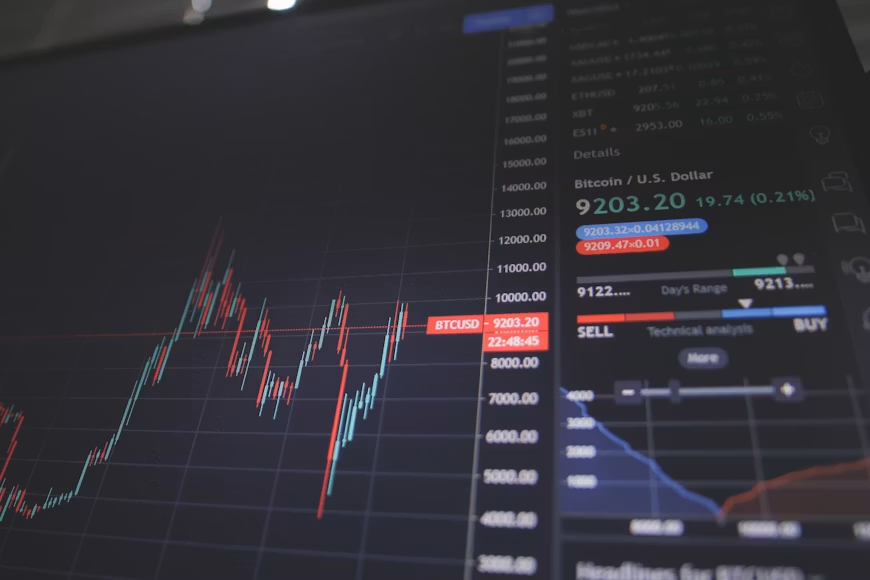
Governance friction further complicated recovery efforts after the community rejected the ATOM 2.0 overhaul proposal, alongside leadership departures. ATOM trades near $1.39, representing a 96.8% drop from its $44.70 peak in September 2021, with a market capitalization around $727 million.
3. Algorand (ALGO): Institutional Design Awaits Sustained On-Chain Volume
Algorand entered the market backed by elite academic leadership. Founded by Turing Award winner Silvio Micali, the network introduced pure proof-of-stake consensus, delivering instant finality, low fees, and zero fork risk. High-profile achievements included a FIFA World Cup partnership and multiple central bank trial initiatives.
However, developer activity and DeFi liquidity shifted toward Ethereum Layer-2 protocols and Solana. While Algorand continues building toward post-quantum encryption and real-world asset tokenization, institutional trial programs have not converted into consistent transaction demand. ALGO hit a fresh all-time low in March 2026. Trading near $0.084, the asset remains down 97.6% from its $3.56 peak in June 2019, holding a market cap of roughly $758 million.
4. Internet Computer (ICP): Web-Scale Vision Works to Overcome Supply Pressures
Internet Computer aimed to overhaul traditional web hosting by replacing cloud providers like AWS and Google Cloud with decentralized architecture. Dfinity dedicated over $500 million to R&D, enabling full applications, databases, and front-end interfaces to run entirely on-chain.
Following its May 2021 launch at an implied $400 billion market valuation, early token unlocks triggered a sustained sell-off. The development team continues delivering features, including native ckBTC integration, on-chain AI tools, and the February 2026 “Mission 70” proposal designed to cut token inflation by 70% by 2027.
Sustainable momentum depends heavily on driving developer adoption to increase ICP token burning through app usage. ICP trades around $2.15, down 99.7% from its $700.65 all-time high, with a market cap near $1.2 billion.
Key Insights
Determining which asset serves as the next crypto to explode requires balancing technical track records against short-term market momentum. Projects like Cosmos, Algorand, and Internet Computer maintain impressive technical foundations, yet their token prices struggle under historical supply unlocks and value-capture challenges. Conversely, BlockDAG combines fixed structural advantages with immediate time-bound rewards, offering high upside potential.
With only 2 days left to claim 50% extra tokens via code “CLAIM50” and lock in early $0.02 buybacks with code “BUYBACK,” early participants hold a distinct advantage. As the market prepares for its next rotation, acting quickly on structured incentives remains crucial for traders seeking maximum returns.