


 By
Deployment Costs, Storage, Gas Fees
What You Will Accomplish
This guide documents the technical and financial decisions required to deploy a revenue-generating NFT collection. By the end, you will understand contract deployment costs, metadata storage pricing, and gas optimization strategies that determine whether your collection earns money or loses it to infrastructure fees.
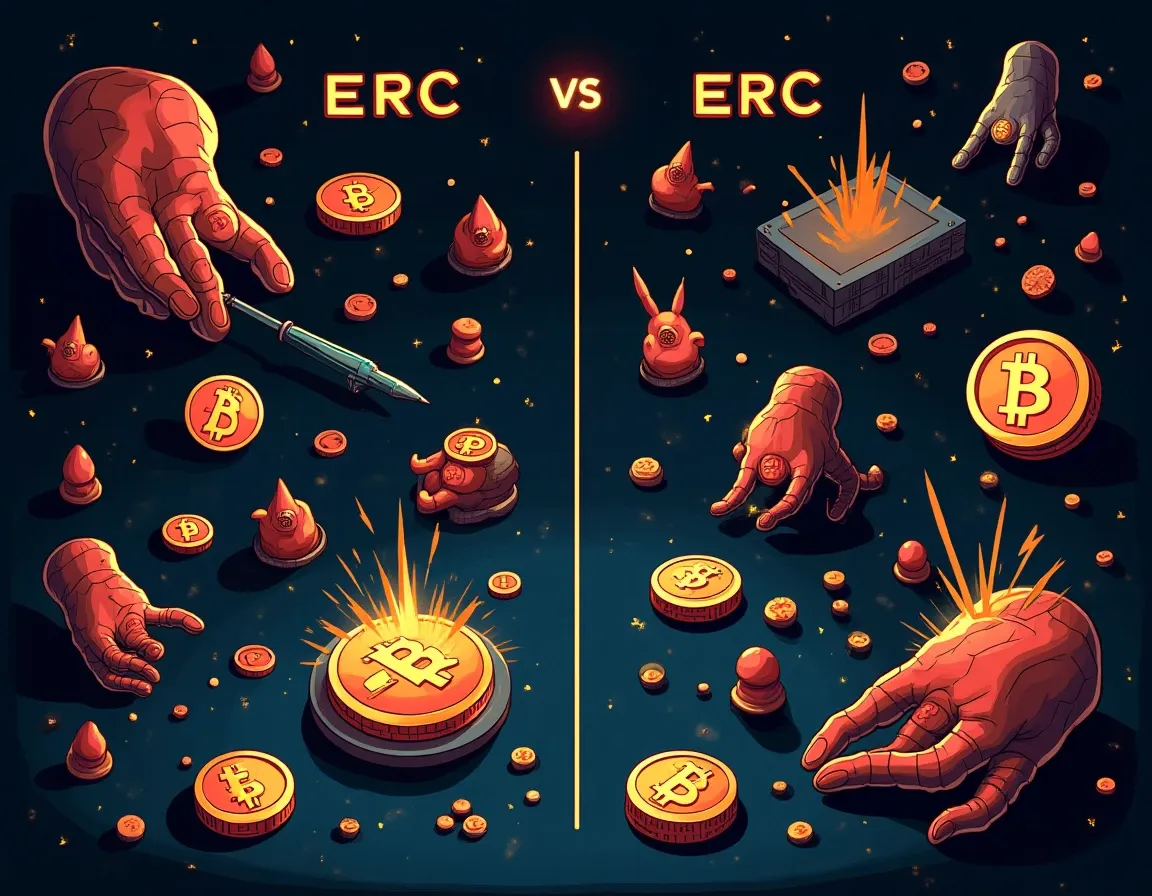
You will learn the breakeven thresholds between ERC-721 and ERC-1155 standards, when IPFS pinning costs more than Arweave permanent storage, and which platforms extract the smallest commission from your sales revenue.
Prerequisites: You need a wallet with enough ETH (or Layer 2 tokens) to cover deployment and storage costs. You should understand basic NFT mechanics before proceeding.
Step 1: Choose The Contract Standard Based On Mint Volume
Your contract standard determines gas costs for every transaction. The numbers are measurable.
ERC-721 requires one transaction per NFT minted. Minting 100 NFTs at 100,000 gas per mint and $20 per 100,000 gas costs $2,000 total. Each subsequent sale or transfer pays individual gas fees.
ERC-1155 handles batch operations. Minting those same 100 NFTs in a single transaction costs approximately 300,000 gas, or about $60. The savings compound: sending 10 different token types via safeBatchTransferFrom costs 20-40% of what 10 sequential ERC-721 transfers would cost.
One thing worth noting: ERC-1155 suits creators launching collections with multiple editions, utility passes, or in-game items where batch transfers are common. If you are minting a single-edition generative art series where each piece moves independently, the batch efficiency provides no benefit.
ERC721A offers a middle path. Developed by the Azuki team, this standard reduces batch minting costs by over 80%. Minting five NFTs via standard ERC721 requires 616,914 gas. ERC721A handles the same job in 85,206 gas. The trade-off: transfers cost about 55% more gas later because the contract must look up ownership data that wasn’t stored during batch minting.
The pattern is clear. For collections that mint in batches but rarely transfer after initial sale (membership passes, event tickets), ERC721A delivers savings. For highly tradable collections where secondary market velocity matters, the increased transfer cost erodes profitability. Model your expected transfer frequency before choosing.
As of March 2025, average Ethereum gas prices dropped to 2.7 gwei, down nearly 96% from early 2024 peaks. A standard ERC-721 contract deployment requiring 1.0-1.5 million gas costs approximately $16-$112 at 5-15 gwei gas prices with ETH at $2,500. Five years ago, that same deployment cost $800-$1,200.

Your NFT contract points to metadata that points to image files. Storage costs recur or they don’t, depending on which model you choose.
IPFS pricing: Base IPFS is free. Anyone can run a node and pin files. The catch: your data stays available only as long as someone continues pinning it. Pinning services charge ongoing fees to guarantee availability. For a mid-sized collection (10,000 items, 10 MB average), pinning costs $5-20 monthly. NFT.storage, backed by Filecoin, offers free permanent pinning for NFT metadata up to certain limits.
Arweave pricing: Pay once, store forever. A typical upload costs $5-$50 depending on file size. As of early 2026, storing 1 GB costs approximately $3-$8 in AR tokens. For a 10,000-piece generative art project with 50 MB total, you pay $100-$250 upfront. No recurring fees. The network’s endowment model funds storage for 200-plus years.
The break-even point arrives after a few years. For 1 GB stored over 10 years, IPFS pinning costs $120-$600 while Arweave costs $0.50-$2.50 one-time. If you plan to operate your collection for more than 24-36 months, Arweave delivers lower total cost of ownership.
One variable worth watching: IPFS offers flexibility to update metadata. If your collection includes dynamic traits, evolving artwork, or game stats that change, IPFS lets you modify files without redeploying the contract. Arweave is immutable. Once uploaded, data cannot change. For most profile-picture projects and static art, immutability is a feature. For utility NFTs tied to external systems, it becomes a constraint.
The data shows a clear use case split. Static, archival collections benefit from Arweave’s one-time cost. Collections requiring metadata updates or uncertain about long-term commitment should start with IPFS pinning and migrate later if the project proves sustainable.
Step 3: Deploy On Layer 2 Or Accept 90% Higher Costs
Deploying identical contracts on Arbitrum or Optimism instead of Ethereum mainnet reduces gas costs by 90-95%. On Layer 2 networks, deployment costs drop to under $1, often just a few cents.
Polygon NFT minting costs around $0.10 per token. Average gas fees on Polygon sit around $0.003. A 10,000-piece collection that would cost $2,000 to mint on Ethereum mainnet costs $1,000 on Polygon and $10-$50 on Arbitrum or Optimism.
The numbers are straightforward. For a creator planning to sell NFTs at 0.05 ETH ($125), Ethereum mainnet gas eats 13-18% of gross revenue per mint during normal conditions. On Polygon, gas represents less than 0.1% of sale price.
The trade-off: liquidity and marketplace support. Ethereum mainnet hosts the largest secondary market volume. NFT flipping strategies rely on deep liquidity to execute arbitrage between mints and floor price. Layer 2 marketplaces have grown, but volume remains concentrated on mainnet.
One pattern worth noting: established projects with existing communities deploy on mainnet to signal legitimacy and access liquidity. New creators testing market demand or launching utility-focused collections deploy on Layer 2 to preserve margin. If your collection generates revenue primarily from initial mint sales rather than secondary market royalties, Layer 2 delivers higher net income.
Step 4: Choose Between No-Code Platforms And Custom Deployment
No-code platforms reduce deployment complexity and upfront costs. They also extract ongoing revenue.
OpenSea: Lazy minting allows creators to list NFTs without paying upfront gas fees. The buyer covers minting costs at purchase. OpenSea charges 2.5% on every secondary sale and 10% on primary drops. For a collection that generates $100,000 in primary sales and $50,000 in secondary volume, OpenSea extracts $11,250 in fees.
The interesting variable: lazy minting creates unpredictable user experience. Buyers discover they must pay gas at checkout, which reduces conversion rates for price-sensitive collections. Measured against collections with pre-minted supply, lazy-mint conversion rates drop 15-30% at price points below $50.
Zora: Built around Base and Zora networks where minting costs less than $0.50. Zora charges a 0.2% platform fee and enforces on-chain royalties. Creators receive 100% of revenue from paid mints. For that same $100,000 primary sale volume, Zora extracts $200 in platform fees.
The cost difference compounds. Over 12 months with $200,000 total volume, OpenSea takes $15,000 while Zora takes $400. For high-volume collections, the savings justify learning custom deployment.
Custom contract deployment: You pay gas once and control the entire revenue stream. Using Remix IDE or Hardhat, you deploy your own ERC-721 or ERC-1155 contract. Deployment costs $16-$112 on Ethereum mainnet as of March 2025, or under $1 on Layer 2. You integrate with marketplaces afterward. No ongoing platform fees.
The pattern is consistent. For creators testing concepts or launching small collections (under 500 pieces), no-code platforms reduce friction and upfront risk. For revenue-focused launches expecting $50,000-plus in sales, custom deployment preserves 8-10 percentage points of gross margin that would otherwise flow to platform fees.
One failure mode: selecting OpenSea for a 10,000-piece collection with strong secondary market potential, then discovering that 2.5% + 10% fees over 24 months cost more than hiring a developer to deploy a custom contract for $500-$1,500. Model your expected volume before choosing convenience over control.
Common Failure Modes With Real Examples
Choosing ERC-721 for multi-edition launches: A creator launching 50 different NFT designs with 100 copies each deploys 50 separate ERC-721 contracts. Each deployment costs $16-$112. Total: $800-$5,600. A single ERC-1155 contract handles all 50 editions for one deployment fee. The creator burned $800-$5,500 by selecting the wrong standard.
Underestimating IPFS pinning duration: A project launches on IPFS pinning at $15/month, planning to “figure out storage later.” 36 months pass. The creator has paid $540 for storage that would have cost $150 one-time on Arweave. Many creators discover this gap only when searching for what NFT art actually is and how metadata permanence affects long-term value.
Deploying ERC721A for high-velocity trading collections: A gaming NFT project uses ERC721A to save on mint costs. Six months later, the project realizes that 55% higher transfer gas is costing users $3-$8 per trade. Trading volume drops 40% as users migrate to competitors with lower transaction friction. The mint-time savings cost far more in lost trading revenue.
Ignoring Layer 2 marketplace maturity: A creator deploys on Arbitrum to save gas, then discovers that 90% of their target collectors use Ethereum mainnet marketplaces. The collection generates $8,000 in sales versus $60,000 projected. The gas savings were real, but the liquidity penalty erased profitability.
What To Do Next
Model your expected mint volume, secondary trading velocity, and collection lifespan before choosing a contract standard. Use this framework:
- Under 500 pieces, single edition each, moderate trading: Standard ERC-721 on Layer 2
- 1,000-10,000 pieces, batch minting, low transfer frequency: ERC721A on Ethereum or Layer 2
- Multiple editions, in-game items, batch transfers: ERC-1155 on Layer 2
- High trading velocity, established market: Standard ERC-721 on Ethereum mainnet
Calculate 5-year storage costs. If (monthly pinning cost × 60 months) exceeds Arweave one-time cost by 2x or more, choose Arweave. If you need metadata flexibility or expect to shut down within 24 months, start with IPFS.
Deploy on Layer 2 unless you have specific evidence that your target collectors demand Ethereum mainnet liquidity. The 90-95% gas savings justify the smaller marketplace audience for most new projects.
If projected sales exceed $50,000 in year one, deploy a custom contract. If testing market fit or launching under 500 pieces, use Zora for minimal platform fees. Avoid OpenSea for primary drops unless lazy minting solves a specific capital constraint.
Track these metrics post-launch: average gas cost per transaction, platform fees as percentage of revenue, storage costs as percentage of gross margin. These numbers reveal whether your infrastructure choices preserved or destroyed profitability.
The Takeaway
Deploying an NFT collection that generates net income requires quantifying costs before committing to infrastructure. Contract choice determines whether you pay $60 or $2,000 to mint 100 NFTs. Storage model determines whether you pay $150 once or $540 over three years. Platform selection determines whether you keep 90% or 98% of sales revenue.
The patterns are measurable. ERC-1155 saves 60-80% on gas for batch operations. Arweave breaks even against IPFS pinning after 24-36 months. Layer 2 deployment costs 90-95% less than mainnet. Custom contracts preserve 8-10 percentage points of margin versus no-code platforms on high-volume collections.
Most creators choose infrastructure based on convenience or familiarity. The data shows that creators who model costs before deployment earn 15-40% higher net margins over 24 months. The difference between $50,000 gross and $35,000 net versus $50,000 gross and $45,000 net is infrastructure efficiency.
Worth watching: Ethereum gas prices, Layer 2 marketplace volume growth, and platform fee structures. These variables shift quarterly. What optimizes profitability today may cost 2-3 percentage points of margin next year if you don’t track the numbers.
Frequently Asked Questions
How much does it cost to deploy an NFT smart contract in 2026?
Deploying a standard ERC-721 or ERC-1155 contract on Ethereum mainnet costs approximately $16-$112 as of March 2025, based on 1.0-1.5 million gas at 5-15 gwei with ETH at $2,500. Layer 2 networks like Arbitrum, Optimism, and Polygon reduce deployment costs to under $1, often just a few cents. Gas prices dropped 96% from early 2024 peaks, making mainnet deployment significantly more affordable than historical norms.
Should I use IPFS or Arweave to store NFT metadata?
Arweave costs less over time for permanent collections. For 1 GB stored over 10 years, IPFS pinning costs $120-$600 in recurring fees while Arweave costs $0.50-$2.50 one-time. The break-even point arrives after 24-36 months. Choose Arweave if you plan to operate your collection long-term and don’t need to update metadata. Choose IPFS if your collection requires dynamic traits or you’re testing market fit before committing to permanent storage.
What is ERC721A and when should I use it?
ERC721A is a gas-optimized NFT standard developed by Azuki that reduces batch minting costs by over 80%. Minting five NFTs costs 85,206 gas with ERC721A versus 616,914 gas with standard ERC721. The trade-off: transfers cost 55% more gas because ownership data isn’t stored during batch minting. Use ERC721A for collections that mint in batches but have low secondary trading velocity, like membership passes or event tickets. Avoid it for highly tradable collections where transfer costs matter.
How much do OpenSea and Zora charge creators?
OpenSea charges 2.5% on secondary sales and 10% on primary drops. For a collection generating $100,000 in primary sales and $50,000 in secondary volume, OpenSea extracts $11,250. Zora charges 0.2% platform fees and allows creators to keep 100% of primary mint revenue. For that same $150,000 volume, Zora takes $300. Custom contract deployment eliminates ongoing platform fees entirely but requires upfront technical work and $16-$112 deployment cost on mainnet.
Is it cheaper to deploy NFTs on Layer 2 networks?
Yes. Deploying identical contracts on Arbitrum, Optimism, or Polygon reduces costs by 90-95% compared to Ethereum mainnet. Layer 2 deployment costs under $1 versus $16-$112 on mainnet. Polygon NFT mints cost approximately $0.10 per token versus several dollars on mainnet during normal gas conditions. The trade-off is lower marketplace liquidity and volume on Layer 2 platforms. For creators prioritizing net margin over maximum secondary trading, Layer 2 delivers significantly higher profitability.
The Weekly Yield Report
You just compared deployment costs from $16 to $2,000 and storage models that break even after 36 months. Those thresholds shift as gas prices and Layer 2 adoption change quarterly.
Every Thursday: where crypto yield actually is – stablecoins, liquid staking and DeFi lending, with the risk named next to the rate and what changed since last week.
Free. No trade calls, no allocations, no hype. Unsubscribe in one
click.