

 By
Convex CVXCRV Rate Increase Why: 5pp Jump Vetting Protocol
What You Are About To Verify
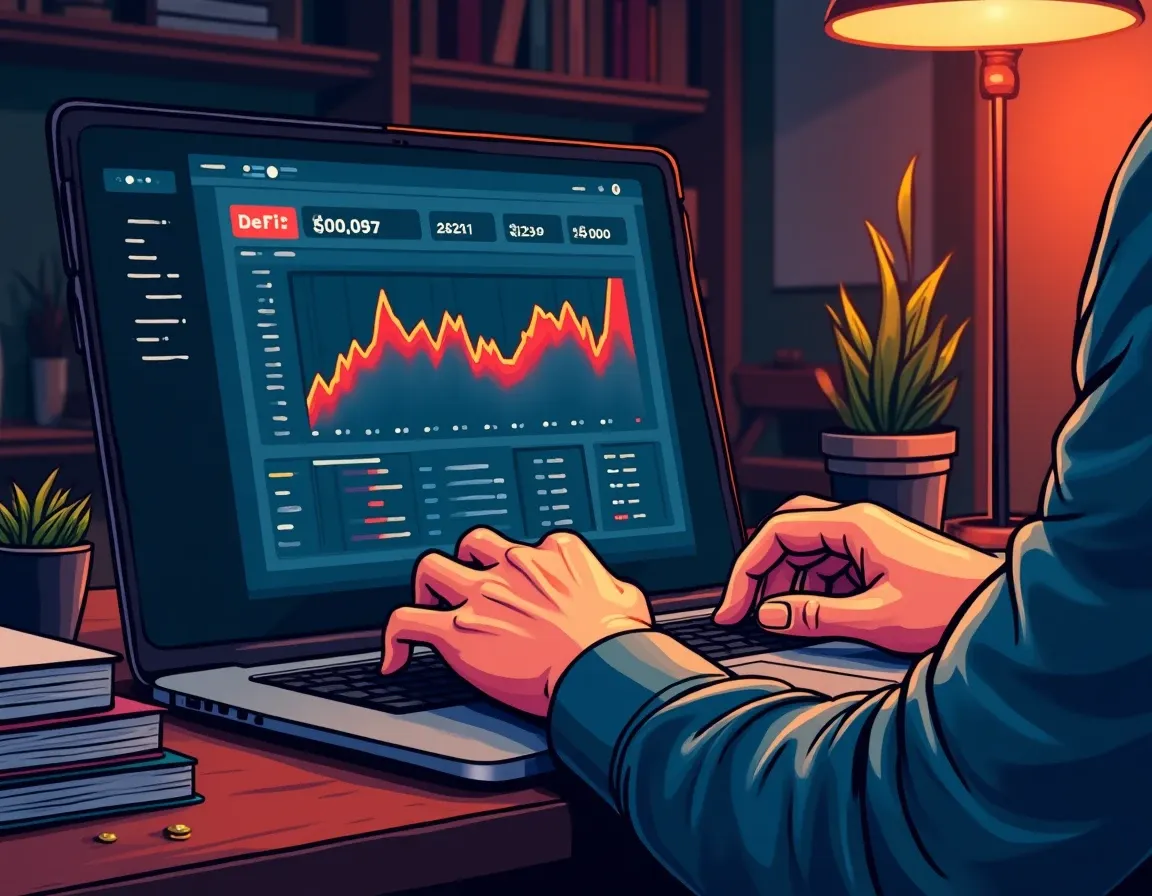
Convex CVXCRV jumped from 10.7% to 15.71%. That 5.01 percentage point increase translates to an extra $10,020 per year on a $200k allocation. The question you need to answer before you deploy is whether the rate reflects structural protocol changes or temporary incentive campaigns that revert within a week.
Most yield trackers show you the number. None show you the composition. This protocol walks through the four Convex-specific mechanisms that determine whether the 15.71% rate holds beyond this week: bribe market shifts, vlCVX gauge voting, CRV emission adjustments, and CVX emission depletion. You will verify which driver caused the jump and calculate how long it persists.
You need three pieces of data before you start: the current CVXCRV rate (15.71%), the TVL ($47M), and access to Convex governance vote records (on-chain since July 30, 2026). If you lack those, this protocol will not help. If you have them, you have 48 hours to decide whether the rate justifies locking capital into a 16-week illiquid position.
Step One: Isolate CRV vs CVX Emission Components
The 15.71% headline rate combines two distinct revenue streams: CRV emissions (5-15% APY) and CVX emissions (2-5% APY). The CRV portion comes from Curve gauge rewards boosted by Convex’s 47-50% control of veCRV voting power. The CVX portion comes from Convex’s native token emissions, which follow a halving schedule and are depleting.
Pull the detailed yield breakdown from the Convex dashboard. If the interface does not separate CRV and CVX components, calculate manually: check the CRV reward rate for the cvxCRV-CRV pool on Convex Finance’s DefiLlama page, then subtract from the 15.71% total. The residual is your CVX component.
If the 5pp jump came primarily from CVX emissions, you are looking at unsustainable yield. Convex’s CVX emissions are projected to deplete within 12 months at a 90% farm rate. A CVX-driven spike signals that the protocol is burning through its emission reserves to attract liquidity, which means the rate collapses when those reserves run dry. If the jump came from CRV emissions, proceed to step two.
Step Two: Check vlCVX Governance Votes for Gauge Weight Shifts
Convex moved all governance on-chain on July 30, 2026. Every gauge weight vote is now transparent and verifiable. Navigate to convexfinance.com/vote and review the most recent voting round. Look for changes to the cvxCRV-CRV pool gauge weight.
vlCVX holders control how Convex’s massive veCRV position votes on Curve gauge weights. If a recent vote redirected more veCRV voting power toward the cvxCRV-CRV pool, CRV emissions to that pool increase proportionally. This is a structural change. It persists until the next vote reverses it, which typically happens every two weeks during gauge weight voting cycles.
Compare the current gauge weight to the weight from two weeks prior. If the weight increased by more than 10%, that explains the 5pp jump. If the weight remained flat or increased by less than 5%, the rate increase did not come from governance. Move to step three.
One caveat: gauge weight votes can be bribed. If protocols paid vlCVX holders to direct votes toward the cvxCRV-CRV pool, those bribes expire when the incentive campaign ends. Check the bribe market in the next step to confirm whether the vote was organic or paid.
Step Three: Monitor Bribe Markets for Temporary Incentive Spikes
Bribe markets (Votium, bribe.crv.finance, Hidden Hand) allow protocols to pay vlCVX holders to direct gauge votes toward specific pools. Annualized bribes per vlCVX have ranged from $1.76 to over $22.72 at their peak, representing up to 46% APR on vlCVX. When bribes spike, so do the rates on the pools receiving those votes.
Navigate to the active bribe markets and filter for the cvxCRV-CRV pool. Look at the bribe amount offered in the most recent round. If the bribe per vlCVX increased by more than 50% compared to the prior round, that likely drove the 5pp rate jump. Bribe-driven increases are temporary. They last one or two voting cycles, then revert when the incentive campaign ends.
Calculate the dollar value of the bribe relative to the pool’s TVL. If the bribe totals more than $500k on a $47M pool, that represents a 1% boost for one voting cycle (two weeks). Extrapolate that to annual terms: a $500k two-week bribe translates to roughly 1.1% annualized if sustained, but those campaigns rarely sustain beyond a month.
If you find no meaningful bribe increase, the rate jump did not come from temporary incentives. Move to step four to check for CRV emission adjustments at the protocol level.
Step Four: Verify CRV Emission Rate Changes and Price Dependency
CRV emissions are set by Curve governance, not Convex. If Curve increased the total CRV emission rate or redirected emissions across gauges, every Convex pool benefits proportionally. Check Curve’s governance forum and on-chain votes for recent emission adjustments.
More commonly, the dollar value of CRV emissions changes because the CRV token price changed. Pull the 7-day CRV price chart. If CRV appreciated by 30-50% in the past week, the dollar value of your CRV emissions increased by the same percentage, which could account for the 5pp jump when measured in dollar terms rather than token terms.
This is a critical distinction. A rate increase driven by CRV price appreciation is sustainable only if the CRV price holds. If CRV reverts to its prior price level, your dollar yield reverts with it. Token-denominated yield remains constant, but you are earning income to pay bills in dollars, not CRV.
Cross-reference the 5pp jump timing with the CRV price chart. If the jump coincided with a CRV price spike, recalculate your yield assuming CRV returns to its 30-day average. If that calculation drops you below 12%, the 15.71% rate is not sustainable.
Step Five: Test Exit Liquidity and Lock Duration Trade-Offs
CVXCRV trades at a 5.34% discount to CRV (94.66% peg). That discount reflects weak conversion demand and limited exit liquidity. Before you allocate, you need to confirm that you can exit your position within acceptable slippage tolerances if the rate collapses.
Run a hypothetical trade on the cvxCRV-CRV Curve pool. Input a sale of 10% of the pool’s liquidity and observe the slippage. If slippage exceeds 3% on a 10% liquidity draw, the pool cannot absorb a meaningful exit without driving the peg further underwater. That tells you exit liquidity is shallow.
Next, calculate the lock duration breakeven. Convex locks deposits for 16 weeks. If you deploy $200k at 15.71% and the rate drops to 10.7% after two weeks, you earn the high rate for two weeks and the lower rate for 14 weeks. Weighted average yield: (2/16 * 15.71%) + (14/16 * 10.7%) = 11.33%. Compare that to a liquid stablecoin alternative paying 7-9%. The 2-4 percentage point spread compensates you for illiquidity only if the rate does not drop further.
If you conclude that the rate is temporary and exit liquidity is shallow, the lock duration eliminates your ability to react. You are committed for 16 weeks regardless of what happens to bribes, governance votes, or CRV price. For reference, this vetting protocol walks through CVXCRV lock duration risk in detail using a prior 2.83pp rate jump as a case study.
Common Failure Modes and How To Avoid Them
Failure mode one: you allocate based on the headline rate without decomposing CRV vs CVX yield. Two weeks later, CVX emissions cliff and your yield drops by 40%. You are locked for 14 more weeks. Solution: always isolate the CVX component in step one and assume it goes to zero within six months.
Failure mode two: you assume gauge weight votes are permanent. They are not. vlCVX holders vote every two weeks, and bribe markets shift those votes constantly. A gauge weight increase this round can reverse next round. Solution: track two consecutive voting cycles before assuming a vote-driven rate increase is stable.
Failure mode three: you calculate yield in CRV terms instead of dollar terms. CRV price volatility creates phantom yield gains that evaporate when the token price corrects. Solution: always convert token yields to dollars using a 30-day average price, not the current spot price.
Failure mode four: you deploy your full allocation in week one. If the rate proves temporary, you have no dry powder to reallocate and no exit for 16 weeks. Solution: deploy 25-50% in week one, then monitor bribe markets and governance votes for two cycles before committing the remainder. This limits your downside if the rate collapses and preserves optionality if better opportunities emerge.
What To Do After You Confirm Rate Sustainability
If you verified that the 5pp jump came from a structural gauge weight increase with no offsetting bribe expiration, calculate your position size. On $200k deployed, the incremental 5pp is worth $10,020 per year. Subtract gas costs (roughly $50-150 for deposit and withdrawal), subtract the peg discount risk (5.34% haircut if you exit to CRV), and subtract opportunity cost (the next-best liquid alternative paying 7-9%).
Net calculation: $10,020 incremental yield minus $100 gas minus $10,680 peg discount (5.34% on $200k) minus $14,000 foregone yield on a 7% stablecoin alternative equals a negative $14,760. That math only works if you believe the 15.71% rate persists for the full 16-week lock and the peg recovers above 98%.
Adjust your allocation accordingly. If you conclude the rate is sustainable but the peg is not, size down to $50k-100k and accept the peg risk as a cost of accessing the yield. If you conclude the rate is temporary, do not deploy. The lock duration eliminates your ability to exit before the rate reverts.
For broader context on evaluating DeFi yield sustainability across protocols, this category review covers lending, DEX, and yield aggregator mechanics with TVL benchmarks and fee structure comparisons.
The Takeaway
The 5pp jump to 15.71% is sustainable only if it came from a structural gauge weight vote, not a temporary bribe campaign or CRV price spike. You have 48 hours to verify the source using on-chain governance data and bribe market records. If you cannot confirm the driver within that window, assume the rate is temporary and calculate your yield using the 10.7% baseline. The 16-week lock duration means you cannot react once you deploy, which turns temporary yield into a four-month opportunity cost trap if you guess wrong.
You have just compared eight venues paying between 3.6% and 5.4%. Those numbers will be different next week.
Frequently Asked Questions
What caused the Convex CVXCRV rate to jump 5pp to 15.71%?
The 5pp increase to 15.71% can result from four mechanisms: vlCVX governance votes redirecting veCRV voting power toward the cvxCRV-CRV pool, temporary bribe campaigns paying vlCVX holders to direct votes, CRV token price appreciation increasing dollar-denominated yield, or CVX emission boosts (unsustainable). Check on-chain governance votes from July 30, 2026 onward, monitor Votium and Hidden Hand bribe markets for incentive spikes, and decompose the headline rate into CRV (5-15% APY) versus CVX (2-5% APY) components to identify the driver.
How long does a bribe-driven CVXCRV rate increase last?
Bribe-driven rate increases typically persist for one to two vlCVX voting cycles, or two to four weeks. Protocols pay bribes to direct gauge votes toward specific pools during discrete voting rounds. When the incentive campaign ends, vlCVX holders redirect votes to the next highest bidder, and the rate reverts. To verify duration, track bribe amounts on Votium, bribe.crv.finance, and Hidden Hand across consecutive rounds. If bribes drop by more than 50% in the following round, assume the rate increase was temporary and calculate yield using the pre-spike baseline.
Is the 16-week CVXCRV lock worth the 15.71% rate?
The 16-week lock is worth 15.71% only if the rate persists for the full lock period and exit liquidity remains sufficient. On $200k deployed, a 5pp increase yields $10,020 annually, but you must subtract gas costs ($50-150), peg discount risk (currently 5.34%), and foregone yield from liquid alternatives (7-9% stablecoin rates). If the rate drops to 10.7% after two weeks, your weighted average yield falls to 11.33%, eliminating the advantage. Deploy 25-50% initially and monitor bribe markets and governance votes for two cycles before committing the remainder.
How do I verify if a CVXCRV rate jump came from CRV emissions or CVX emissions?
Pull the detailed yield breakdown from the Convex dashboard or calculate manually by checking the CRV reward rate for the cvxCRV-CRV pool on DefiLlama, then subtract from the 15.71% total. The residual is your CVX component. CVX emissions are depleting and projected to run out within 12 months at a 90% farm rate, so CVX-driven spikes are unsustainable. CRV emissions come from Curve gauge rewards and persist as long as vlCVX governance votes maintain gauge weight allocation. A jump driven by CRV is structural; a jump driven by CVX is temporary.
What is the CVXCRV peg discount and why does it matter?
CVXCRV trades at 94.66% of CRV’s value, a 5.34% discount reflecting weak conversion demand and limited exit liquidity. When you exit a CVXCRV position, you either swap to CRV at the discounted peg (accepting a 5.34% haircut) or withdraw during the 16-week lock period (not possible). Shallow exit liquidity means large withdrawals drive the peg further underwater. Test slippage by simulating a sale of 10% of pool liquidity on the cvxCRV-CRV Curve pool. If slippage exceeds 3%, exit liquidity cannot absorb meaningful volume, increasing the cost of unwinding your position.
The Weekly Yield Report
You have just verified the four mechanisms driving a 5pp CVXCRV rate jump on $47M TVL. Those drivers will shift within two weeks.
Every Thursday: where crypto yield actually is – stablecoins, liquid staking and DeFi lending, with the risk named next to the rate and what changed since last week.
Free. No trade calls, no allocations, no hype. Unsubscribe in one
click.