


 By
DeFi Yield Rate Change Alerts Monitoring: One-Hour Setup
What You Will Build And Why It Matters
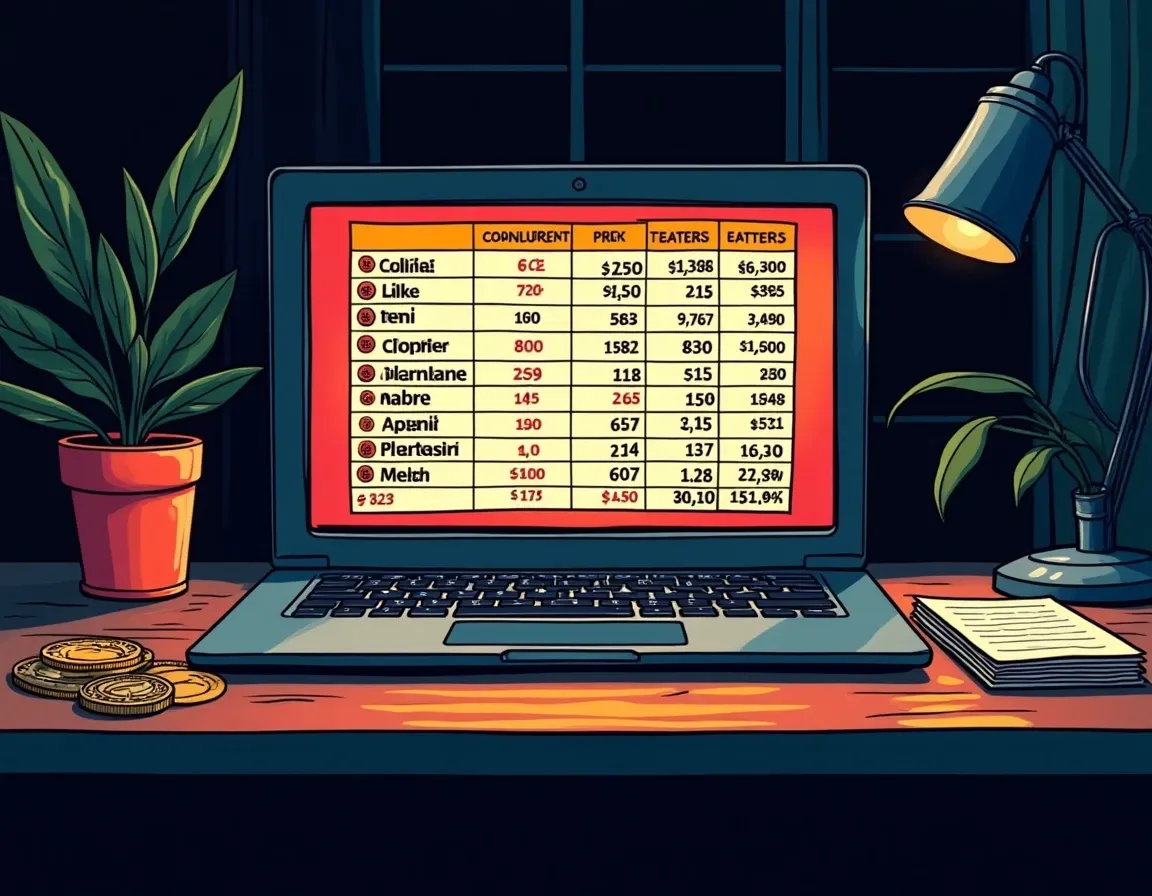
On $500,000 deployed across ten DeFi positions, one-hour detection of a 2 percentage point drop saves $10,000 per year per position versus discovering it on Twitter the next day. Catching 2pp increases before crowd migration tightens spreads captures upside that disappears within 48 hours. The difference between monitoring and guessing is the difference between controlled rebalancing and reactive scrambling after losses have already accumulated.
You will build a system that polls Aave, Morpho Blue, Curve, Convex, Sky, Compound V3, and any other protocol you choose, compares current rates against baseline thresholds, and sends you an alert within one hour when any position moves 2pp or more. The system runs on freely available API endpoints, requires no specialized infrastructure, and can be deployed in a single session.
Prerequisites: $100,000+ in stablecoin yield positions across at least two protocols, basic familiarity with API calls and webhook configuration, and willingness to check your phone when an alert fires. If you are running five figures across a single venue, manual monitoring once per day is sufficient. If you are running six figures across multiple venues, manual monitoring is the gap where your income leaks.
Step One: Map Your Positions And Define Detection Thresholds
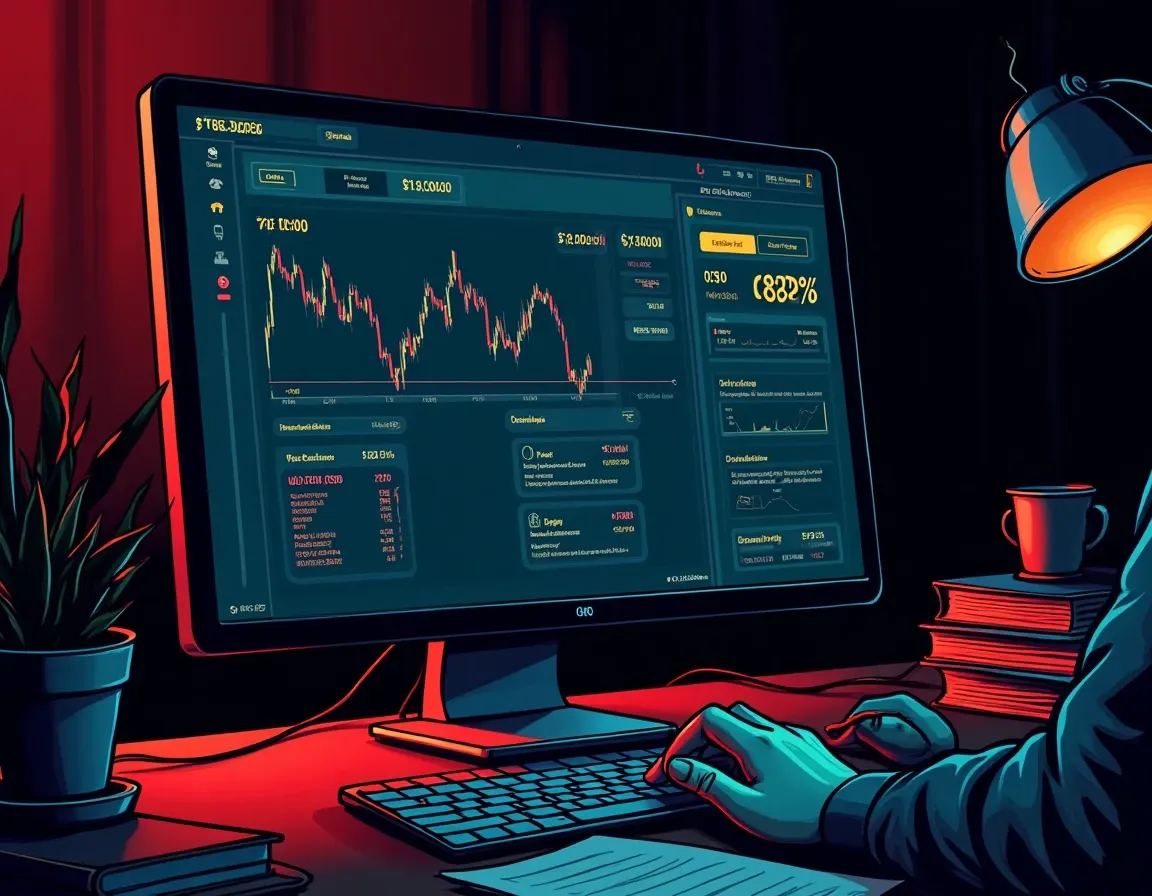
Before you write a single line of code, map every position you hold and assign each a capital-weighted detection threshold. A $200,000 USDC position on Aave V3 Ethereum deserves a lower threshold than a $10,000 position on a Base-deployed Morpho vault. The system you build will poll all of them, but you do not want ten alerts per day from noise on your smallest allocations.
Create a spreadsheet with the following columns: Protocol, Chain, Asset, Current Rate, Capital Deployed, Detection Threshold (in percentage points), Polling Frequency. For positions above $100,000, set a 1.5pp threshold. For positions between $50,000 and $100,000, set 2pp. For positions below $50,000, set 3pp unless the position is in a high-volatility protocol where rate spikes are common.
Morpho-adjacent protocols saw utilization-driven rate spikes of over 20% within 48 hours before compressing back to 2%. Sky’s governance-set rate moves are deliberate and persistent. Aave and Compound respond to utilization in real time. Your threshold must reflect the protocol’s rate volatility profile, not just your capital allocation. A 2pp move on Sky is a governance decision that will persist for weeks. A 2pp move on a Morpho vault may reverse within 72 hours. The alert is the same, but the response is different.
For each protocol, note the data source you will use. DeFiLlama tracks 14,380 pools across 505 protocols with real-time yield analytics and provides free API access with no key required for core endpoints. Aave and Compound publish their own rate oracles on-chain. Morpho Blue’s curated vaults report rates through vault-specific contracts. Your monitoring system will pull from whichever source updates fastest for each protocol.
Step Two: Configure API Polling And Rate Normalization
Rates come directly from contract data. No reliance on protocol-provided endpoints that can go stale. Aave uses ray values at 1e27 precision. Compound uses per-block rates. Morpho vault rates are denominated in APY at the vault level. Sky publishes the SSR as a per-second compounding rate. Without normalization, cross-protocol comparison is impossible.
Use DeFiLlama’s yield API as your primary data source. The endpoint returns APY, TVL, and chain for every pool. Parse the response and extract the `apyBase` field, which represents the current supply APY net of incentives. For protocols not covered by DeFiLlama, write a custom parser that reads on-chain rate data and converts it to annualized yield.
Set a polling frequency of 3 to 5 minutes. Faster polling risks hitting API rate limits on the free tier, which caps at 100,000 calls per day. Slower polling introduces latency that defeats the purpose of one-hour detection. At 5-minute intervals, you poll 288 times per day per position. With ten positions, that is 2,880 calls, well within the free limit.
Store each rate in a time-series log. You need baseline comparison data to distinguish a 2pp drop from normal fluctuation. For the first 24 hours, log rates without triggering alerts. After 24 hours, calculate a rolling 6-hour average for each position. Any rate that deviates more than your defined threshold from the 6-hour average triggers an alert.
Rate normalization matters because you are comparing protocols with different compounding intervals and denomination standards. A 5% APY on Aave is not equivalent to 5% on Compound if one compounds every block and the other compounds daily. Convert all rates to effective annual yield before comparison. The formula is standard: if the protocol compounds n times per year at rate r, effective yield is ((1 + r/n)^n) – 1. For continuous compounding, use e^r – 1.
Step Three: Build The Alert Logic And Notification Routing
The alert logic runs on every polling cycle. For each position, compare the current rate against the rolling 6-hour average. If the absolute difference exceeds your threshold, fire a webhook to your notification endpoint. The webhook payload should include protocol name, chain, asset, current rate, baseline rate, percentage point change, and capital deployed. You need context to decide whether to act immediately or wait.
Route alerts to Telegram, Discord, or email. Telegram and Discord support webhook delivery with zero setup beyond bot token generation. Email introduces latency because most email providers throttle API-triggered messages. If you route to email, use a dedicated alerting service like SendGrid or Amazon SES that guarantees sub-minute delivery. Phone push notifications are ideal, but require a dedicated alerting app or service integration. Most allocators running six-figure positions use Telegram because it delivers reliably and supports rich formatting for rate tables.
Include a secondary alert threshold for 5pp+ moves. A 2pp move requires investigation. A 5pp move requires immediate action. Simultaneous drops across multiple protocols may signal market-wide stress, not isolated utilization changes. Your alert system should flag cluster events separately so you can triage by systemic risk, not individual position performance.
Test your alert logic by manually adjusting thresholds to trigger false positives. If your system does not fire when it should, you will miss real moves. If it fires constantly on noise, you will ignore it when a real move happens. Calibrate thresholds over one week of live polling before trusting the system with capital-deployment decisions.
Step Four: Integrate Utilization And TVL Change Monitoring
Rate changes without context are noise. A 3pp drop on Aave USDC when utilization falls from 95% to 70% is expected mean reversion. A 3pp drop when utilization stays at 90% and TVL drops $500 million in 24 hours signals a liquidity crisis. Your monitoring system must track utilization and TVL alongside rates.
DeFiLlama’s TVL API provides per-protocol and per-chain TVL with hourly granularity. Poll TVL on the same cadence as rates and store both in your time-series log. Flag any position where TVL drops more than 10% in 24 hours while rates drop 2pp+. That combination indicates withdrawal pressure, not equilibrium rebalancing. Hedging against simultaneous rate collapses requires knowing whether the rate drop is supply-driven or demand-driven.
Utilization data is protocol-specific. Aave publishes utilization per asset per chain. Compound V3 reports utilization per market. Morpho Blue’s utilization is vault-specific, and curator allocation shifts can change effective utilization without changing market demand. For Morpho, monitor curator allocation changes separately. If a curator rebalances a vault and locks allocations under a 48-hour timelock, you have advance warning of rate changes before they appear in your rate polling system.
Sky’s SSR is funded by interest from collateral portfolios that include RWA holdings and ETH-backed loans. Sky rates do not respond to borrowing demand. They move on governance votes and collateral rebalancing. Monitor Sky governance proposals in parallel with rate polling. A proposal to cut the SSR by 1pp will pass through a governance delay before execution, giving you days of advance notice instead of one hour of reactive detection.
Step Five: Define Response Protocols And Migration Breakeven Math
An alert is useful only if you know what to do when it fires. Define a response protocol for every threshold tier before you deploy the system. For a 2pp drop on a position above $100,000, the response is: check TVL and utilization, calculate migration cost, and decide within one hour whether to exit. For a 5pp drop, the response is: exit immediately unless utilization is above 95% and the drop appears to be temporary.
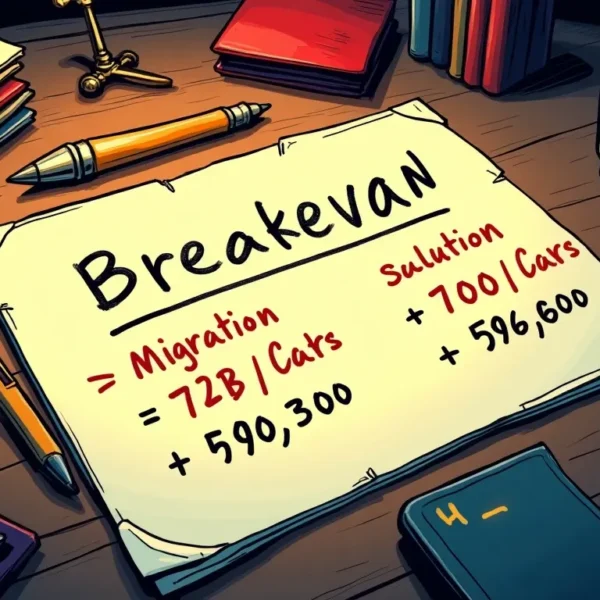
Migration breakeven math is straightforward. On $250,000 USDC, a 2pp drop costs $5,000 annually, but migration burns $200 in gas and 3 to 5 days at zero yield during the transition. The breakeven threshold depends on how long you expect the rate drop to persist. If you believe the drop will reverse within two weeks, migration costs exceed the lost income. If you believe the drop is permanent, waiting costs $96 per day.
Build a migration cost calculator into your monitoring system. For each position, pre-calculate gas cost to exit, bridge cost if moving cross-chain, and opportunity cost of zero yield during migration. When an alert fires, your system should display the annualized cost of staying versus the total cost of migrating. That calculation determines whether you act within one hour or wait 24 hours for more data.
For simultaneous rate changes across multiple protocols, triage by capital-weighted loss. When five protocols lose 2pp to 4pp in one week, you do not have time to manually recalculate migration math for each. Your system should rank positions by annualized loss, flag exits where migration breaks even within 30 days, and defer investigation on positions where the rate drop is immaterial relative to capital deployed.
Common Failure Modes And How To Avoid Them
The most common failure mode is alert fatigue. If your thresholds are too tight, you will receive ten alerts per day and start ignoring them. Calibrate thresholds to fire only when action is required, not when rates fluctuate within normal ranges. For the first week, set thresholds 1pp higher than your target and observe how often they would have fired. Adjust downward only after you have baseline volatility data.
The second failure mode is polling latency during high-traffic periods. DeFiLlama’s free tier throttles aggressively when query volume spikes. During market-wide liquidation events, your polling requests may queue for minutes or fail entirely. Build retry logic into your polling script. If a request fails, retry with exponential backoff up to three attempts. If all three fail, send an alert that monitoring is degraded, not that rates are stable.
The third failure mode is ignoring chain-specific variance. Base USDC often runs 50 to 100 basis points higher than Ethereum mainnet because passive liquidity is lower. A 2pp move on Base may be normal volatility. A 2pp move on Ethereum signals a macro shift. Your thresholds must account for chain-level baseline volatility. Use separate thresholds for Ethereum, Base, Arbitrum, and Optimism, even when monitoring the same protocol.
The fourth failure mode is treating governance-driven rate changes the same as market-driven ones. Aave’s safety module can trigger parameter changes that affect rates without changing utilization. Morpho curators can reallocate vault capital under timelock, changing effective rates days after the reallocation is proposed. Sky’s SSR moves only on governance votes. Your monitoring system should distinguish between rate changes that reflect market conditions and rate changes that reflect governance decisions. The former may reverse quickly. The latter persist until the next vote.
The fifth failure mode is failing to log historical rate data. Without a time-series log, you cannot distinguish a sudden 2pp drop from gradual 0.2pp daily declines that accumulate to 2pp over ten days. Store at least 30 days of rate history per position. When an alert fires, compare the current rate not just against the 6-hour average but against the 7-day and 30-day averages. That context tells you whether the move is an anomaly or a trend.
What To Do After Deployment
Run the system in shadow mode for one week before trusting it with migration decisions. Shadow mode means alerts fire, but you do not act on them. Instead, compare each alert against what you would have done with manual monitoring. If the alert fired on a move you would have ignored, tighten the threshold. If the alert missed a move you would have acted on, loosen the threshold or adjust your rolling average window.
After one week, enable live decision-making for high-capital positions. Start with your largest allocation. When an alert fires, follow your predefined response protocol. Log every decision: whether you migrated, what the migration cost, and what the rate did over the next 72 hours. After 30 days, calculate whether your alert-driven migrations outperformed a passive hold strategy. If they did not, your thresholds or response protocols need adjustment.
Expand monitoring to cover new protocols as you allocate. Adding a new position to your system requires three steps: identify the data source, write a rate parser if DeFiLlama does not cover it, and set a threshold based on your capital allocation and the protocol’s volatility profile. The system scales linearly. Monitoring ten positions is no harder than monitoring three once the infrastructure is in place.
Integrate tax-loss logging if you migrate frequently. Tax-proof record systems must capture deposit timestamps, withdrawal timestamps, realized yield, and migration costs. Your monitoring system already logs this data. Export it monthly and reconcile against your wallet transaction history. That export becomes your audit trail if you face a tax inquiry.
The Takeaway
The allocators getting this right are not picking a protocol. They are watching the spread and rotating. That requires seeing live rates side by side across multiple venues, which is exactly the kind of cross-protocol view a single venue’s dashboard will not give you. One-hour detection for 2pp+ moves lets you rebalance before the crowd, not after Twitter finds out. On $500,000 split across ten positions, that time advantage is worth $10,000 per position per year. The system you just built captures that advantage. The discipline to act on the alerts is what keeps it.
Frequently Asked Questions
How much capital justifies building a rate change monitoring system?
At $100,000 deployed across two or more protocols, one-hour detection of a 2pp drop saves $2,000 annually versus discovering it the next day. Below $50,000, manual daily checks are sufficient. Above $250,000, monitoring is not optional. The breakeven point is where annual saved income from early detection exceeds the 4-6 hours required to build and calibrate the system.
What polling frequency avoids API rate limits while maintaining one-hour detection?
Poll every 3 to 5 minutes. At 5-minute intervals, you poll 288 times per day per position. With ten positions, that is 2,880 calls, well within DeFiLlama’s free tier limit of 100,000 calls per day. Faster polling risks throttling during high-traffic periods. Slower polling introduces latency that defeats one-hour detection.
Should I set the same threshold for Aave, Morpho, and Sky?
No. Morpho vaults can spike 20pp within 48 hours before reverting. Sky’s governance-set rate moves are deliberate and persistent. Aave responds to utilization in real time. Use 1.5pp thresholds for high-capital Aave positions, 2pp for Morpho, and 2.5pp for Sky. Chain-specific variance matters too. Base USDC runs 50-100 basis points higher than Ethereum, so use separate baselines per chain.
How do I distinguish temporary rate spikes from permanent drops?
Track utilization and TVL alongside rates. A 3pp drop when utilization falls from 95% to 70% is expected mean reversion. A 3pp drop when utilization stays at 90% and TVL drops $500 million in 24 hours signals withdrawal pressure. Compare current rates against 6-hour, 7-day, and 30-day averages. Sudden moves against stable baselines are anomalies. Gradual declines over weeks are trends.
What should I do when five protocols drop rates in the same week?
Triage by capital-weighted loss. Rank positions by annualized income loss, not by percentage point change. A 4pp drop on a $200,000 position costs $8,000 per year. A 2pp drop on a $50,000 position costs $1,000. Migrate the high-loss positions first. For simultaneous drops, check whether utilization and TVL declined across all protocols, which signals market-wide deleveraging, not isolated rate reversion.
The Weekly Yield Report
You have just configured one-hour detection for 2pp+ moves across ten protocols. Those thresholds will need recalibration as volatility patterns shift next quarter.
Every Thursday: where crypto yield actually is – stablecoins, liquid staking and DeFi lending, with the risk named next to the rate and what changed since last week.
Free. No trade calls, no allocations, no hype. Unsubscribe in one
click.