

 By
DeFi Pool Disappeared Where Did My Yield Go
What You Will Accomplish
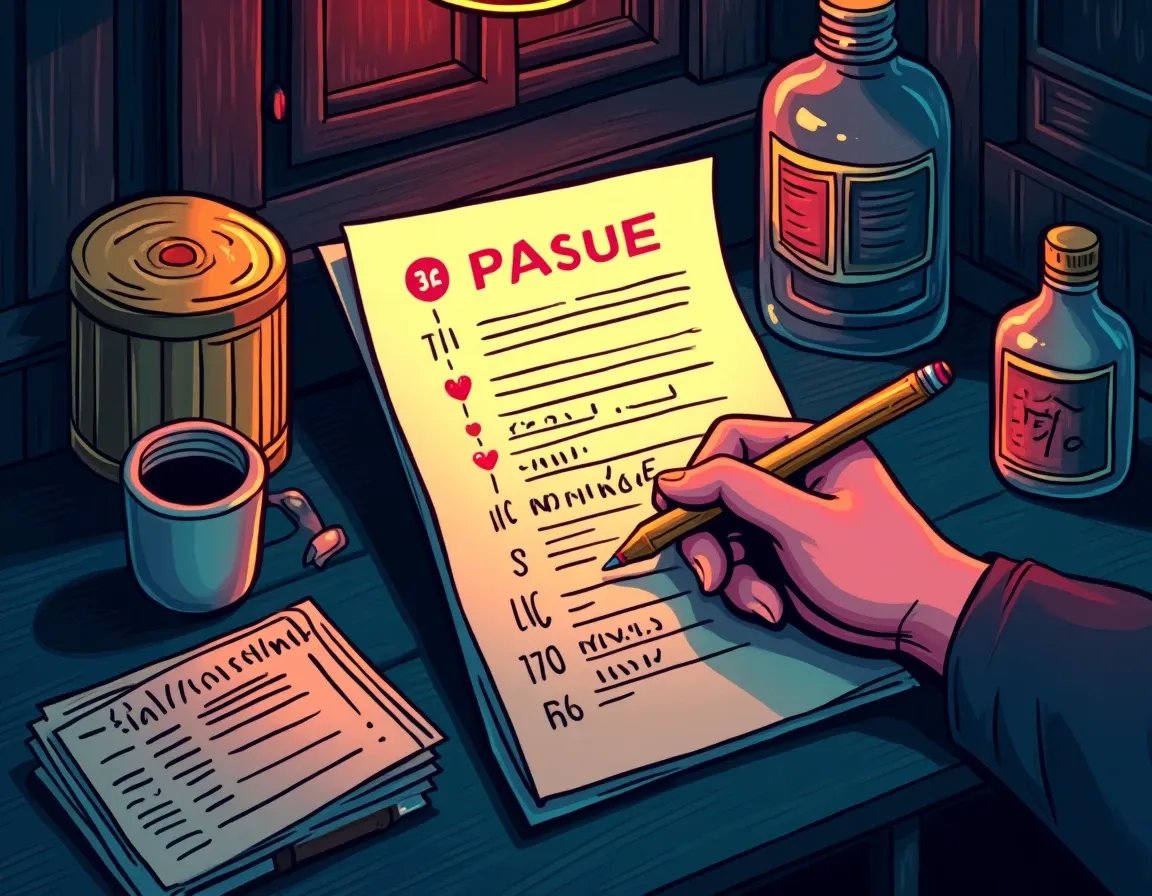
When your DeFi position vanishes from yield tracking aggregators, you have one hour to separate aggregator configuration changes from actual protocol failure. This checklist teaches you to verify smart contract event logs, cross-reference on-chain TVL against historical baselines, and audit Discord and governance forums for emergency communications within 60 minutes of discovering the absence.
You will learn the specific verification steps that distinguish benign tracking threshold changes, which leave your yield intact, from protocol-wide pause events or exploit signatures that require immediate exit. The difference matters because Centrifuge currently holds $1.592 billion in TVL, Fluid USDT has paid between 4.71 percent and 7.61 percent over the past four months, and the Curve crvUSD-cbBTC pool managed $82.6 million as recently as August 2026. A position in any of these pools disappearing from DeFiLlama does not inherently signal loss, but failure to verify the cause within the first hour leaves you exposed to either premature exit costs or delayed recognition of genuine protocol risk.
Prerequisites: you must hold an active position in at least one tracked DeFi yield pool, know how to navigate Etherscan or an equivalent block explorer for the chain your position occupies, and have access to the protocol’s official Discord server or governance forum. You do not need smart contract development experience, but you must be comfortable reading event logs and interpreting transaction history.
Step 1: Check Smart Contract Event Logs For Pause Signatures Within 15 Minutes
The first distinction you must make is whether the protocol itself has paused operations or whether only the aggregator has stopped tracking the pool. Transaction event logs in EVM-based blockchain systems are immutable records produced during smart contract execution. Analyzing these logs provides transparency into contract interactions and outcomes that aggregators may fail to reflect immediately or may exclude due to configuration changes.
Navigate to Etherscan or the relevant block explorer for your protocol’s deployment chain. For Centrifuge USDS, Fluid USDT on Ethereum, and Curve crvUSD-cbBTC, this is Etherscan. For Fluid on Arbitrum, use Arbiscan. Enter the pool’s smart contract address into the search field and select the “Events” tab. Sort by timestamp descending to display the most recent activity.
Search specifically for events named LogPause, Paused, EmergencyShutdown, or similar identifiers. DeFi protocols that support emergency pause mechanisms emit these events when governance or automated circuit breakers halt operations. Of 183 DeFi victims studied, 87 support emergency pause mechanisms, but only 51 of those 87 protocols pause within 48 hours of an incident, and only one protocol pauses within the first hour. If you find a pause event timestamped within the past 24 hours, your position is at genuine risk and you should proceed directly to Step 4 to evaluate withdrawal mechanics.
If you find no pause events, examine the most recent Transfer, Deposit, or Withdraw events. These events record normal user interactions with the pool. If Transfer events are still occurring at intervals consistent with the pool’s historical activity pattern and no pause events appear, the protocol is operating normally and the aggregator tracking failure is isolated to the data layer, not the protocol layer.
For Fluid USDT specifically, examine whether the borrow rate curve parameters have changed. Fluid’s USDT rates ranged from 4.71 percent to 7.61 percent over September 2026, with current rates near 4.74 percent on Ethereum. Rate stability over this range suggests utilization-driven organic yield sourced from borrower interest payments. A sudden cessation of yield without corresponding governance events signals either utilization collapse, in which case borrowers have repaid positions and lender yield has dropped to near zero, or a configuration change on the aggregator side. Check the protocol’s official dashboard at Fluid’s domain to confirm current borrow and supply rates match what the smart contract is emitting.
Step 2: Verify On-Chain TVL Against 7-Day And 30-Day Historical Baselines

Aggregators like DeFiLlama track more than 50,000 pools across 461 chains. Pools can vanish from aggregator listings when the scraper stops detecting them due to RPC node failures, minimum TVL threshold changes, or deliberate delisting decisions unrelated to protocol health. The second verification step isolates whether TVL has collapsed, which would indicate genuine capital flight or exploit, or whether TVL remains stable while only the tracking has ceased.
For Centrifuge, navigate to DeFiLlama’s Centrifuge protocol page and examine the TVL chart. As of the most recent data, Centrifuge holds $1.592 billion in total value locked with an average supply APY of 3.36 percent across 24 pools tracked on 10 chains. Ninety-five percent of this TVL sits in two Janus Henderson institutional funds, and 95 percent comes from a single client. This concentration means that a single institutional fund pause or restructuring event could remove the majority of tracked TVL without indicating broader protocol failure.
Compare current TVL to the 7-day and 30-day historical levels visible on the chart. A TVL decline of less than 10 percent over 30 days, which matches the pattern Curve Finance showed with its recent 10.6 percent monthly decline, suggests normal market dynamics or slow institutional reallocation rather than sudden exploit or loss of confidence. A TVL collapse exceeding 30 percent within 48 hours without a corresponding governance announcement or emergency forum post indicates either exploit or institutional withdrawal that other participants have not yet been informed about.
For Curve crvUSD-cbBTC, the pool’s TVL history shows significant volatility. The pool held $35.7 million in May 2026 with a change of negative $103 million, then grew to $82.6 million by August 2026, then entered a downtrend through October and November. This volatility pattern reflects governance-driven incentive changes, specifically Curve gauge weight rebalancing, rather than protocol failure. When a Curve pool’s TVL swings by multiples over months, the disappearance from tracking is more likely due to the pool falling below a minimum threshold used by aggregators than due to sudden failure.
Cross-reference the aggregator TVL data with the protocol’s own analytics dashboard. Curve publishes weekly metrics reports that include pool-specific TVL tracking. Centrifuge provides real-time dashboards showing vault-level deposits. If the protocol’s own dashboard shows stable TVL but the aggregator shows zero or has delisted the pool entirely, you have confirmed that the tracking failure is isolated to the aggregator and your position remains intact.
Step 3: Audit Discord And Governance Forums For Emergency Communications Posted In Past 72 Hours
Protocol teams and governance participants communicate emergency events, planned pauses, and parameter changes through official Discord servers and on-chain governance forums before those events appear in event logs or TVL charts. The third verification step searches these channels for any announcements posted in the 72 hours preceding your discovery of the tracking absence.
Join the protocol’s official Discord server if you have not already. Search the announcements channel and any channels labeled security, incidents, or governance for keywords including pause, emergency, exploit, withdrawal, and the specific pool name. Pay particular attention to messages posted by accounts with official team roles or verified governance participant badges.
A governance pause, which occurs when token holders or a multisig vote to halt operations, will appear in governance forum records before it appears in smart contract event logs. Navigate to the protocol’s governance forum, typically hosted on Discourse, Snapshot, or a custom platform. Search for recent proposals related to the pool in question. For Centrifuge, any proposal affecting USDS pools or the Janus Henderson institutional vaults would appear in the Centrifuge governance forum with discussion threads and on-chain vote records.
Distinguish between governance pauses and exploit pauses by examining the timeline and tone of communications. A governance pause will have prior discussion, a formal proposal, a voting period, and then execution. An exploit pause will have no prior governance activity, followed by an urgent announcement posted after the event logs show the pause transaction, often accompanied by requests that users avoid depositing additional funds or assurances that a post-mortem is being prepared. The absence of any emergency communication in the past 72 hours, combined with normal event log activity and stable TVL, confirms that the pool is operating and only the aggregator tracking has failed.
For Fluid specifically, check whether any rate curve parameter changes have been proposed or executed. Fluid’s USDT curve parameters have remained unchanged since April 23, 2026, with kink levels at 85 percent and 93 percent and rates at 5.40 percent and 7.50 percent. If the governance forum shows a recent vote to adjust these parameters, the yield change or tracking absence may reflect intentional rate adjustments rather than failure. The protocol has one recorded security incident involving $215,000 on May 31, 2026, which is small relative to the $42.04 million TVL currently on Arbitrum. Any new incident of similar or larger scale would generate immediate governance forum discussion.
Step 4: Distinguish Tracking Threshold Changes From Utilization Collapse
Yield aggregators apply minimum TVL thresholds, minimum APY thresholds, and chain-specific inclusion criteria that determine which pools appear in their listings. When a pool falls below these thresholds due to natural utilization changes, it vanishes from tracking without any protocol-level failure occurring. The fourth verification step separates threshold-based delisting from yield collapse that would justify exiting your position.
For lending protocols like Fluid, yield derives from borrower demand. Lenders in Fluid earn yield from multiple sources, including interest paid by borrowers, fees generated from trading on the Fluid DEX, and revenue generated from other protocols built on top of Fluid. When borrow demand declines, utilization falls, and the interest rate paid to lenders drops according to the protocol’s rate curve. A pool paying 7.61 percent in September that drops to 4.39 percent in October reflects reduced utilization, not protocol failure, if the rate curve parameters have not changed.
Check the protocol’s current utilization rate, which is the percentage of supplied capital that has been borrowed. For Fluid USDT, if utilization has dropped from 90 percent to 60 percent over the past month, the yield decline is mechanically predictable and does not indicate risk to principal. The pool may have dropped below an aggregator’s minimum yield threshold, such as 5 percent APY, which would cause it to vanish from tracking while still operating normally at the lower rate.
For Curve pools, yield derives primarily from trading fees and secondarily from CRV emissions distributed to liquidity providers. Fee rates on Curve are set per pool, typically ranging from 0.01 percent to 0.04 percent on stable pools and higher on volatile pools. The crvUSD-cbBTC pool’s TVL volatility suggests that gauge weight votes, which determine CRV emission allocation, have shifted incentives toward other pools. When a pool loses gauge weight, its effective APY declines, and it may fall below tracking thresholds without the pool itself ceasing to function.
Cross-reference your pool’s current yield against comparable pools on other leading DeFi protocols. If Fluid USDT is paying 4.39 percent, compare that rate to Aave USDT, Compound USDT, and other venues tracked on the same aggregator. If all USDT lending rates have declined in parallel, the cause is likely broader market rate compression driven by reduced borrow demand or rising US Treasury bill rates, not isolated protocol failure. If only your specific pool has dropped while comparable venues maintain higher rates, that suggests protocol-specific utilization collapse or parameter changes worth investigating further.
Common Failure Modes With Real Examples
The most common failure mode is premature exit based on aggregator delisting without verifying on-chain activity. A position holder sees their pool vanish from DeFiLlama, assumes the protocol has failed, and immediately withdraws, incurring gas fees and potentially realizing impermanent loss or triggering taxable events. When the verification checklist would have revealed that the pool was still operating normally, this exit was unnecessary and costly.
The second common failure is delayed recognition of genuine protocol risk because the position holder assumes aggregator delisting is benign. Centrifuge’s concentration risk illustrates this scenario. With 95 percent of TVL coming from a single institutional client, a fund restructuring or withdrawal by that client could remove nearly all tracked TVL within 48 hours. If the position holder does not check governance forums or event logs during that window, they may discover only after the fact that early exit was possible but the opportunity has passed.
The third failure mode is mistaking utilization-driven yield decline for protocol insolvency. Fluid USDT’s range from 4.71 percent to 7.61 percent over four months reflects normal fluctuation in borrower demand. A position holder who exits when the rate drops to 4.39 percent, expecting further collapse, may miss the subsequent recovery when utilization increases and rates return to 6 percent or higher. The checklist prevents this by teaching you to verify whether the rate decline matches the protocol’s documented rate curve given current utilization levels.
The fourth failure mode is ignoring smart contract monitoring signals that professional teams use to detect exploits. Within the Ethereum network, a DeFi project can monitor its liquidity pool smart contracts for unusual activities or exploits by tracking contract functions, logs, and internal messages. Granular monitoring detects anomalous patterns such as unexpected spikes in transaction volume or large unauthorized token transfers. Position holders who rely solely on aggregators miss these signals. Event log analysis allows you to see the same exploit signatures that protocol security teams use, giving you early warning before official announcements.
A historical parallel that clarifies the importance of distinguishing aggregator failure from protocol failure is the eurozone sovereign debt crisis of 2011 through 2013. During that period, certain Greek and Portuguese sovereign bonds disappeared from some bond index listings because the issuers were downgraded below investment grade thresholds used by those indices. The delisting did not mean the bonds had defaulted. It meant they no longer met the inclusion criteria of specific indices. Bond holders who understood this distinction could verify that coupon payments were still occurring and that the bonds retained value, even as they vanished from certain tracking aggregators. Those who assumed delisting meant default sold at significant losses. The same logic applies to DeFi pool tracking.
What To Do Next
If your one-hour verification reveals normal event logs, stable TVL, and no emergency governance communications, your position is safe and the aggregator tracking failure is isolated. You may choose to continue monitoring through the protocol’s own dashboard rather than relying on the aggregator, or you may wait for the aggregator to restore tracking once configuration issues or RPC node problems are resolved.
If your verification reveals pause events, significant TVL drain exceeding 30 percent in under 48 hours, or emergency governance posts, evaluate your withdrawal options immediately. Check whether the protocol has enabled emergency withdrawal mechanisms that allow you to exit even during a pause, or whether withdrawals are temporarily frozen pending security review. For protocols with circuit breaker functionality, withdrawals may resume within 24 to 72 hours after governance reviews the incident and determines that resuming operations is safe.
For yield optimization, if your pool has dropped below tracking thresholds due to utilization decline or gauge weight changes but is still operating, compare the current yield to alternative venues. A Fluid USDT rate of 4.39 percent may no longer be competitive if Aave USDT is paying 6.47 percent on comparable risk. Calculate the gas cost of migrating your position against the annualized yield difference to determine whether moving capital is economically justified. On Ethereum mainnet, complex DeFi interactions can cost $50 to $200 in gas during periods of moderate network congestion, which means a yield advantage must be significant and durable to justify migration.
If the verification reveals that your pool’s disappearance was due to governance-driven incentive reallocation, as is common with Curve gauge weight votes, monitor upcoming governance proposals to see whether incentives may return. Curve governance votes occur weekly, and gauge weights shift frequently based on bribes and strategic voting by large CRV holders. A pool that loses gauge weight one week may regain it the following week if market conditions or bribe dynamics change.
For ongoing monitoring, set up alerts on your position using on-chain notification services that track specific smart contract events. Services that monitor Transfer events, Pause events, and governance proposal submissions allow you to receive notifications within minutes of relevant activity rather than discovering changes hours or days later when you check an aggregator. This reduces your response window from hours to minutes and allows you to act before broader market awareness drives gas fees higher or liquidity thinner.
The Takeaway
When a DeFi position vanishes from yield tracking, the cause is not immediately legible without direct verification. Aggregator configuration changes, minimum threshold adjustments, and RPC node failures produce the same observable symptom as protocol pauses, exploits, and governance-driven shutdowns. The one-hour verification protocol separates these causes by examining the source data that aggregators rely upon but do not always reflect accurately or immediately.
Smart contract event logs are the authoritative record of protocol state changes. If those logs show normal operations continuing without pause events, the aggregator failure is isolated and your position is intact. If those logs show pause signatures, emergency governance transactions, or unusual withdrawal patterns, the protocol itself is at risk and immediate action is warranted. The distinction matters because premature exits cost gas and may realize unnecessary losses, while delayed recognition of genuine protocol risk forecloses the option to exit before liquidity constraints bind or governance freezes withdrawals entirely.
The three pools named in this checklist hold more than $1.6 billion in combined TVL when aggregated, and their simultaneous disappearance from tracking this week clarifies that aggregator reliability is not uniform. The verification discipline taught here applies equally to any pool on any aggregator. The underlying question is always the same: is the yield mechanism still operating as documented, or has the structure producing that yield failed in a way the aggregator has not yet reflected or cannot detect. Event logs, on-chain TVL, and governance communications answer that question definitively within one hour when you know where to look.
Frequently Asked Questions
How do I tell if a pool disappeared from the aggregator or the protocol actually paused?
Check the smart contract event logs directly on Etherscan or the relevant block explorer. Search for LogPause or similar pause events in the past 24 hours. If you find none and Transfer events are still occurring normally, the pool is still operating and only the aggregator tracking has stopped. If you see pause events accompanied by governance forum emergency posts, the protocol itself has halted operations and your position may be at risk.
What is the fastest way to verify TVL when a pool vanishes from DeFiLlama?
Go directly to the protocol’s official analytics dashboard or query the smart contract’s total supply function on a block explorer. For Centrifuge, check defillama.com/protocol/centrifuge and compare current TVL to the historical chart. For Curve, visit the official Curve analytics page. A TVL collapse of more than 30 percent in under 48 hours without a governance announcement suggests exploit risk. Stable or slowly declining TVL suggests tracking threshold changes or aggregator configuration issues.
Should I withdraw immediately when my pool disappears from tracking?
Not until you complete the one-hour verification checklist. Premature exits cost gas fees and may trigger unnecessary tax events or impermanent loss realization. First, verify on-chain that the pool contract is still accepting deposits and processing withdrawals by checking recent Transfer events. Second, search the protocol Discord and governance forum for emergency announcements posted in the past 72 hours. Third, compare current TVL to 7-day historical levels. Only exit immediately if you find pause events, TVL drain exceeding 30 percent, or official emergency communications.
What does it mean when Centrifuge USDS drops from tracking but the website still shows yield?
Centrifuge has $1.592 billion in TVL concentrated heavily in two Janus Henderson institutional funds. If the pool dropped below the minimum tracking threshold used by DeFiLlama or another aggregator, it may vanish from their listings while still operating normally. Check the Centrifuge governance forum for any votes related to institutional fund pauses or restructuring. If no governance events appear and TVL remains stable above $300 million, the 4.1 percent yield is likely still accruing and the disappearance reflects only aggregator configuration, not protocol failure.
How long do I have to verify a pool disappearance before my position is at risk?
If the protocol has been exploited, the damage has already occurred by the time you notice the tracking absence. Your verification window is not about preventing loss but about distinguishing real protocol failure from benign tracking changes. Complete the event log and governance forum audit within one hour of discovering the absence. That gives you time to decide whether to exit before broader market panic potentially increases gas fees or triggers liquidity constraints. Emergency pause mechanisms in DeFi activate within 48 hours in only 58.6 percent of affected protocols, so early detection matters for capital preservation.
The Weekly Yield Report
You have just learned to distinguish aggregator failure from protocol risk across three simultaneous pool disappearances. Next week the pools and reasons will be different.
Every Thursday: where crypto yield actually is – stablecoins, liquid staking and DeFi lending, with the risk named next to the rate and what changed since last week.
Free. No trade calls, no allocations, no hype. Unsubscribe in one
click.