


 By
Aave RLUSD Safe To Lend
What You Are Vetting

RLUSD on Aave V3 pays 4.86% on $145M TVL. USDC on the same protocol pays 3.2%. The 1.66pp spread on a $100,000 allocation equals $1,660 additional annual income. Losing that $100,000 to a depeg event costs $100,000.
RLUSD is a fiat-backed stablecoin from Ripple Labs, officially launched in December 2024. It is issued by Standard Custody and Trust Company, LLC, a Ripple subsidiary regulated by the New York Department of Financial Services (NYDFS). Ripple Mint supports RLUSD across XRP Ledger, Ethereum, Base, Optimism, Ink, Unichain, and the XRPL EVM Sidechain, with no mint or redeem fees.
The RLUSD market launched on Aave V3 Ethereum Core on April 21, 2025, with a 50 million supply cap and a 5 million borrowing cap. Initial on-chain data showed only 125 RLUSD supplied, with utilization near zero and deposit APY at 0%. As of November 6, 2026, Aave V3 holds $15.161 billion in total value locked.
This is a reference framework for vetting any new stablecoin market on Aave V3. The April 2025 RLUSD launch provides the case study. The protocol is reusable for the next new stablecoin that appears on Aave V3, Compound, or any other lending protocol.
Prerequisites: You hold stablecoins. You have used Aave V3 or a similar lending protocol. You understand APY calculation and know how to read Etherscan.
Step 1: Verify Oracle Implementation And Depeg Protection
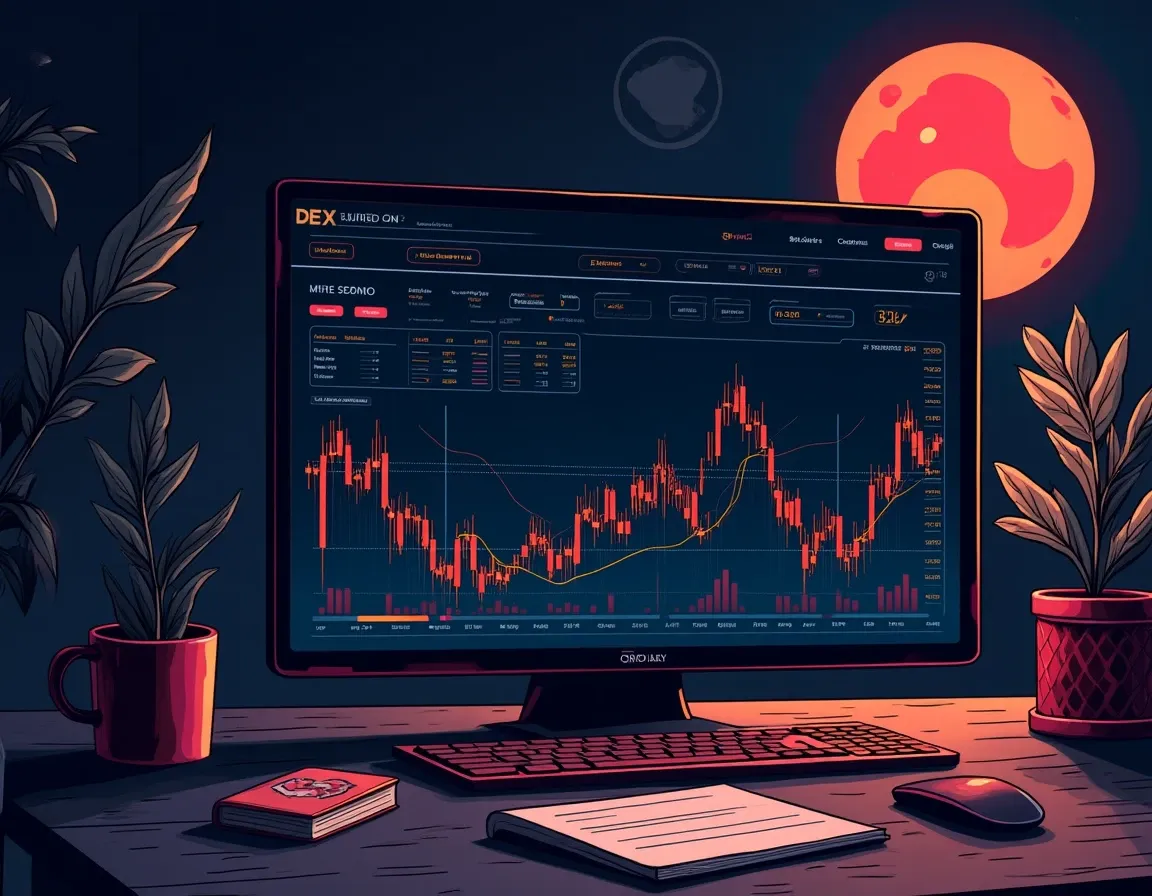
Aave V3 relies on price oracles to value collateral and trigger liquidations. A stablecoin depeg lasting fewer than 60 seconds can trigger hundreds of millions of dollars in DeFi liquidations because lending protocols rely on price oracles that update on fixed intervals.
The USDC depeg to $0.87 during the SVB bank run in March 2023 triggered the most significant impermanent loss event in 3pool history. Newly launched stablecoins often lack deep liquidity and redemption pathways. The USST stablecoin slipped to $0.96 shortly after launch, driven by thin liquidity and early speculative selling.
Check the oracle configuration:
Navigate to the Aave governance forum. Search for the RLUSD asset listing proposal. Look for the oracle address and implementation details. Aave V3’s price oracle implementation fetches and validates asset prices for the protocol. It includes price cap adapters for stablecoins and sentinel functionality to handle oracle outages.
For stablecoins not used as collateral, the deprecated feed is pinned at the nominal peg, which removes oracle manipulation risk on assets whose nominal value is the only sensible reference. Verify whether RLUSD is pinned at $1.00 or uses a live Chainlink feed.
If the oracle is live, check the Chainlink feed health. Go to data.chain.link. Search for the RLUSD/USD feed. Confirm the heartbeat interval (how often the oracle updates), the deviation threshold (how much price must move to trigger an update), and the number of independent node operators reporting prices.
For RLUSD on Aave V3 Core, the oracle configuration should match other Tier 1 stablecoins like USDC or DAI. If the implementation differs, document the deviation and assess the risk. A pinned oracle removes depeg liquidation risk but does not protect you from the depeg itself eroding your deposit value.
Outcome: You now know whether a depeg will trigger cascading liquidations or whether the oracle is pinned. A pinned oracle is safer for lenders but riskier for borrowers.
Step 2: Assess Liquidity Depth Across DEXs And Redemption Pathways

A stablecoin with $145M on Aave V3 but only $8M liquidity on Uniswap and Curve combined cannot sustain a mass exit. If you need to redeem $100,000 RLUSD during a depeg scare, you need to know whether liquidity exists to convert that RLUSD to USDC or ETH without slippage exceeding 2%.
Check on-chain liquidity:
Go to DeFiLlama. Navigate to the RLUSD token page. Review the liquidity distribution across Uniswap, Curve, Balancer, and other major DEXs. For RLUSD, the Curve USDC-RLUSD pool holds $96M TVL as of November 2026, paying 4.33% APY. This is the primary liquidity backstop.
Open the Curve pool on Etherscan. Check the recent swap volume. If daily volume is below $5M, the pool cannot absorb large redemptions without significant slippage. A $100,000 swap in a pool with $1M daily volume will move the price noticeably.
Verify the redemption pathway. Ripple Mint supports direct redemption of RLUSD for USD through Standard Custody and Trust Company. Check the Ripple Mint documentation for minimum redemption amounts, processing windows, and KYC requirements. If redemption requires a $1M minimum or a 72-hour window, on-chain liquidity becomes critical for smaller holders.
Compare to established stablecoins:
USDC on Aave V3 sits at 3.2% APY with billions in on-chain liquidity across dozens of pools. DAI, USDT, and USDC form the Tier 1 yield benchmark at 3.5-4.5% APY. RLUSD’s 4.86% sits above this baseline, suggesting a slightly elevated risk premium.
The spread exists for a reason. The market is pricing depeg risk, liquidity risk, or both. If RLUSD’s liquidity depth matches USDC’s, the spread should compress. If it does not, the premium compensates for the inferior liquidity.
Outcome: You now know whether you can exit a $100,000 position in RLUSD without losing 5% to slippage. If liquidity is insufficient, cap your allocation accordingly.
Step 3: Verify Reserve Backing And Regulatory Attestation
A stablecoin’s peg depends on its reserve backing. RLUSD claims 1:1 backing by cash and cash-equivalent reserves. Verify this claim before you deploy.
Check the attestation reports:
Ripple ensures transparency through monthly reserve attestations conducted by independent certified public accountants, detailing RLUSD’s reserve holdings, tokens minted and burned, and the circulating supply. Navigate to the Ripple website. Locate the transparency or attestation section. Download the most recent report.
Review the attestation date. If the report is more than 45 days old, the data is stale. A monthly attestation that appears quarterly is a red flag. Check the accounting firm’s name. Verify the firm is a recognized CPA with a public reputation. An attestation from an unknown entity provides no assurance.
Compare the circulating supply in the attestation to the on-chain circulating supply. Go to Etherscan. Search for the RLUSD token contract. Check the total supply. If the attestation reports $500M in reserves but Etherscan shows $600M RLUSD minted, the discrepancy demands an explanation.
Verify regulatory standing:
RLUSD is issued by Standard Custody and Trust Company, regulated by NYDFS. Check the NYDFS website for the entity’s license status. A suspended or revoked license invalidates the regulatory claim. A clean license provides jurisdictional recourse if the issuer fails.
Compare RLUSD’s regulatory posture to USDC’s. Circle, the USDC issuer, is regulated as a money transmitter in multiple jurisdictions and provides daily attestations. Ripple’s monthly attestation under NYDFS oversight is weaker but still within industry norms.
Outcome: You now know whether RLUSD’s reserve backing is verifiable and whether regulatory oversight provides recourse. If attestation is missing or stale, do not deploy.
Step 4: Analyze Borrow Demand Sustainability
Lending APY depends on borrow demand. RLUSD’s 4.86% deposit rate requires sufficient borrowers willing to pay a higher rate. If borrow demand collapses, the deposit rate collapses with it.
Check the utilization rate:
Go to the Aave V3 app. Navigate to the RLUSD market. Check the utilization rate (total borrowed / total supplied). A 60% utilization rate on a $145M pool means $87M is borrowed. If utilization drops to 20%, the deposit APY will fall proportionally.
Review the borrow APY. If borrowers are paying 6.5% to borrow RLUSD while USDC borrowers pay 5.2%, the 1.3pp spread indicates a risk premium. Borrowers pay more for RLUSD because the market perceives it as riskier collateral or because liquidity is insufficient to borrow USDC at scale.
Identify the borrower cohort:
Aave V3 does not publish borrower identities, but you can infer behavior from on-chain activity. Open Etherscan. Navigate to the RLUSD reserve contract on Aave V3. Filter for borrow events. Check the wallet addresses borrowing RLUSD.
If a small number of wallets account for the majority of borrows, demand is concentrated. A single borrower repaying a $50M loan will crater the utilization rate and the deposit APY. If borrows are distributed across hundreds of wallets, demand is more resilient.
Compare RLUSD borrow activity to USDC. If USDC has 10,000 active borrowers and RLUSD has 50, the RLUSD market is fragile. A sustainable market requires diverse, ongoing demand.
Outcome: You now know whether the 4.86% APY is durable or dependent on a handful of large borrowers. If demand is concentrated, the rate will not hold.
Step 5: Monitor On-Chain Activity For Early Warning Signals
You cannot predict a depeg, but you can watch for the signals that precede one. Set up monitoring before you deploy.
Track the RLUSD peg on-chain:
Add the Curve USDC-RLUSD pool to your watchlist. Check the pool balance daily. If RLUSD’s share of the pool rises from 50% to 70%, it means traders are dumping RLUSD for USDC. This is the first signal of a confidence loss.
Monitor the RLUSD/USDC price on CoinGecko or DeFiLlama. A deviation below $0.998 for more than 6 hours indicates weak demand. A drop below $0.99 is a depeg event in progress.
Watch for large redemptions:
Go to Etherscan. Add the RLUSD token contract to your watchlist. Filter for transfer events exceeding $5M. If you see multiple $10M+ transfers from Aave V3 to exchange deposit addresses, large holders are exiting. This precedes public awareness by 12-24 hours.
Check the Aave V3 RLUSD reserve. If total supplied drops by 20% in 48 hours, the market is contracting. A falling TVL signals declining confidence.
Set up alerts:
Use Nansen or Arkham to set alerts for large RLUSD transfers. Configure a threshold of $5M. Use DeFiLlama to monitor Aave V3 RLUSD TVL. Set an alert for a 10% decline in 24 hours. Use CoinGecko to track the RLUSD/USDC price. Set an alert for any deviation below $0.995.
These alerts provide 6-48 hours of lead time before a depeg becomes public. That window allows you to exit at minimal slippage.
Outcome: You now have early warning infrastructure. You will see the signals before the market reacts.
Step 6: Size Your Allocation Using The 72-Hour Test
Do not allocate capital you cannot afford to lose. The 72-hour test determines your maximum safe allocation.
Calculate your exit liquidity:
Check the Curve USDC-RLUSD pool’s 24-hour volume. If daily volume is $3M, you can safely exit $30,000 without exceeding 1% of volume. Exceeding 10% of daily volume guarantees slippage above 2%.
If you plan to allocate $100,000, verify that on-chain liquidity can absorb that exit within 72 hours. A $100,000 position in a pool with $1M daily volume requires three days to exit cleanly. A $100,000 position in a pool with $10M daily volume exits in one day.
Cap allocation at 3x daily exit liquidity:
Your maximum allocation should not exceed three times the amount you can exit in 24 hours. If on-chain liquidity supports a $30,000 same-day exit, cap your allocation at $90,000. This ensures you can exit within 72 hours even if liquidity deteriorates.
Diversify across stablecoins:
Do not put 100% of your stablecoin allocation into RLUSD. Allocate 60% to USDC, 20% to DAI, and 20% to RLUSD. This limits your exposure to a single depeg event while still capturing the higher APY.
Outcome: You now have a position size that matches on-chain liquidity. You will not be trapped in an illiquid market.
Common Failure Modes
Ignoring the oracle configuration: Lenders assume all Aave V3 stablecoins use identical oracle setups. They do not. A live oracle on a thinly traded stablecoin creates liquidation risk during flash crashes. Check the oracle before you deploy.
Confusing TVL with liquidity: A $145M TVL on Aave V3 does not mean $145M in exit liquidity. TVL measures deposits. Liquidity measures how much you can sell without slippage. Check DEX liquidity separately.
Trusting the APY without checking utilization: A 4.86% APY on RLUSD today can become 1.2% tomorrow if a large borrower repays. Check the utilization rate and borrower concentration before you deploy.
Skipping the attestation review: A stablecoin without current attestation is a stablecoin without verifiable reserves. Ripple publishes monthly attestations. If the most recent report is three months old, the reserves are unverified. Do not deploy without current attestation.
Allocating more than you can exit: A $500,000 allocation into a stablecoin with $50,000 daily exit liquidity is a trapped position. You cannot exit during a depeg. Cap allocation at 3x daily exit capacity.
What To Watch Next
Once you deploy, monitoring is continuous.
Daily: Check the RLUSD/USDC price on CoinGecko. Verify the peg holds within 0.2%. Review the Curve USDC-RLUSD pool balance. Confirm the pool remains balanced near 50/50. If RLUSD’s share exceeds 65%, confidence is weakening.
Weekly: Review the Aave V3 RLUSD utilization rate. If utilization falls below 40%, the APY will compress. Check the borrow APY. If it falls below 5%, deposit APY will follow. Review Ripple’s attestation page for updated reports.
Monthly: Compare RLUSD’s performance to USDC and DAI on Aave V3. If RLUSD’s APY compresses to match USDC’s, the risk premium has disappeared. Either RLUSD’s risk has fallen or the market is mispricing it. Reassess your allocation.
For additional vetting frameworks, see How To Vet Curve USDC-RLUSD At 4.33% Within 72 Hours and How To Vet New DeFi Yield Positions Within 2 Hours. For broader stablecoin income strategies, see How To Earn Passive Income From Stablecoins In 2026.
The Takeaway
RLUSD on Aave V3 pays 4.86% on $145M TVL. USDC pays 3.2%. The 1.66pp spread on a $100,000 allocation equals $1,660 additional annual income. A single depeg event erases that gain and costs you principal.
The vetting protocol: verify oracle implementation, assess liquidity depth, confirm reserve backing, analyze borrow demand, monitor on-chain activity, and size allocation to match exit liquidity. This framework applies to every new stablecoin market on Aave V3, Compound, or any lending protocol.
The data is on-chain. The signals precede the narrative by 12-48 hours. Set up monitoring before you deploy. Watch the wallets, watch the pools, watch the utilization rate. The blockchain is a receipt. Read the receipts.
Frequently Asked Questions
Is RLUSD safe to lend on Aave V3?
RLUSD is backed 1:1 by cash reserves held by Standard Custody and Trust Company, regulated by NYDFS. Ripple publishes monthly attestations. The stablecoin has been live since December 2024 with no depeg events. Lending safety depends on oracle configuration, liquidity depth, and your ability to exit during volatility. Verify current attestation, check on-chain liquidity exceeds your position size by 3x, and monitor the RLUSD/USDC peg daily. The 4.86% APY includes a risk premium above USDC’s 3.2% for a reason.
Why does RLUSD pay more than USDC on Aave V3?
RLUSD pays 4.86% versus USDC’s 3.2% because the market prices additional risk. RLUSD launched in December 2024 and lacks USDC’s multi-year track record and deep liquidity. Borrowers pay a premium to borrow RLUSD, which passes through to lenders. The spread compensates for depeg risk, lower liquidity, and shorter operational history. As RLUSD matures and liquidity deepens, the spread should compress. A persistent premium above 1.5pp suggests the market still perceives elevated risk.
How much RLUSD can I safely lend on Aave V3?
Your maximum allocation should not exceed three times your 24-hour exit liquidity. Check the Curve USDC-RLUSD pool’s daily volume. If volume is $3M, you can exit $30,000 in 24 hours without excessive slippage. Cap your allocation at $90,000. This ensures you can exit within 72 hours even if liquidity deteriorates. Do not allocate more than 20% of your total stablecoin holdings to RLUSD. Diversify across USDC, DAI, and RLUSD to limit single-depeg exposure.
What happens if RLUSD depegs while I am lending on Aave?
If RLUSD is configured as collateral with a live oracle, a depeg triggers liquidations as the oracle marks collateral value down. If RLUSD uses a pinned oracle at $1.00, liquidations do not trigger, but your deposit value erodes. You must exit through on-chain liquidity (Curve, Uniswap) or direct redemption via Ripple Mint. On-chain exits during a depeg suffer slippage. Direct redemption may require minimum thresholds and 72-hour processing. Monitor the RLUSD/USDC price daily and exit before the depeg reaches $0.99.
How do I monitor RLUSD for early depeg signals?
Track the Curve USDC-RLUSD pool balance on Etherscan. If RLUSD’s share rises above 65%, traders are dumping RLUSD for USDC. Monitor the RLUSD/USDC price on CoinGecko. A deviation below $0.998 for more than 6 hours indicates weak demand. Set Nansen or Arkham alerts for RLUSD transfers exceeding $5M. Watch Aave V3 RLUSD TVL on DeFiLlama. A 10% decline in 24 hours signals capital flight. These signals provide 12-48 hours lead time before public awareness. Exit during the signal window, not after the depeg announcement.
The Weekly Yield Report
You just verified oracle configuration, liquidity depth, reserve backing, and borrow demand for RLUSD on Aave V3. Those metrics will shift within 30 days.
Every Thursday: where crypto yield actually is – stablecoins, liquid staking and DeFi lending, with the risk named next to the rate and what changed since last week.
Free. No trade calls, no allocations, no hype. Unsubscribe in one
click.