


 By
By Public vs Launchpad vs OTC
The Allocation Decision You Need To Make Before The Sale Opens
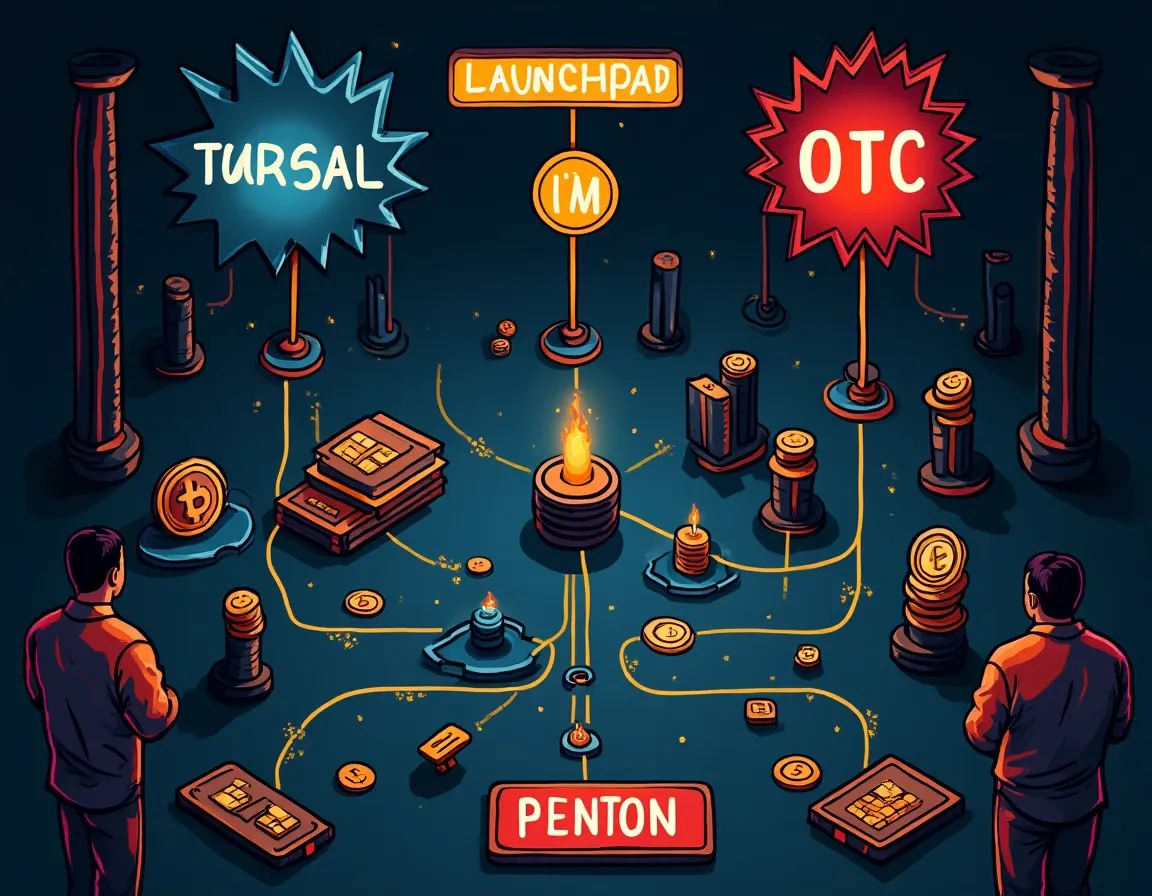
You have three routes into a new token before it lists on major exchanges: public sale, launchpad allocation, or OTC pre-launch deal. Each offers different entry prices, vesting schedules, and allocation certainty. The mechanics differ so much that comparing them on discount alone is misleading. I have watched institutional buyers lock in 50% discounts through OTC deals with 12-month cliffs while retail participants paid 15% above that price on a launchpad with immediate liquidity. I have also watched public sale buyers exit at 3x within 48 hours while OTC holders sat locked for another eleven months as the token fell 80%. Understanding which route matches your capital size, time horizon, and risk appetite is worth real money.
This piece compares all three channels on the factors that actually determine returns: allocation certainty, entry price and discount structure, vesting and lockup terms, minimum buy-in thresholds, and historical performance data from more than 50 launches between 2024 and 2026. The data challenges the assumption that earlier is always better. In many cases, retail participants who bought on launchpads or public sales outperformed OTC buyers who accepted longer lockups for deeper discounts, simply because the token never recovered to the OTC entry price by the time vesting completed.
Public Sales: Smallest Discount, Shortest Lockup, Lowest Certainty

A public sale is the final stage of a token offering before exchange listing. Tokens are sold directly to retail participants, usually through the project’s website or a decentralized platform. Public sales typically offer the smallest discount to expected listing price, ranging from 5% to 20%, and carry the shortest vesting schedules. Most public sales have zero cliff or a cliff of one to three months, followed by linear vesting over 12 to 24 months. Some tokens unlock immediately at the token generation event (TGE), giving buyers instant liquidity.
Minimum buy-ins for public sales are low, commonly $100 to $2,000, making them accessible to retail participants without large capital or institutional connections. The trade-off is allocation certainty. Public sales are often oversubscribed, and allocation is determined by first-come-first-served mechanics, lottery, or pro-rata distribution based on whitelist tier. You may register, complete KYC, and still receive zero allocation or a fraction of your intended purchase.
Public sale participants generally receive better vesting terms than private or seed investors, who face 12-month cliffs and three- to four-year linear vesting. This shorter lockup period reduces exposure to prolonged bear markets and token price deterioration. However, the smaller discount means you need the token to appreciate quickly post-listing to generate meaningful returns. If the token lists flat or below your entry price, you have little margin for error.
Performance data from 2025 shows that public sale tokens face the same post-launch struggle as launchpad tokens. The majority of tokens sold to retail in 2025 traded below their issue price within three months. Screening token fundamentals before you buy becomes critical when your entry discount is thin and your exit window is short.
Launchpad Sales: Lottery Allocation, Mid-Range Discount, Platform Token Lock Required

A launchpad vets early-stage projects and sells their tokens to users before exchange listing, usually at a discount to expected listing price. Launchpads are operated by centralized exchanges (Binance Launchpad, Bybit Launchpad) or decentralized platforms (DAO Maker, Polkastarter). They offer mid-range discounts, typically 15% to 30% below listing price, and allocation is determined by lottery, pro-rata staking, or reputation scoring.
Access to launchpad sales requires holding or staking the platform’s native token. Binance Launchpad allocates tickets based on BNB holdings: one ticket per 100 BNB held, up to a maximum of five tickets. At current prices, the minimum 100 BNB threshold represents approximately $1,700 in locked capital. Bybit allocates based on the size of MNT holdings or runs a lottery for users holding USDT. The allocation model creates a double exposure: you are betting on both the project token and the platform token’s price stability during the sale period.
Allocation odds are low. Launchpad allocation odds range from 3% to 28% depending on the platform, oversubscription ratio, and your tier. Whales holding large amounts of platform tokens receive disproportionate allocation, while new participants with minimum stakes face lottery odds below 1%. Even when you win allocation, the amount is often a fraction of your intended investment.
Vesting schedules for launchpad tokens are stricter than public sales. A six- to 12-month cliff is common, followed by 18- to 36-month linear vesting. Some launchpads offer partial unlocks at TGE (10% to 25%), but the majority of tokens remain locked for months. This extended lockup increases your exposure to price volatility and market cycle risk.
Performance data from 2025 is sobering. Tokens launched via launchpads in 2025 left investors down 46% on average. Only six of 41 sales tracked were still above their issue price as of March 31, 2026. Some tokens fell 97% to 98% from their sale price. The most troubling data point: 12 of 16 launchpads reviewed offered refund mechanisms, and 11 of 16 verifiable sales traded below sale price after listing. Between 60% and 95% of committed capital was refunded, clustering around 80%. This means the majority of participants recognized losses quickly and exited.
Binance Launchpad has historically outperformed other platforms. Data from 2025 shows Binance hitting a 78x ROI at peak levels, with 94% of projects achieving positive ROI at some point post-launch. Bitget’s launchpad projects achieved an average historical peak return of 39x, while Bybit and Binance averaged 32.3x and 29x respectively. These peak numbers are misleading because they measure the highest point, not sustained returns or median participant outcomes. Most retail participants do not exit at peak.
The launchpad route works best for participants who already hold platform tokens for other reasons (trading fee discounts, staking yield) and can absorb the opportunity cost of locking capital for lottery-based allocation. It does not work well for participants who buy platform tokens specifically for launchpad access, because the allocation odds and token price coupling often erase the discount advantage.
OTC Pre-Launch Deals: Deepest Discount, Longest Lockup, Institutional Access Only
OTC (over-the-counter) pre-launch deals allow accredited investors and institutions to buy tokens before public sale or listing, often at steep discounts in exchange for extended lockup periods. A typical OTC deal offers 30% to 70% discounts with vesting periods ranging from four months to 24 months. Top 20 tokens trade at nearly 50% discounts with one-year lockups, while tokens outside the top 100 trade at discounts as steep as 70%.
OTC deals guarantee allocation. If the deal closes, you receive the full amount negotiated. There is no lottery, no oversubscription, no pro-rata dilution. This certainty is valuable for large capital deployments, but it comes with strict access requirements. OTC deals target institutional investors and accredited individuals. Minimum buy-ins are typically $100,000 to $500,000 or higher. Retail participants cannot access OTC rounds unless they have direct relationships with the project team, venture funds, or OTC desks like CoinList, Republic, or Gate.io.
The vesting structure in OTC deals is negotiable but generally stricter than public sales. A four-year schedule with a one-year cliff remains the most common reference, with roughly 25% vesting at the cliff and the remainder released monthly over the following three years. Some deals allow partial unlocks at TGE (5% to 10%), but the majority of tokens remain locked for months or years.
OTC buyers face a different risk profile than public or launchpad participants. The deepest discounts come with the longest exposure to product-market fit risk, team execution risk, and market cycle risk. If the token lists, pumps, and dumps before your cliff expires, you have no ability to exit. I have watched tokens rise 10x in the first month post-listing, then fall 90% over the following six months while OTC holders remained locked. By the time their tokens unlocked, the price was below their entry point despite the original 50% discount.
Institutional buyers hedge this risk using short positions in futures markets. They open an equal-sized short on the token once it lists, offsetting price volatility while the built-in discount locks in profit once tokens unlock. Retail participants rarely have access to this hedging strategy, either because they lack the capital, the exchange access, or the risk management infrastructure to execute it properly.
The secondary OTC market allows early investors to sell locked tokens before they become tradable, but pricing on these deals reflects both the discount and the remaining lockup period. If a token is trading at $1.00 on Binance and you hold tokens with a $0.30 entry price and six months remaining on your lockup, a secondary buyer may offer you $0.50 to $0.60, allowing them to capture the discount spread while assuming the lockup risk. You exit early but give up upside. The buyer assumes the risk that the token falls further before unlock.
OTC deals work for participants with large capital, long time horizons, and the ability to hedge or diversify across multiple deals. They do not work for retail participants who need liquidity, lack hedging tools, or cannot afford to have capital locked for 12 to 48 months. Retail traders lose while OTC buyers win only when the token appreciates and holds value through the lockup period. When tokens fail, OTC buyers lose more because they are locked longer.
Vesting Cliffs and the Price Impact You Should Expect
Vesting cliffs create predictable sell pressure. When a large percentage of the token supply unlocks simultaneously, holders who have waited months or years often sell immediately to realize gains or cut losses. This is especially true for insiders (team and early investors) whose allocations are typically 32% to 35% of total supply and vest over three to four years with a one-year cliff.
Modern token launches started with exactly 0% of insider tokens liquid at TGE. The entire insider allocation unlocked after the cliff period, creating concentrated sell pressure. Buyers who entered via public sale or launchpad with shorter lockups could exit before the cliff. Buyers who entered via OTC with cliffs aligned to insider vesting faced simultaneous unlock events and price deterioration.
Price drops of 20% to 30% at cliff expiration are common. Some tokens implement buyback programs to buffer the impact, but these are only effective if the project has revenue or treasury reserves to fund them. Tokens without revenue or poorly managed treasuries experience sharper drops. Worldcoin (WLD) fell from $11.82 in March 2024 to $0.24 in 2026, a 97% decline, despite multiple OTC raises at progressively lower prices ($5.43, $1.13, $0.27). The declining OTC prices signaled failed product-market fit, and cliff unlocks accelerated the selloff.
Liquidity depth determines whether you can actually sell at the price you see. Tokens with thin liquidity and large cliff unlocks experience slippage far worse than the nominal price drop. If the order book cannot absorb the selling volume, your exit price may be 40% to 60% below the quoted price.
Failure Modes: When Each Route Loses Money
Public sales fail when the token lists flat or below sale price. With discounts of only 5% to 20%, you have no margin for error. If the token opens at or below your entry price, you are immediately underwater. Public sales also fail when allocation is so limited that you deploy only a fraction of your intended capital, forcing you to either accept the small position or chase the token post-listing at a higher price.
Launchpad sales fail when platform token price drops during the staking period. If you lock $1,700 worth of BNB for a Binance Launchpad sale and BNB falls 15% during the sale, you have lost $255 before receiving any allocation. If you then lose the lottery and receive zero allocation, you have locked capital and absorbed price risk for nothing. Launchpad sales also fail when the project token lists below sale price and you are locked in by vesting terms, unable to exit while the price deteriorates.
OTC deals fail when the token never recovers to your entry price by the time your lockup expires. A 50% discount is worthless if the token falls 70% between your purchase and your unlock date. OTC deals also fail when the project pivots, delays launch, or collapses during your lockup period. You have no liquidity, no exit, and no recourse. The secondary OTC market may offer a buyer, but only at a steep discount to your entry price, locking in a realized loss.
All three routes fail when the project itself fails. Product-market fit, team execution, and market timing matter more than entry price. A 70% discount on a failed project is still a 100% loss. Screening fundamentals before you buy is the only defense against allocation into projects that never ship, never find users, or never generate revenue.
Who Each Route Is Right For
Public sales are right for retail participants with small to mid-size capital ($100 to $10,000) who want short lockup periods and are willing to accept low allocation odds. Public sales work best when you have strong conviction in the project and want exposure without locking capital for months. They also work when you believe the token will appreciate quickly post-listing, allowing you to exit before vesting cliffs or market downturns.
Launchpad sales are right for participants who already hold platform tokens for other reasons and can absorb the opportunity cost of locking capital for lottery-based allocation. Launchpads work best on platforms with strong historical performance (Binance) and when you are diversifying across multiple launches rather than betting on a single project. Launchpads do not work for participants who buy platform tokens specifically for launchpad access, because the allocation odds, platform token price risk, and poor 2025 performance data make the expected value negative.
OTC deals are right for institutional participants with large capital ($100,000+), long time horizons (12 to 48 months), and the ability to hedge using futures or diversify across multiple deals. OTC deals work when you have direct relationships with project teams or OTC desks and can negotiate favorable terms (shorter cliffs, partial TGE unlocks, secondary exit rights). OTC deals do not work for retail participants who need liquidity, lack hedging tools, or cannot afford to lock capital for years.
My Recommendation: Start With Public Sales, Ignore Launchpads Unless You Already Hold Platform Tokens, Avoid OTC Unless You Have Institutional Capital and Hedging Capability
The 2025 performance data is clear. Launchpad tokens left investors down 46% on average, with 11 of 16 sales trading below sale price and refund rates clustering around 80%. The allocation odds are terrible (3% to 28%), the platform token lock creates double exposure, and the vesting terms trap you in losing positions. Unless you already hold BNB, MNT, or another platform token for trading or staking and can treat launchpad allocation as a free lottery, the expected value is negative.
Public sales offer the worst discount but the shortest lockup and the most flexibility. If the token lists and pumps, you can exit immediately or within weeks. If the token lists flat or down, you can cut losses without waiting months for a vesting cliff. The low minimum buy-in ($100 to $2,000) allows you to take small positions across multiple launches, diversifying project risk without locking large capital.
OTC deals offer the deepest discounts but demand institutional capital, long lockups, and sophisticated risk management. Retail participants without hedging tools or secondary exit options should not take OTC exposure. The 50% to 70% discounts sound attractive until you watch the token fall 80% during your 12-month lockup and realize you cannot exit. Institutional buyers can hedge and diversify. Retail buyers cannot.
If you want exposure to new token launches, focus on public sales with projects you have researched thoroughly. Avoid launchpads unless you already hold platform tokens and treat allocation as a bonus, not a strategy. Avoid OTC unless you have institutional capital and the infrastructure to hedge or diversify. The data from 50+ launches shows that most retail participants who chase discounts through launchpads or OTC deals underperform participants who pay slightly higher prices in public sales but maintain liquidity and flexibility.
The Decision Rule: Match Your Capital Size and Time Horizon to the Sale Type
If you have $500 to $5,000 and want exposure to new launches without locking capital for months, use public sales. Accept the smaller discount in exchange for shorter lockups and faster exit optionality. If you have $10,000 to $50,000 and already hold platform tokens for other reasons, treat launchpad allocation as a secondary opportunity but do not buy platform tokens specifically for access. If you have $100,000+ and can lock capital for 12 to 48 months while hedging or diversifying across multiple deals, OTC becomes viable, but only with direct access to project teams or OTC desks and only with secondary exit rights negotiated into your deal terms.
The allocation route does not determine returns. The project determines returns. The allocation route determines your entry price, lockup period, and exit flexibility. Choose the route that matches your capital size and time horizon, then spend your energy screening projects rather than chasing discounts. A 70% discount on a failed project is still a 100% loss. A 10% discount on a successful project with fast exit optionality is a better outcome than a 50% discount on a successful project with a 24-month lockup that expires after the market cycle turns.
Most retail participants overweight entry price and underweight exit flexibility. The 2025 launchpad data proves this. Participants locked capital, accepted lottery odds, held platform tokens through price drops, and still ended down 46% on average because they could not exit when the token listed below sale price. Public sale participants with smaller discounts but immediate liquidity could exit at breakeven or small losses. OTC participants with the deepest discounts are still locked, watching tokens trade 70% to 90% below their entry price with six to 18 months remaining on their vesting schedule.
The route that gets you better terms is the route that matches your capital, your time horizon, and your ability to exit when the project underperforms. For most retail participants, that route is public sales. For participants who already hold platform tokens and can treat launchpad allocation as a free lottery, launchpads remain viable but only on platforms with strong historical performance. For institutional participants with large capital and hedging capability, OTC deals offer the deepest discounts, but only when negotiated with secondary exit rights and only when diversified across multiple deals to reduce single-project risk.
Frequently Asked Questions
What is the main difference between public sales and launchpad allocations?
Public sales offer smaller discounts (5-20%) with shorter lockups (0-6 month cliff) but low allocation certainty. Launchpads offer mid-range discounts (15-30%) with lottery-based allocation requiring platform token stakes. Public sales have $100-$2,000 minimums while launchpads like Binance require $1,700+ in BNB locked. Public sales give faster exit flexibility while launchpads lock capital longer through both vesting and platform token exposure.
Why do OTC deals offer such deep discounts compared to public sales?
OTC deals offer 30-70% discounts because buyers accept 12-48 month lockup periods with strict vesting cliffs. The discount compensates for illiquidity, longer exposure to project execution risk, and inability to exit during price volatility. OTC buyers also provide early capital before product-market fit is proven. Institutional buyers hedge this risk with short positions in futures markets, a strategy unavailable to most retail participants.
How do launchpad allocation odds actually work?
Allocation odds depend on platform token holdings and oversubscription ratio. Binance allocates one ticket per 100 BNB held (max five tickets). Bybit uses MNT holdings or USDT lottery. Actual allocation odds range from 3% to 28% across platforms. Whales with large platform token stakes receive disproportionate allocation while minimum-stake participants face lottery odds below 1%. Even winning allocation often means receiving a fraction of intended investment.
What happens to token price when vesting cliffs expire?
Vesting cliffs create concentrated sell pressure as locked tokens unlock simultaneously. Price drops of 20-30% at cliff expiration are common. Insider allocations (team and early investors) represent 32-35% of supply and typically vest over 3-4 years with 1-year cliffs. Tokens without revenue to fund buyback programs or with thin liquidity experience sharper drops. Slippage can push actual exit prices 40-60% below quoted price during high-volume unlocks.
Should retail investors buy platform tokens specifically for launchpad access?
No. 2025 data shows launchpad tokens left investors down 46% on average, with 11 of 16 sales trading below sale price. Buying platform tokens creates double exposure: both project token risk and platform token price risk during staking period. Allocation odds are 3-28%, meaning most participants lock capital and absorb price risk for zero allocation. Launchpads only make sense if you already hold platform tokens for trading or staking.
The Weekly Yield Report
You now know which sale route matches your capital size and time horizon across fifty launches. Those odds and discount spreads will shift as the next cycle matures.
Every Thursday: where crypto yield actually is – stablecoins, liquid staking and DeFi lending, with the risk named next to the rate and what changed since last week.
Free. No trade calls, no allocations, no hype. Unsubscribe in one
click.