


 By
By Bitcoin USDT Settlement: RGB Protocol Income Implications
Tether-backed Utexo is launching USDT on Bitcoin using RGB and Lightning Network protocols after closing a $7.5 million seed round co-led by Tether. This marks the first major stablecoin deployment on Bitcoin in twelve years, since Tether abandoned the Omni Layer protocol in 2014. The October 2026 release is designed to turn Bitcoin from a pure store-of-value asset into a settlement rail for dollar-denominated transactions, directly competing with Ethereum and Tron as USDT infrastructure.
For crypto gambling operators, this development matters more than most infrastructure announcements. Settlement speed, transaction cost, and custody flexibility determine which platforms can offer competitive withdrawal economics and which cannot. Bitcoin-native USDT changes the calculation for licensed operators who have avoided Bitcoin because it lacked programmable dollar settlement. It also changes the income economics for affiliates, VIP players, and treasury managers operating within the crypto gambling vertical.
Why Bitcoin Lost Stablecoin Settlement in 2014

Tether launched on Bitcoin’s Omni Layer in 2014, the first blockchain deployment of USDT. The protocol worked, but it did not scale. Transaction throughput was low, confirmation times were long, and the scripting environment was not designed for the kind of programmable settlement logic that stablecoin issuers and institutional users required. By 2017, Ethereum had become the dominant USDT settlement layer, offering ERC-20 programmability, faster block times, and a developer ecosystem built around token standards. Tron followed in 2019, optimizing for high throughput and near-zero transaction costs, which made it the preferred chain for exchange deposit and withdrawal operations.
Bitcoin remained the largest cryptocurrency by market capitalization and the most trusted settlement layer for final value transfer, but it could not support the transactional velocity that stablecoin use cases required. Operators who wanted to offer USDT deposits and withdrawals built on Ethereum or Tron. Players who wanted to move USDT between wallets and platforms used those chains. Bitcoin was the reserve asset. It was not the payment rail.
The RGB protocol changes that. RGB is a smart contract system built on Bitcoin that uses off-chain computation with on-chain anchoring, similar in architecture to Lightning but designed for asset issuance and programmable logic rather than payment channels. The protocol allows USDT to settle on Bitcoin while maintaining the same programmability and transaction speed that Ethereum and Tron provide. When combined with Lightning Network for instant settlement, Bitcoin becomes a viable USDT rail for the first time since Omni.
What RGB and Lightning Enable for Platform Economics
The RGB release allows Tether to issue USDT on Bitcoin with smart contract functionality, while Lightning provides instant settlement for small-to-medium transactions. This combination addresses the two primary barriers that kept Bitcoin out of transactional stablecoin use: speed and programmability. For operators, this opens new custody and settlement architectures that were not previously possible.
Licensed crypto casinos currently hold player balances in USDT on Ethereum or Tron, because those chains allow for automated hot wallet management, instant withdrawals, and low-cost batch processing. Bitcoin has been used primarily for player deposits and large withdrawals, where final settlement security matters more than speed. With RGB and Lightning, operators can now hold player balances in Bitcoin-native USDT, which provides the same programmable wallet infrastructure as Ethereum but with Bitcoin-level security and a custody model that institutional treasury managers and compliance officers prefer.
For affiliates and VIP players, the income implication is withdrawal cost and speed. Platforms that settle on Ethereum charge gas fees that vary with network congestion. During high-volatility periods, withdrawal costs can exceed $20 for a single USDT transaction, which erodes rakeback and affiliate commission income for users who withdraw frequently. Tron offers lower fees but carries reputational and regulatory risk that some licensed operators avoid. Bitcoin-native USDT on Lightning offers sub-dollar settlement cost with Bitcoin-grade finality, which makes frequent small withdrawals economically viable for the first time.
This matters specifically for players who treat gambling activity as a revenue surface. Skilled poker players, sports bettors with positive expected value, and bonus arbitrage specialists typically withdraw earnings frequently to minimize platform risk and to reallocate capital across opportunities. Withdrawal cost is a real friction in that income model. Lightning-settled USDT on Bitcoin reduces that friction to near zero while maintaining the custody security that Ethereum cannot match.
The $7.5 Million Seed Round and Tether’s Strategic Position
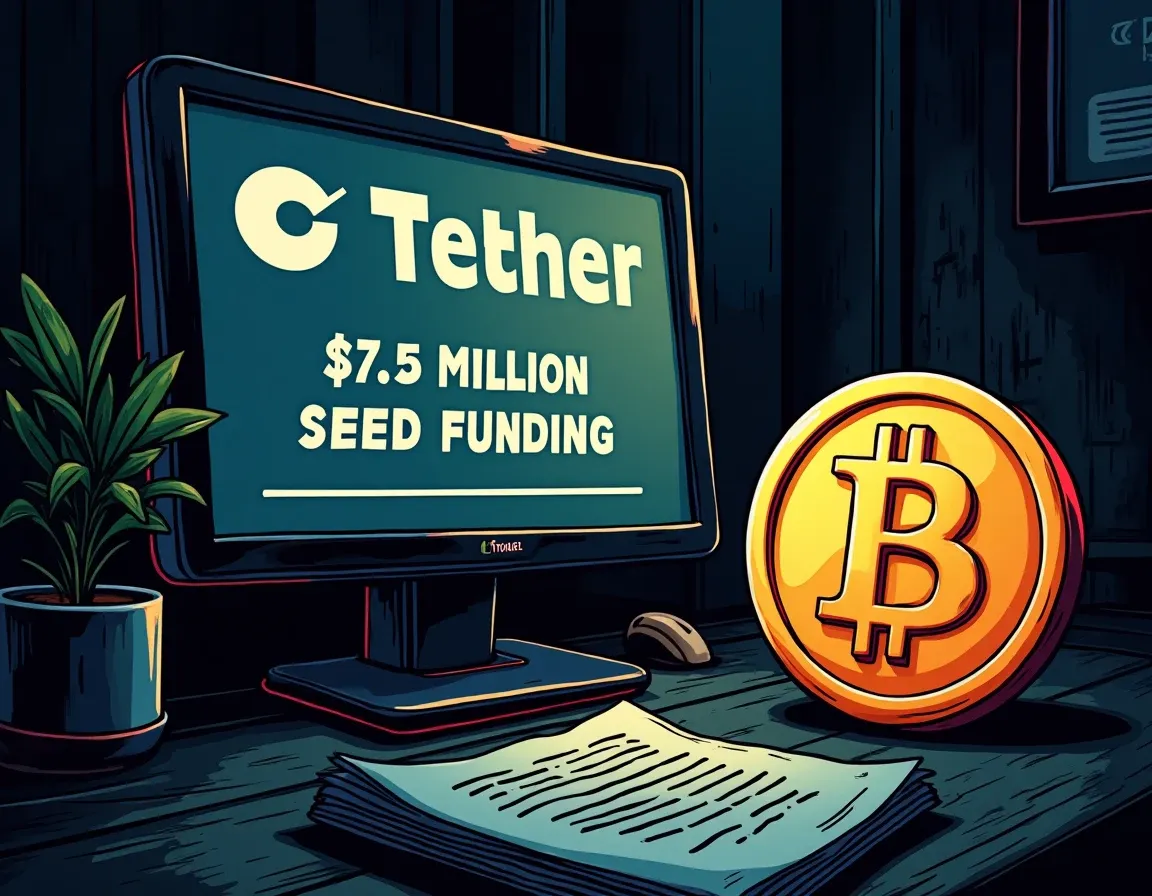
Tether co-led the $7.5 million seed round for Utexo, the infrastructure company building the RGB deployment. This is not a speculative investment. Tether controls the dominant stablecoin by circulating supply, with more than $120 billion USDT outstanding across multiple blockchains. The company earns revenue from the interest on reserve assets backing that supply, which means every additional use case for USDT increases the total circulating supply and therefore increases Tether’s income.
Deploying USDT on Bitcoin expands the addressable market for Tether into custody environments and regulatory jurisdictions that prefer Bitcoin infrastructure over Ethereum or Tron. Institutional treasury managers, regulated exchanges, and licensed gambling operators in jurisdictions with strict custody requirements have historically avoided Ethereum-based stablecoins because the custody model and smart contract risk surface do not meet their compliance standards. Bitcoin-native USDT solves that problem, which expands Tether’s total addressable market without requiring users to trust a new issuer or a new reserve structure.
For operators, this creates a new compliance path. Casinos licensed in Malta, Isle of Man, and certain Curaçao sub-licenses are required to hold player funds in segregated accounts with specific custody standards. Ethereum-based USDT does not meet those standards in many cases, which forces operators to settle in fiat or to use licensed stablecoin custodians with higher operational cost. Bitcoin-native USDT on RGB allows operators to hold player balances in a Bitcoin wallet structure that meets custody requirements while maintaining dollar-denominated accounting and instant settlement through Lightning.
The result is lower operational cost for licensed operators, which translates into better VIP economics and higher affiliate commission sustainability. Operators with lower treasury and custody costs can afford to pay higher rakeback percentages and more competitive RevShare structures, because their cost structure supports it. That is a direct income benefit for affiliates and skilled players operating within those platforms.
Settlement Rail Competition and Operator Adoption Incentives
Bitcoin competes with Ethereum and Tron as USDT settlement infrastructure, but the competitive dynamics differ by use case. Ethereum remains the dominant chain for DeFi applications, which require composable smart contracts and deep on-chain liquidity. Tron remains the lowest-cost chain for high-volume exchange and remittance use, where transaction throughput and near-zero fees matter more than decentralization or security. Bitcoin offers final settlement security and a custody model that institutional users and regulated operators trust, which makes it the preferred chain for large-value storage and for compliance-sensitive environments.
For crypto gambling operators, the choice of settlement rail determines treasury cost, regulatory risk, and withdrawal economics. Platforms that serve retail players with small deposits and frequent small withdrawals will likely continue using Tron, because the cost structure is unbeatable for that use case. Platforms that serve VIP players, high-stakes poker, and sports betting with large balances will likely migrate toward Bitcoin-native USDT, because those users value custody security and withdrawal finality more than they value marginal cost savings on small transactions.
The stablecoin income strategies that work on Ethereum-based USDT will also work on Bitcoin-native USDT, but with different risk and cost profiles. Lending USDT on DeFi platforms requires Ethereum because that is where the liquidity pools and smart contract infrastructure exist. Holding USDT in a platform treasury or in a cold wallet for capital preservation works better on Bitcoin because the custody model is simpler and the security assumptions are stronger. Affiliates who earn RevShare commissions in USDT will prefer Bitcoin settlement if they withdraw frequently, because Lightning offers lower cost and faster finality than Ethereum without the regulatory uncertainty of Tron.
Operator adoption will depend on licensing jurisdiction and player demographics. I expect licensed operators in European jurisdictions to adopt Bitcoin-native USDT faster than unlicensed operators, because the compliance and custody benefits matter more in regulated environments. I expect poker rooms and sportsbooks to adopt faster than slots-focused casinos, because poker and sports betting attract skilled players who withdraw frequently and who value custody security. I expect VIP-focused platforms to adopt faster than casual-player platforms, because VIP players hold larger balances and care more about final settlement security than about marginal transaction cost.
Income Implications for Affiliates and Platform-Adjacent Earners
Affiliates earn commission on player deposits, either as cost-per-acquisition (CPA) or as revenue share (RevShare) based on gross gaming revenue (GGR). Both models are sensitive to withdrawal friction. Players who face high withdrawal costs or slow settlement times are more likely to leave balances on-platform and to continue playing, which increases GGR and therefore increases affiliate income in the short term. But those same players are also more likely to experience platform risk, regulatory seizure, or exit scams, which destroys long-term affiliate income because the player never deposits again.
Bitcoin-native USDT on Lightning reduces withdrawal friction to near zero, which means players can withdraw earnings instantly at sub-dollar cost. This reduces short-term GGR because players hold smaller on-platform balances, but it increases long-term player lifetime value (LTV) because players trust the platform more and return more frequently. For affiliates operating on RevShare structures, this is a net positive. Lower withdrawal friction increases player retention, which increases total commissionable GGR over the player’s lifetime, even if individual session GGR is lower.
For treasury managers and LP-into-casino-token holders, Bitcoin-native USDT offers a new reserve asset structure. Many casino tokens are backed by a percentage of platform GGR, which is held in a treasury and distributed to token holders as yield. Those treasuries are typically denominated in USDT or other stablecoins, held on Ethereum or Tron. Bitcoin-native USDT allows those treasuries to be held on Bitcoin with the same dollar accounting but with stronger custody security and lower smart contract risk. This reduces the probability of treasury loss due to Ethereum smart contract exploits, which have drained hundreds of millions from DeFi protocols over the past three years.
For skilled players, the income implication is capital efficiency. Players who extract positive expected value from poker, sports betting, or bonus arbitrage typically operate across multiple platforms simultaneously, moving capital to wherever the best opportunity exists. Withdrawal speed and cost determine how quickly they can reallocate capital. Lightning-settled USDT on Bitcoin allows instant reallocation at near-zero cost, which increases the number of opportunities a skilled player can exploit in a given time period. That is a direct income multiplier.
The Takeaway
Tether’s return to Bitcoin after twelve years is not a symbolic move. It is an infrastructure upgrade that changes settlement economics for licensed operators, affiliates, and skilled players operating within the crypto gambling vertical. Bitcoin-native USDT on RGB and Lightning offers the custody security and regulatory clarity that Ethereum cannot match, combined with the instant settlement and low cost that Tron provides but without the reputational risk. Operators in regulated jurisdictions will adopt first, followed by VIP-focused platforms and poker rooms. Affiliates on RevShare structures will see higher player LTV due to lower withdrawal friction. Skilled players will see faster capital reallocation and lower withdrawal cost, which increases the number of income opportunities they can exploit. The first platforms to integrate RGB-based USDT settlement will have a measurable competitive advantage in VIP retention and compliance cost, and that advantage will show up in affiliate commission sustainability within six months of deployment.
Frequently Asked Questions
Frequently Asked Questions
Why did Tether leave Bitcoin in 2014 and why is it returning now?
Tether launched on Bitcoin’s Omni Layer in 2014 but migrated to Ethereum in 2017 because Bitcoin lacked programmable smart contract infrastructure and transaction throughput for stablecoin use cases. The RGB protocol changes that by enabling off-chain smart contract computation with on-chain Bitcoin anchoring, combined with Lightning Network for instant settlement. This allows USDT to settle on Bitcoin with the same speed and programmability as Ethereum but with Bitcoin-grade custody security, which meets institutional and regulatory requirements that Ethereum cannot.
How does Bitcoin-native USDT affect crypto casino withdrawal costs?
Crypto casinos currently settle USDT withdrawals on Ethereum or Tron. Ethereum gas fees can exceed twenty dollars during network congestion, which erodes income for affiliates and skilled players who withdraw frequently. Tron offers lower fees but carries regulatory risk. Bitcoin-native USDT on Lightning Network provides sub-dollar settlement cost with Bitcoin-level finality, making frequent small withdrawals economically viable for the first time. This reduces withdrawal friction for VIP players and improves capital efficiency for skilled players moving funds across platforms.
Which crypto gambling operators will adopt Bitcoin USDT first?
Licensed operators in European jurisdictions like Malta and Isle of Man will adopt first because Bitcoin-native USDT meets custody and compliance requirements that Ethereum-based stablecoins do not. Poker rooms and sportsbooks will adopt faster than slots casinos because they serve skilled players who withdraw frequently and value custody security. VIP-focused platforms will adopt faster than casual-player platforms because VIP players hold larger balances and prioritize final settlement security over marginal transaction cost savings. Unlicensed operators will likely continue using Tron for cost reasons.
How does this affect affiliate commission structures for crypto casinos?
Affiliates earning RevShare commissions based on gross gaming revenue will see higher player lifetime value because lower withdrawal friction increases player trust and retention. Bitcoin-native USDT on Lightning allows instant withdrawals at sub-dollar cost, which reduces on-platform balance size and short-term GGR but increases long-term player return frequency. Platforms with lower treasury and custody costs can afford higher rakeback percentages and more competitive RevShare rates, which directly benefits affiliates. This is especially valuable for affiliates promoting licensed operators to VIP players.
What is the RGB protocol and how does it enable USDT on Bitcoin?
RGB is a smart contract system built on Bitcoin that uses off-chain computation with on-chain anchoring, similar in architecture to Lightning but designed for asset issuance and programmable logic. It allows Tether to issue USDT on Bitcoin with the same programmability as Ethereum ERC-20 tokens while maintaining Bitcoin-level security. When combined with Lightning Network for instant settlement, RGB enables Bitcoin to function as a transactional stablecoin rail for the first time since 2014, competing directly with Ethereum and Tron for USDT settlement infrastructure.
The Weekly Yield Report
You have just reviewed the first major stablecoin return to Bitcoin infrastructure in twelve years, with specific implications for operator custody cost, affiliate commission sustainability, and player withdrawal economics. Those settlement rails and adoption timelines will shift as licensed platforms integrate RGB deployment over the next six months.
Every Thursday: where crypto yield actually is – stablecoins, liquid staking and DeFi lending, with the risk named next to the rate and what changed since last week.
Free. No trade calls, no allocations, no hype. Unsubscribe in one
click.