

 By
By Aave Surges 45.5% in 30 Days on V4 Stock Collateral
What Happened and By How Much
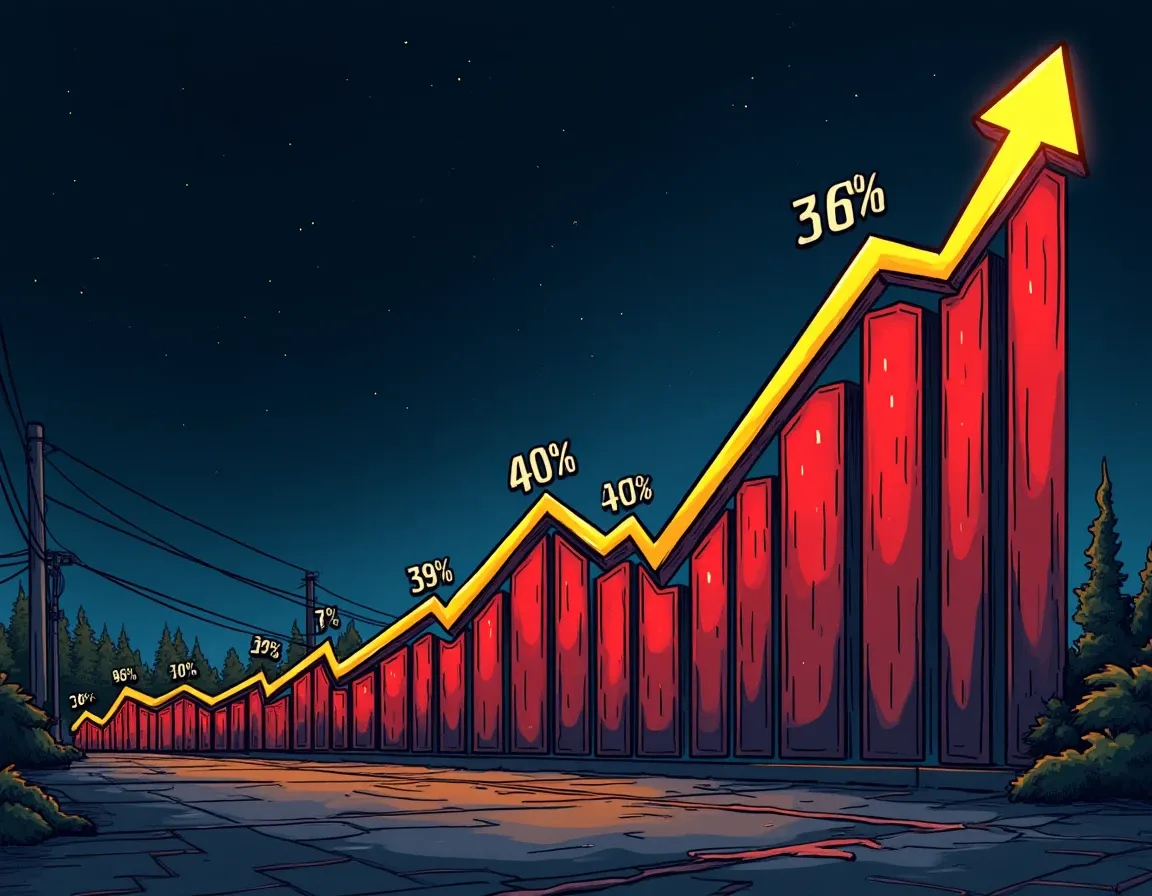
Aave climbed 45.5% over 30 days to $183.63 as of October 2, 2026, according to CoinGecko. The move brought the token’s market capitalization to $2.83 billion and extended a weekly gain of 23.9% and a 24-hour jump of 10.6%. The protocol ranks 41st by market cap and trades 72.2% below its May 18, 2021 all-time high of $661.69.
The rally accelerated in the final week of September, with DeFi lending activity and V4 adoption serving as the primary drivers. The 30-day gain places Aave among the strongest performers in the DeFi lending sector during the period, outpacing both Bitcoin and Ethereum on a percentage basis.
What Drove the Move: V4 Equities Hub and Tokenomics

The catalyst that triggered the final leg of the rally was the September 25, 2026 launch of Aave V4’s Equities Hub on Base. The market allows eligible non-U.S. users to deposit Coinbase-issued tokenized stocks as collateral to borrow USDC, according to CoinMarketCap on September 25. Seven tokenized equities are available at launch, including Apple, Nvidia, and Tesla, with Chainlink providing price feeds.
The Equities Hub caps collateral at approximately $29 million, USDC supply at $32 million, and borrowing at $21 million as of September 25, per CoinMarketCap. The market operates under Regulation S and is restricted to users outside the United States. It represents the first live deployment of Aave V4’s hub-and-spoke architecture for real-world asset collateral, moving beyond the protocol’s March 30, 2026 Ethereum mainnet launch of V4’s Core, Plus, and Prime hubs.
The rally began well before the Equities Hub announcement. Aave V4 launched on Ethereum mainnet on March 30, 2026, as reported by DL News on that date. The protocol then expanded to Avalanche on July 16, 2026, marking its first multi-chain V4 deployment, according to CoinMarketCap. By early September, V4 had surpassed $1 billion in deposits, per Aave Labs’ September 1, 2026 development update.
A secondary catalyst emerged on September 29, 2026, when Aave founder Stani Kulechov indicated the protocol is considering adding token burns to its existing buyback program under Aavenomics 3.0. The proposal would permanently remove some AAVE tokens from circulation rather than directing repurchased tokens to the DAO treasury, as reported by multiple outlets on September 29. Aave already operates a $50 million annual buyback budget with weekly purchases ranging from $250,000 to $1.75 million, according to protocol documentation cited on September 29.
The timing matters. The rally built momentum through July and August as V4 adoption grew, then accelerated on September 25 when the Equities Hub went live, and extended further on September 29 as burn discussions gained traction. The sequence suggests the market priced in V4’s real-world asset potential over weeks, not days, with the Equities Hub serving as confirmation rather than surprise.
What the Move Means for Lending and Yield
For holders focused on yield mechanics, the V4 upgrade changes how liquidity is structured but does not fundamentally alter the risk-return profile of supplying capital to Aave. The hub-and-spoke model consolidates liquidity into unified pools per blockchain, with specialized markets drawing from shared collateral. That design improves capital efficiency but introduces cross-contamination risk if one spoke experiences stress.
The Equities Hub specifically creates a new risk vector for USDC lenders. Tokenized stock price feeds freeze when U.S. markets close, but borrowing and liquidations can still occur, as noted by CryptoSlate on September 27, 2026. A borrower using tokenized Tesla shares as collateral faces liquidation risk based on stale weekend prices while the underlying equity trades in after-hours or pre-market sessions. That disconnect does not affect most Aave markets, but it is material for anyone supplying USDC to the Equities Hub spoke.
The broader V4 ecosystem offers no immediate yield advantage over V3 for standard crypto collateral. Aave V3 held $12.5 billion in active loans as of September 2026, per Aave Labs’ September update, while V4 crossed $1 billion in deposits during the same period. The older protocol remains the dominant liquidity venue, and supply rates on USDC, ETH, and stablecoins are comparable across versions as of early October 2026.
Where V4 matters for income-focused holders is institutional real-world asset lending through Aave Horizon, a permissioned market for tokenized Treasuries and comparable instruments. Horizon held approximately $540 million in assets against $163.5 million in borrowing as of July 2026, with a stated goal of exceeding $1 billion, according to a report dated August 25, 2026. That market targets regulated counterparties and does not compete with retail DeFi yield, but its growth could drive protocol revenue and, under Aavenomics 3.0, buyback volume.
The potential token burn mechanism adds a layer of supply-side pressure if implemented, but it does not change the lending yield available today. Buybacks funded by protocol revenue reduce circulating supply over time, which can support price if demand holds. A burn accelerates that dynamic by making the reduction permanent. Neither action increases the interest paid to lenders or changes the collateral requirements for borrowers.
What Could Hold or Break the Move
A 45.5% move over 30 days reflects positioning ahead of expected catalysts, not a fundamental repricing of the protocol’s earning power. For the rally to hold, V4 adoption must continue to grow at a pace that justifies the valuation step. That means Horizon scaling past $1 billion, additional hub-and-spoke deployments across chains, and sustained institutional inflows into tokenized asset markets.
The rally breaks if V4 growth stalls, if the Equities Hub experiences a liquidation event that damages confidence in the hub-and-spoke model, or if the burn proposal fails to gain governance approval. Each of those outcomes removes a leg of the narrative that drove the move. The token repriced on the expectation of V4 becoming the dominant infrastructure for onchain credit. If that does not materialize, the rally reverses.
Leverage is the mechanical risk. A fast move attracts positioned traders, and the September 29 rally saw exchange reserves climb to a monthly high, as noted by AMBCrypto on September 29, 2026. Rising reserves on exchanges typically precede increased selling pressure, as tokens move from wallets to venues where they can be liquidated. If the move stalls and leveraged longs start closing, the reversal can be as sharp as the ascent.
The broader DeFi lending market also matters. Aave held a 48% market share of active loans as of September 1, 2026, according to CoinMarketCap. Morpho, the second-largest lending protocol, has grown rapidly through modular market creation and institutional partnerships, including a Coinbase integration in 2025. If Morpho continues to capture share, Aave’s dominance narrows, and the V4 upgrade becomes less differentiated. That scenario does not break the token immediately, but it caps the upside and increases sensitivity to any execution miss.
What It Does Not Mean
A large move does not mean the asset is undervalued at the new price, and it does not mean the trend will continue. The 45.5% gain over 30 days reflects a repricing around specific developments: V4 going live, tokenized stock collateral launching, and burn discussions gaining visibility. Those catalysts are now known. The next 30 days will not have the same concentration of announcements unless the roadmap accelerates unexpectedly.
The move also does not mean Aave is now the best venue for yield. Lending rates are determined by utilization, and utilization depends on borrowing demand, not token price. A holder supplying USDC to Aave V3 on Ethereum earns the same rate today as they did when AAVE traded 30% lower. The protocol’s revenue has grown, and that revenue funds buybacks, but the connection between token price and lender yield is indirect and operates on a longer time horizon than a 30-day rally.
For someone holding Aave for its income mechanics, the V4 launch is structurally significant because it expands the types of collateral the protocol can accept and the institutions it can serve. That matters over quarters and years as tokenized assets scale. It does not mean October will repeat September’s performance, and it does not mean the token is mispriced if it consolidates or retraces.
The Equities Hub is a proof of concept with $29 million in collateral capacity. If it scales to hundreds of millions and additional asset classes are added, the V4 architecture becomes validated. If it remains a niche product with limited adoption, the hub-and-spoke model stays theoretical. The rally priced in the optimistic scenario. The next phase depends on whether usage confirms it.
The Weekly Yield Report
You have just reviewed a 45.5% move driven by V4 adoption, tokenized stock collateral, and potential burns. Those catalysts are now priced in, and the next 30 days will reveal whether usage confirms the thesis.
Every Thursday: where crypto yield actually is – stablecoins, liquid staking and DeFi lending, with the risk named next to the rate and what changed since last week.
Free. No trade calls, no allocations, no hype. Unsubscribe in one
click.