
 By
By Is there a Robinhood Chain token?
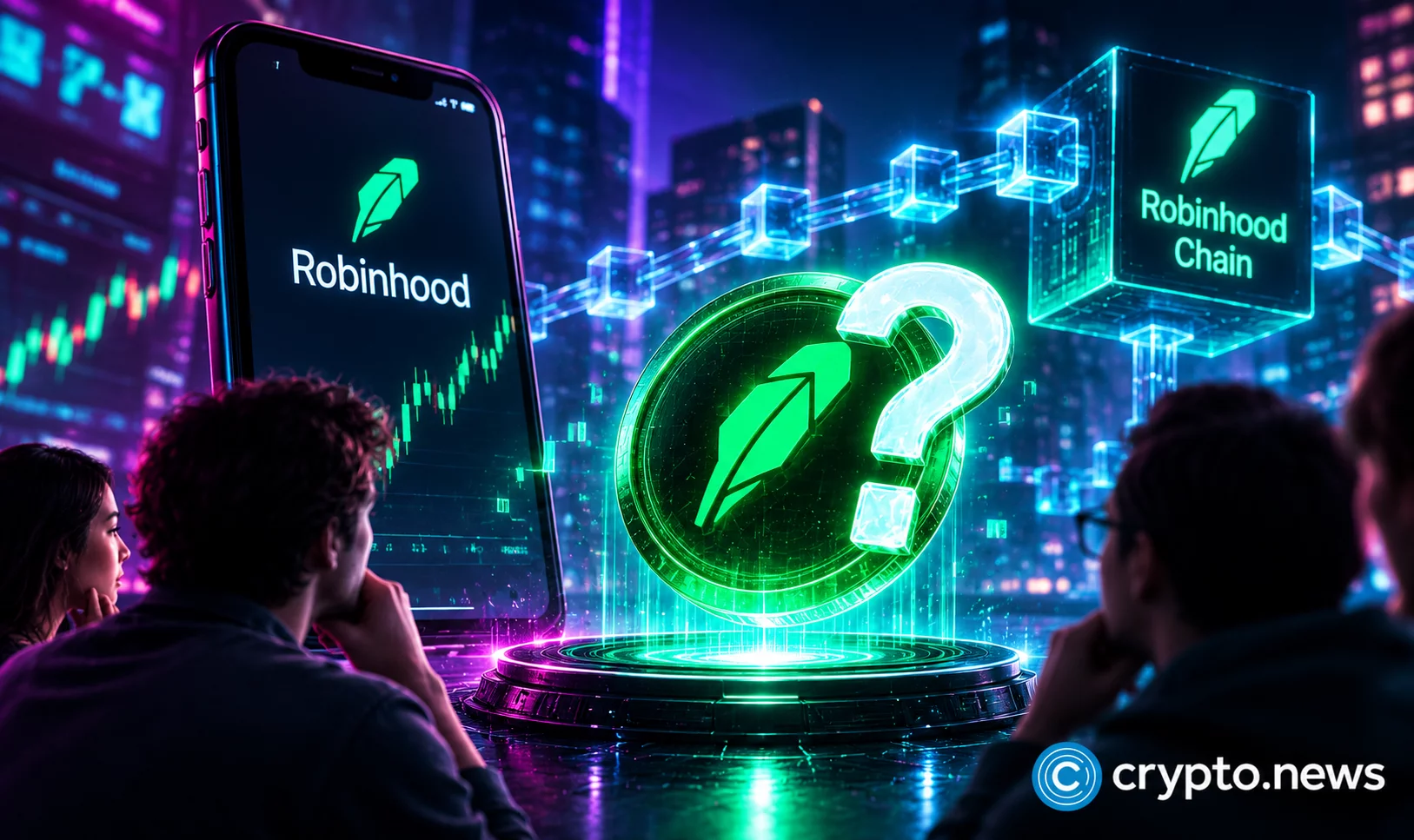
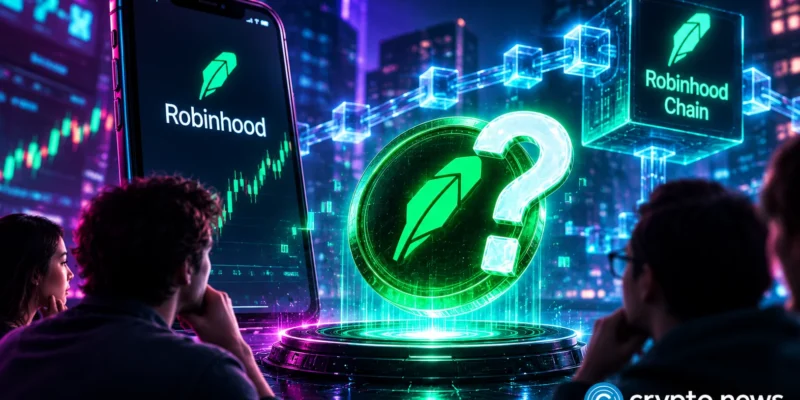
No. There is no official Robinhood Chain token, there is no airdrop, and there is no snapshot. Every token currently claiming that association is either a joke that admits it or a trap that does not.
Summary
- Robinhood has not issued a native token for Robinhood Chain. The network runs on ether for gas, which removes the main technical reason a chain needs a token of its own.
- Robinhood Markets trades as HOOD on Nasdaq. That equity is the only official way to own a piece of the company, and it is a stock, not a crypto asset.
- CASHCAT, the chain’s best-known token, is a community project with no affiliation to Robinhood. Its own website describes itself as fan fiction with a ticker.
- New tokens keep launching into the branding gap. STONKCAT opened a presale on July 16, and others are running alongside it.
- The absence of a token is the scam surface. Treat any airdrop claim, snapshot rumor, or official-looking token as false unless Robinhood confirms it through its own channels.
Ask the internet whether Robinhood Chain has a token and you will get a hundred confident answers, most of them wrong and several of them designed to be. The correct answer is short: no. Robinhood launched its blockchain on July 1, 2026 and did not issue a native token with it. What exists instead is a chain that runs on ether, a company stock that trades on Nasdaq, and a growing crowd of community tokens borrowing Robinhood’s branding without permission. Understanding why the chain has no token, and why that absence is precisely what makes the question dangerous, is worth more than any list of tickers.
The direct answer
Robinhood Chain has no official native token. There is no RHC, no HOODCHAIN, no chain coin.
The network is an Ethereum layer 2 built on Arbitrum’s Orbit stack, and it uses ether for gas. When you transact on Robinhood Chain, you pay fees in ETH, the same asset that secures Ethereum. That is a deliberate design choice and it is the single most important fact in this article, because gas is the primary reason most chains issue tokens at all. For readers new to the network, crypto.news has also explained the chain itself and its Stock Tokens.
The company’s only official tradable instrument is HOOD, the common stock of Robinhood Markets on Nasdaq. That is an equity: it carries shareholder rights, it is regulated as a security, and it is bought through a brokerage account. It is not a crypto token and it does not live on the chain.
Two other tickers cause confusion and neither is what people mean. USDG is the stablecoin used across Robinhood’s on-chain products, including as collateral for perpetual futures. It is not a Robinhood Chain token; it is a dollar stablecoin. LIT is the token of Lighter, the perpetuals exchange that partners with Robinhood Chain. Robinhood Ventures invested in Lighter and Lighter committed $11 million of LIT to the Robinhood community, which is a partner incentive and not a chain token.
So: ETH for gas, HOOD for equity, USDG for stable value, LIT for a partner protocol. No chain token.
Why the chain does not have one
Blockchains issue native tokens for three reasons, and Robinhood Chain has an answer for each.
Gas. A chain needs a unit to pay for computation. Most layer 1 networks mint their own. Robinhood Chain uses ether instead, inheriting Ethereum’s asset and its liquidity on day one. No new token required.
Governance. Some networks distribute tokens so holders can vote on protocol changes. Robinhood is a publicly listed brokerage running a chain as corporate infrastructure. It has shareholders and a board. It does not need a governance token, and issuing one would create an awkward second constituency with unclear legal standing next to the one that already owns the company.
Incentives. Chains hand out tokens to bootstrap usage. Robinhood has roughly 28 million customers across 38 countries and a distribution pipeline no new chain can match. It ran a 90-day gas fee subsidy instead, which achieves the same bootstrapping without issuing a security-shaped asset.
There is a fourth reason, unstated and probably decisive. Robinhood is a regulated broker with securities licenses in multiple jurisdictions. Issuing a token would invite an immediate question about whether that token is a security, from the same regulators who supervise its core business. The company has spent years building the relationships that let it offer Stock Tokens abroad and lending products at home. A native token would put all of that on the table in exchange for benefits it can already obtain without one.
The precedent supports the read. Coinbase’s Base, the most successful corporate chain to date, has no native token either, and Coinbase has repeatedly said it has no plans to issue one. Corporate chains built by regulated financial companies tend not to mint coins. That is the pattern, not the exception.
What CASHCAT actually is
CASHCAT is the token everyone means when they ask this question, so it deserves a direct treatment.
It is a community memecoin deployed on Robinhood Chain shortly after mainnet. It has a fixed supply of one billion tokens and its contract address is 0x020bfC650A365f8BB26819deAAbF3E21291018b4. It reached a market capitalization near $156 million within days and, at its peak, was worth roughly twelve times every tokenized real-world asset on the chain combined.
It has no affiliation with Robinhood. Not a partnership, not an endorsement, not a corporate project. The token’s own website says as much, disclaiming any connection to Robinhood Markets or to Vlad Tenev, and describing the project as fan fiction with a ticker. Asked what the utility is, the site answers that the utility is cat.
The name is where the confusion comes from, and it is a genuinely good story. Before Robinhood was Robinhood, Tenev and co-founder Baiju Bhatt called their company CashCat. The detail comes from a New Yorker profile and had been sitting in startup lore for years until someone realized it made a perfect memecoin. The token resurrects a discarded company name. That is the whole connection, and it is a connection of trivia, not of ownership.
What complicated matters is that on July 8, Tenev posted that while the company is building the chain to be the best for real-world assets, it works great for memes too, and he followed the token’s account. That is a CEO acknowledging something visible on his own network. It is not an endorsement, an affiliation, or a claim of ownership. But it is exactly the kind of signal that makes a retail buyer assume otherwise, which is why the disclaimer matters more than the follow.
The tokens filling the gap
The absence of an official token has not produced an absence of tokens. It has produced the opposite.
Within days of launch, Robinhood Chain hosted Cash Dog in Hood, Little John, Hoodrat, and Arrow, none of which existed before July 1. Noxa, the chain’s dominant launchpad, was averaging roughly 18,600 new token launches per day before it stopped accepting launches on July 11 and went dark two days later. Pump.fun added Robinhood Chain support on July 8, letting Solana’s memecoin crowd deploy without bridging. Crypto.news covered how memecoins took over the network as Robinhood’s RWA chain became dominated by speculative tokens.
The wave has not stopped. On July 16, STONKCAT opened a presale for $SCAT, pitching a community called The Litter and a running joke about a cat that never sells. A separate MemeToro presale is running alongside it, promising staking, AI-assisted launch tools, and prediction markets after the ecosystem expands.
Read the pattern rather than the individual tokens. Each new project borrows Robinhood’s branding, gestures at the chain’s legitimacy, and sells the association. None of them have the association. The branding gap that CASHCAT discovered is now a repeatable business model, and presales are where it converts fastest, because a presale asks for money before there is a market price to check.
How the scam works
This is the part worth internalizing, because the mechanics are predictable.
The airdrop rumor. New chains often reward early users with retroactive token distributions. Robinhood Chain will not, because there is no token to distribute. But the expectation exists, and it is exploited: posts claiming a snapshot has been taken, a claim window is open, or eligibility depends on connecting a wallet. Every one of those is false by construction. There is nothing to claim.
The official-looking token. A token deploys with Robinhood branding, a plausible ticker, and a website that mimics corporate design. It buys visibility. Retail buyers who have heard that Robinhood launched a chain assume this is the asset. It is not, and no amount of visual polish changes that.
The unaudited contract. CASHCAT itself illustrates the deeper problem: security audits of its contract were not possible because Robinhood Chain is too new for the tooling to have caught up. That applies across the chain. Tokens launching today are deploying into an environment where standard verification infrastructure does not yet exist, which removes the check that would normally catch a malicious contract.
Thin liquidity. CASHCAT’s trading pool has been worth far less than the token’s market capitalization, which means large trades swing the price hard in both directions. A nine-figure market cap sitting on a shallow pool is not a nine-figure asset. It is a small pool with a large number attached.
The defense is unglamorous and it works. Verify the contract address against a source you trust before buying anything. Assume any claim of official Robinhood affiliation is false unless Robinhood says otherwise on its own channels. Treat presales with more suspicion than listed tokens, since presales take money before price discovery. And accept the base case: there is no token, so there is nothing to be early to. That is also why understanding how token scams are structured matters before interacting with any new chain asset.
Why the question keeps getting asked
It is worth understanding why this particular question generates so much search traffic, because the answer explains the risk better than any warning does.
Crypto spent roughly four years training people that a new chain means a new token, and that being early to the token is where the money is. That training was accurate. Solana, Avalanche, Arbitrum, Optimism, and dozens of others issued native assets, and early participants in several of them did extraordinarily well. Airdrops turned unpaid testnet activity into five-figure windfalls. An entire behavioral pattern formed around it: hear about a new chain, find the token, get in before everyone else.
Robinhood Chain arrives carrying every signal that pattern responds to. It is new. It launched with a keynote. It is backed by a company with roughly 28 million customers and a Nasdaq listing. It has partners with real names, real volume, and real integrations. Every heuristic a crypto user has says there is a token here and being early to it matters.
There is not, and the mismatch between the expectation and the reality is the entire exploit surface. Scammers do not need to be clever when the audience has already convinced itself the thing exists. They only need to supply it. A token appears, the branding is close enough, and buyers who arrived expecting to find an official asset find something that looks like one. The pattern completes itself. That is why these tokens appear on new chains so quickly after launch.
The same dynamic explains why presales cluster here. STONKCAT opened a $SCAT presale on July 16 and a MemeToro presale is running alongside it, both pitching future products, staking, and ecosystem participation. A presale is the purest expression of the be-early instinct: it asks for money before there is any market price, any liquidity, or any way to verify what you bought is what was described. On a chain where audit tooling has not caught up, the ordinary checks that would flag a problem are also unavailable.
Notice too what the corporate structure means for anyone hoping the policy changes. If Robinhood ever issued a token, it would be a decision made by a listed company with a board, disclosed through filings and official channels, and scrutinized immediately by the regulators supervising its brokerage business. It would not leak through a countdown site or a Telegram group. The manner of any announcement would itself be evidence of whether it was real, and that is a more reliable filter than any list of red flags.
The uncomfortable framing worth sitting with: the reason there is no official token is the same reason the chain has institutional credibility at all. A regulated broker that minted a coin would be a different kind of company, facing a different set of questions, offering a different product. The absence people are searching for is not an oversight waiting to be corrected. It is the design.
What to watch instead
If the interest behind the question is genuine exposure to what Robinhood is building, three things are real and none of them are memecoins.
HOOD equity. The company’s stock is the direct instrument. Its crypto business is under real pressure, with transaction revenue down 47% year over year to $134 million in the first quarter of 2026 and native-app crypto volume down 48% to $24 billion. The chain is the response. Second-quarter earnings on July 29 are the first look at whether Stock Tokens are converting.
The chain’s real-world asset figure. This is the metric that matters and almost nobody quotes it. Tokenized real-world assets on Robinhood Chain total roughly $12.8 million against a network holding around $312 million in total value. If that number grows substantially while memecoin activity fades, the strategy is working. If it does not, the traffic never converted.
Whether the policy changes. Companies reverse themselves. If Robinhood ever does issue a token, it will announce it through its own channels, in filings and official communications, not through a countdown site. Until that happens, the answer to the question in the headline is the same as it was on July 1.
The honest summary is that the most valuable thing about Robinhood Chain having no token is that it tells you what kind of chain it is. Networks that mint coins are asking you to fund them. A network built by a listed brokerage running on someone else’s gas asset is asking you to use it. Those are different propositions, and only one of them has a ticker to chase.
The one number that answers everything
If you take a single thing from this article, make it this: the chain’s own scoreboard tells you whether any of it is working, and it is not the number anyone quotes.
Robinhood Chain holds roughly $312 million in total value locked. That figure gets cited constantly and it is close to meaningless, because value locked counts stablecoins parked, lending positions open, and assets sitting in automated market makers. It measures presence, not purpose. Transaction counts are worse, because a 90-day gas fee subsidy has been paying for activity since launch, which inflates the count and makes comparisons with chains like Base unreliable until the subsidy expires.
The number that means something is tokenized real-world assets: roughly $12.8 million, of which about $10.68 million is stocks and around $410,000 is Treasuries. That is approximately 4.1% of activity on a chain built entirely for that category. Every other metric on the network is measuring something the chain was not designed to do.
So the honest scorecard reads: enormous traffic, negligible product-market fit for the actual product, and a subsidy propping up the headline. That is not a verdict, because two weeks is not a verdict. It is a baseline. If tokenized assets grow well past $13 million while the memecoin volume fades, the speculation was the ignition sequence and Robinhood was right. If the assets stay flat while the traffic rotates to whichever chain is paying attention next, the chain attracted a crowd that was never going to convert.
Second-quarter earnings on July 29 are the first genuine look, because they will show Stock Token adoption from the company’s own books rather than from chain-level metrics that a subsidy is distorting. Watch that, and watch whether liquidity persists after the subsidy expires. Those two data points will tell you more than any token ever could, and neither of them requires you to buy anything.
Frequently asked questions
Is there an official Robinhood Chain token?
No. Robinhood has not issued a native token for the chain, which launched its public mainnet on July 1, 2026. The network uses ether for gas, which removes the primary technical reason a blockchain needs its own token. The only official way to own a stake in the company is HOOD, its common stock on Nasdaq, which is an equity and not a crypto asset.
Is CASHCAT the Robinhood Chain token?
No. CASHCAT is a community memecoin with no affiliation to Robinhood, no endorsement, and no partnership. Its own website disclaims any connection to Robinhood Markets or Vlad Tenev and describes the project as fan fiction with a ticker. The name references CashCat, the working name Tenev and co-founder Baiju Bhatt used before the company became Robinhood, which is a piece of trivia rather than a relationship.
Will there be a Robinhood Chain airdrop?
There is nothing to airdrop, because no token exists. Claims of a snapshot, a claim window, or eligibility requirements are false by construction and are a common scam pattern on new chains. If Robinhood ever changed this policy, it would be announced through official company channels and filings, not through a third-party claim site.
Why does Robinhood Chain not have a token?
Three technical reasons and one strategic one. Gas is paid in ether, so no new unit is needed. Governance runs through a listed company with shareholders and a board. Incentives come from roughly 28 million existing customers and a 90-day gas subsidy instead of a token distribution. Strategically, a regulated broker issuing a token would invite securities questions from the regulators supervising its core business.
Do other corporate chains have tokens?
Generally no. Coinbase’s Base, the most successful corporate chain to date, has no native token and Coinbase has repeatedly said it has no plans to issue one. Chains built by regulated financial companies tend not to mint coins, because the legal cost of doing so exceeds the benefit when the company already has distribution and a balance sheet.
What are USDG and LIT then?
USDG is a dollar stablecoin used across Robinhood’s on-chain products, including as collateral and quote asset for perpetual futures. LIT is the token of Lighter, the perpetuals exchange partnered with Robinhood Chain, in which Robinhood Ventures invested. Lighter committed $11 million of LIT to the Robinhood community as a partner incentive. Neither is a Robinhood Chain native token.
How do I avoid Robinhood Chain token scams?
Start from the base case that no official token exists, so any claim of one is false. Verify contract addresses against a trusted source before buying. Treat presales with extra caution, since they take money before any market price exists. Be aware that security audits are difficult on Robinhood Chain because the network is new enough that verification tooling has not caught up, which removes a check that would normally catch malicious contracts. Crypto.news has also explained verifying contracts before you transact as part of broader self-custody safety.
What should I look at instead?
If the interest is exposure to Robinhood’s strategy, HOOD equity is the direct instrument. If the interest is whether the chain is working, watch the tokenized real-world asset figure, which sits around $12.8 million against roughly $312 million in total value locked. Robinhood’s second-quarter earnings on July 29 are the first meaningful look at Stock Token adoption.
Disclaimer: This article is for information and educational purposes only and does not constitute financial or investment advice. Memecoins are highly speculative, frequently trade on thin liquidity, and most participants lose money. Token affiliations, contract addresses, and project claims change and should be verified independently before any transaction. Nothing here is a recommendation to buy any token or security. Always do your own research. Information is accurate as of July 17, 2026.